site.btaFebruary 16,1926: Donor's Will Secures Future of Sofia's Oldest Functioning Cinema
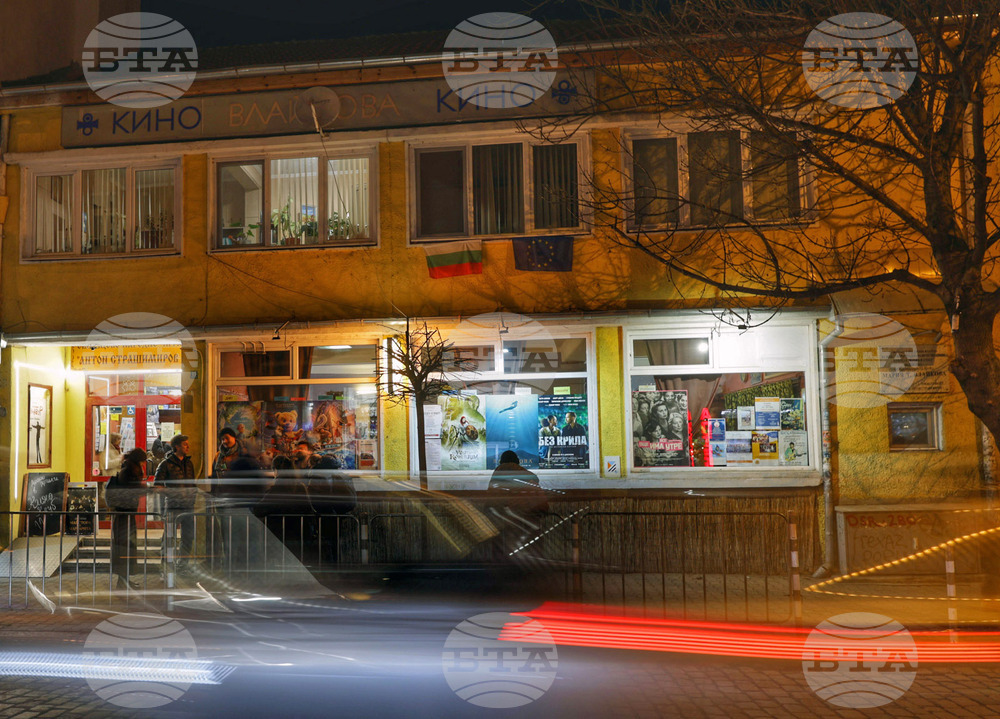
One hundred years ago on Monday, on February 16, 1926, Maria Vlaikova signed a will that secured the future public use of a purpose-built cinema on Sofia's central Ivan Asen II Street. With its name unchanged, the Vlaikova Cinema is still there, remaining the oldest functioning cinema in Bulgaria's capital.
Born in Bitola (then in the Ottoman Empire, now in North Macedonia) in 1871, Maria Vlaikova devoted much of her early life to education. After graduating from the high school in Stara Zagora, she spent six years teaching in Ohrid, Bitola, and Salonika. In 1910 she married writer Todor Vlaikov (1865-1943), a prominent cultural and public figure of his time.
The building of the cinema went under construction in 1925 on a privately owned lot of 465 square metres at 9 Ivan Asen II Street. The auditorium itself occupied 330 square metres and was designed to seat 400 spectators. It came complete with a stage and four small dressing rooms - features that reflected its intended role not only as a cinema but as a broader cultural venue.
To finance the construction project, the Vlaikovs mortgaged their home and ran into heavy debts, including a 250,000 leva mortgage.
On November 26, 1925, Maria Vlaikova formally notified the Ministry of Public Education of her intention to make the auditorium available as a cinema for pupils once finished in the spring of 1926. To ensure the project's long-term future, she formalized the donation through her will, signed on February 16, 1926.
"The great success of the cinematograph, sensibly organized and controlled, which can not only bring supreme aesthetic delight but can serve the character education of the young generation and of the people, gave rise to my idea that the support I wished to provide to the cause of theatre in Bulgaria and, through that, to public education, be linked to the setting up of a cinematographer for popular edification," Vlaikova wrote in her will.
Under the terms of the will, following her death, ownership in the building was to pass to the Ministry of Public Education, with revenues from its use and rent of the premises to be used to finance the education abroad of six of the most talented Bulgarian actors (including three from Macedonia): a remarkable cultural investment for its time.
After her death on December 31, 1926, the donation was accepted by a law adopted by the 22nd Ordinary National Assembly on September 23, 1928 and endorsed by a decree of King Boris III on October 16, 1928. Regular film screenings began at the cinema in 1936. An Allied air raid of Sofia during WW II burnt down the building and the equipment on the night of March 29 to 30, 1944. The cinema was restored by its tenant and resumed its operation as early as October 15, 1944. On April 6, 1949, a Council of Ministers decision allocated the building to the Anton Strashimirov Community Centre for perpetual use.
Between 1968 and 1971, the cinema was renamed Eisenstein (after the Soviet film director) and functioned as a specialized archival cinema. Under pressure from the residents of the neighbourhood and the public, its original name was restored in 1971.
Nearly a century later, the Vlaikova Cinema remains the oldest functioning cinema in Sofia, continuing to host film screenings and cultural events.
/LG/

news.modal.header
news.modal.text