site.btaOutgoing PM Zhelyazkov: Cabinet Worked Like a Programme Government in 2025
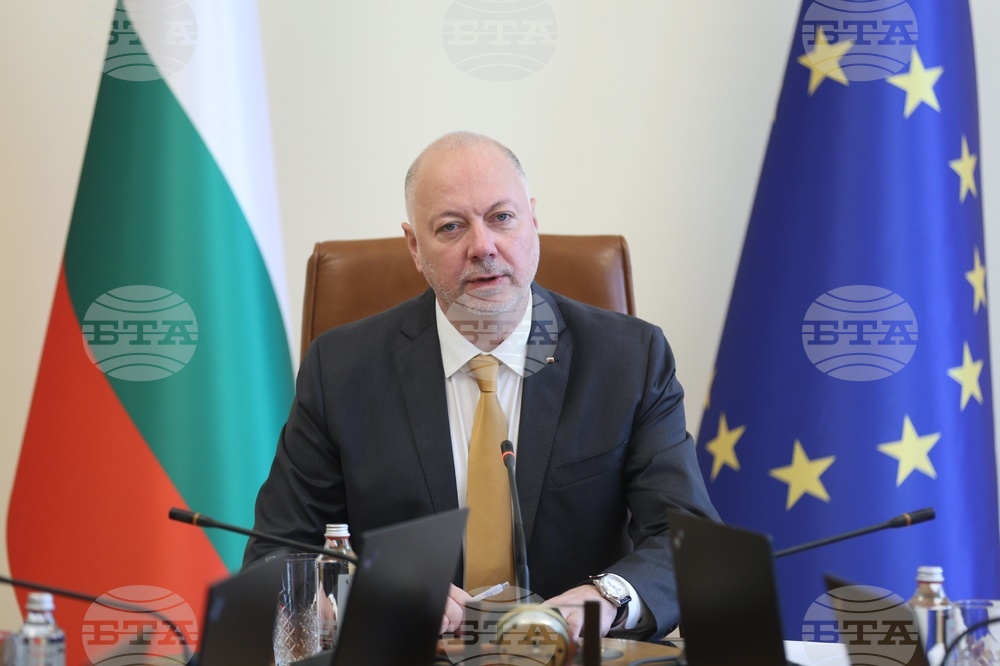
The government in 2025 worked like a programme-based cabinet despite appearing political, outgoing Prime Minister Rosen Zhelyazkov said on Tuesday at the start of the cabinet’s last meeting of the year.
Zhelyazkov described the year as dynamic, complex and important on the geopolitical, European and national agendas. He said the government was formed with difficulty in a complex coalition with ideological differences and different views on the country’s development, but with a high degree of consensus and trust between the partners. He also pointed to very dynamic parliamentary backing and thanked partners for good coalition relations.
Zhelyazkov said the government had set out clear goals for 2025, including financial stabilization, restoring payments under the Recovery and Resilience Plan, boosting the economy’s competitiveness and joining the eurozone. “All of these commitments for 2025 have been met,” Zhelyazkov said. He added that when the time came for a sober assessment of the cabinet’s work, they believed these results should be recognized. They were also due to society’s efforts, the restored tripartite dialogue and the trust of the social partners during this period, as well as the support the government received despite complex political processes, Zhelyazkov said.
He also said there had been no other government that, within a single year, had faced six no-confidence votes in a difficult foreign and domestic political environment. Bulgaria ended the year with a gross domestic product of EUR 113 billion and economic growth of more than 3%, placing the country among the top five in the European Union. Bulgaria had long ceased to be the EU’s poorest country and, in purchasing power parity terms, had overtaken countries such as Greece, Romania, Hungary, Slovakia and Lithuania, Zhelyazkov said.
He added this should be a source of confidence for every Bulgarian. In Bulgaria, the unemployment rate fell by 0.6% in 2025 compared with 2024. The number of people in employment rose by 1.6%, while revenue collection hit a record, with more than BGN 10 billion in additional income compared with 2024. Inflation stood at about 3.6% and had nothing to do with the euro, but was linked to higher purchasing power and the formalization of the economy by nearly 4%, Zhelyazkov said.
Zhelyazkov said others should judge the government’s performance. “Let businesses speak, let hauliers speak about the programme we will deliver for them, because toll-system revenues have reached a record level of over BGN 1 billion. We owe Bulgarian hauliers greater competitiveness through the measures we are presenting today,” Zhelyazkov said. He added that in 2026 rail rolling stock would be running with new trains that had been contracted and paid for. “In every sector there is something to show, and I believe that whatever the next cabinet is, it will build on what has been achieved, because the point of evolution is to build,” he added.
Prime Minister Rosen Zhelyazkov announced the resignation of his Cabinet at an emergency press conference in Parliament on December 11, 2025, alongside senior officials of the governing coalition parties GERB-UDF, There Is Such a People (TISP) and BSP-United Left. The move came as the National Assembly was about to vote on a no-confidence motion submitted by Continue the Change-Democratic Bulgaria (CC-DB) and amid mass anti-government protests that began over the Cabinet’s budget plans and broadened into wider discontent over corruption and governance failures; the resignation was submitted to Parliament and the outgoing Cabinet said it would continue to perform its functions until a new government is elected.
/IV/
news.modal.header
news.modal.text