site.btaMedia Review: December 30
The upcoming adoption of the euro as the national currency in Bulgaria from the beginning of 2026 dominates the news media on Tuesday. Many outlets carry articles with practical tips to help people through the transition, or recall the key steps Bulgaria took to join the eurozone.
TRANSITION TO EURO
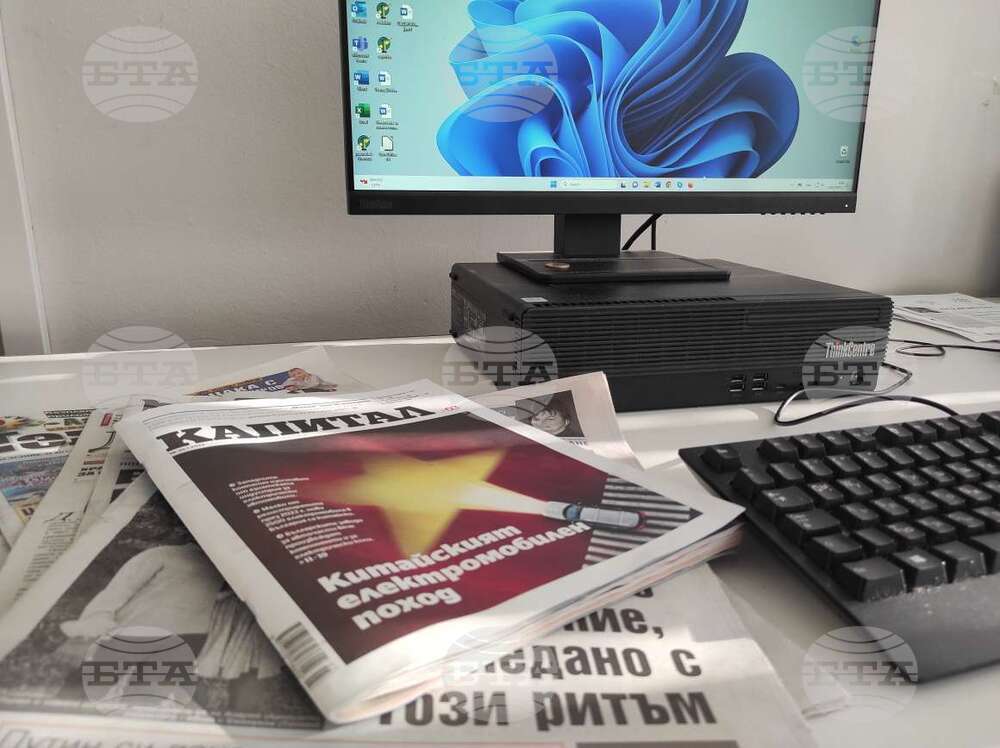
Capital.bg writes that as the euro is about to replace the lev, Bulgarians are channeling their savings into deposits, real estate, and cars, while the amount of levs in circulation continues to shrink. Between June - when Bulgaria received the green light to join the eurozone - and November, more than BGN 6 billion in cash was withdrawn from the economy. By November, household deposits had already topped BGN 100 billion. Housing loans are surging, with annual growth approaching an eye-popping 30% - levels not seen since the pre-2008 financial boom - and new car registrations have risen for the seventh month in a row.
In Trud.bg, economics professor Boyan Durankev writes that the euro is the world’s second most powerful reserve currency. The dollar remains the backbone of the global reserve system, accounting for about 58% of reported global reserves, or roughly USD 6.6 trillion. The euro ranks second, representing around 20% of global reserves, or approximately USD 2.3 trillion. Other reserve currencies, including the Japanese yen and the British pound, together make up about 11%, while currencies such as the Chinese yuan, Canadian and Australian dollars, and the Swiss franc hold much smaller shares. Despite its growing role in global trade, the yuan still accounts for just over 2% of global reserves, underscoring the euro’s firm position as the world’s second most important reserve currency.
Mediapool.bg reports of "sparse protests" against the euro in several cities in Bulgaria including Sofia, Burgas, Vratsa and Montana on Monday evening.
On Bulgarian National Radio (BNR), Dimitar Margaritov, former chairman of the Consumer Protection Commission said that over the past year, prices of major consumer goods have risen, creating a widespread perception that the cost of living in Bulgaria has increased. He emphasized that this trend is not primarily due to the introduction of the euro, but rather to societal and institutional mismanagement, which fueled unnecessary tension and public hysteria. "This led to a situation where talk and speculation became a key driver of inflation, rather than market forces, and as a result, the Christmas and New Year celebrations this year will be more expensive," Margaritov said. He also noted that holiday shopping, which begins around Black Friday at the end of November, contributes to price pressures, and advised consumers not to stock up on goods ahead of the euro transition, as this could create artificial market tension and provoke reactive price increases.
The mayor of the southern village of Kalugerovo, Angel Bozhilov, told BNR that the residents of his village link the introduction of the euro to increasing poverty. He said that before adopting the single currency, Bulgaria should have first aligned its justice system, education, and especially healthcare with European standards - but these steps were skipped, he argued. People fear they will become poorer, noting that prices in stores have risen since the euro decision, with many asking, “Where is the control?!” Although there was a public information campaign about the euro, Bozhilov noted that Bulgarian Posts did not provide enough euro starter packs, which could create problems, and shop owners will continue operating with levs until the end of January 2026.
In the morning programme of Nova TV, the transition to the euro was the dominant topic. It showed people lining up outside the Bulgarian National Bank even before the bank's opening hours, waiting to buy the so called "starter packs" of euro coins. Some cited collector interest as a reason to wait in lines. Economics professor Vassil Karaivanov explained that there is no need to rush to exchange the lev: the current exchange rate is less favorable than the fixed official rate that will apply, and the early queues are unnecessary. He noted that during the transition - particularly between 9 p.m. on December 31 and the early hours of January 1 - banking systems may experience short, temporary outages as they switch to the new currency, but these disruptions are expected to last only minutes rather than hours, with longer timeframes cited primarily as a precaution. Karaivanov advised that people planning payments on New Year’s Eve should keep a small amount of cash on hand, as card systems may temporarily be unavailable, with the exact amount depending on individual plans and spending.
MORE ECONOMY
Trud.bg writes that among Bulgaria’s major cities, newly built homes showed the biggest annual price increase in Varna, rising by 18.4%, according to data from the National Statistical Institute. In the existing housing segment, the steepest price growth was reported in Stara Zagora, where prices rose by 24.5% year on year. Price increases in the other five major cities with populations of over 120,000 have also been substantial. Housing price growth in Sofia and Stara Zagora, as well as in Plovdiv and Ruse, has been very similar, indicating that demand for property remains strong across all of Bulgaria’s major cities, the report goes.
***
Trud.bg carries a story by political analyst Ognyan Minchev headlined "Workers from Islamic Countries Quietly Imported in Bulgaria". The article argues that Bulgaria’s long-standing balance between Christian and Muslim communities is being put at risk by the quiet import of migrant labor from Muslim-majority countries, carried out without public debate or transparency. It notes that the Balkans are historically vulnerable due to religious and geopolitical fault lines, but that Bulgaria has largely maintained social stability over the past three decades, including after the Revival Process, thanks in part to the traditionally moderate form of Islam in the region and Turkey’s stabilizing role. According to the author, this balance could be undermined by the growing influence of pan-Islamist movements and by the undisclosed arrival of large numbers of foreign workers, particularly from Pakistan. The text claims that employers and state institutions are facilitating this process without informing society, warning that Pakistan’s internal problems with religious extremism and minority rights could pose long-term risks to social cohesion. It concludes that the combination of economic interests and administrative opacity may create tensions that threaten Bulgaria’s social peace.
***
Winter tourism in Bulgaria is increasingly diverse, extending beyond skiing to include cultural experiences, spa and wellness visits, and trips to see family and friends, according to Ivan Groshev, chairman of the Association of Incoming Tourism Agencies. He spoke on Bulgarian National Radio. Only about one-sixth of winter visitors come primarily for skiing. Bulgaria is expecting a decent winter season in 2026, with projected growth of 2–3%, amounting to roughly 2.3 million visitors, following a 2.6% increase in arrivals this year. Challenges for the tourism sector include labor shortages, aging infrastructure both nationally and in resorts, and the urgent need for digitalization. Key markets are evolving: the British market faces disruption after a major operator exited, while the German market may see minor turbulence due to the withdrawal of a main airline. Romania remains the dominant source market, Poland is expected to be the largest charter market, and Germany and the UK will rank third and fourth. Groshev emphasized efforts to build a unified brand for Bulgaria, noting that uncoordinated initiatives by multiple institutions make it difficult to convey a consistent message. Extending the tourist season, he suggested, will require infrastructure improvements in resorts and the organization of cultural events, with the domestic market also offering significant potential.
***
Mediapool.bg writes that the planned increase in parking fees and the expansion of paid parking zones in Sofia, originally set to take effect on January 5, has been postponed. The changes to the blue and green zones, including new rates and coverage areas, were challenged in court - including by Delyan Peevski’s MRF - New Beginning party - and the court has suspended the preliminary implementation of the updated municipal regulations.
POLITICS
On Bulgarian National Radio, political analyst Kaloyan Velchev described Bulgaria’s political landscape as highly uncertain, noting that if President Rumen Radev enters early elections, it would create a new dynamic, but could also backfire as any concrete vision he presents will inevitably alienate some voters and risk his presidential authority. Regardless of his participation, forming a stable government will be difficult, with GERB’s main opposition likely coming from the CC-DB coalition, which appears incapable of a parliamentary majority. Velchev highlighted citizens’ rejection of political dysfunction and oligarchic influence over the past year, particularly that of Delyan Peevski, whose rise as a supposed “new leader” failed, while new political figures, including mayors who resisted Peevski, have emerged as courageous leaders. He described GERB leader Boyko Borisov as a waning political figure and criticized his appeals to ethnic politics. "The talk of 'playing the ethnic card' is usually the trademark of the Movement for Rights and Freedoms. I don’t understand this move. Clearly, there is some fear that the Turkish vote might become more pluralized, spreading across multiple parties." Velchev sees the Socialist party as remaining weakened but "may be revitalized through upcoming leadership changes", potentially offering a more modern, pro-European leftist alternative. Velchev also noted that protests have reshaped the political scene and predicted higher voter turnout in future elections, especially among young people, whose participation consistently exceeds the national average despite common stereotypes.
***
Also on BNR, political analyst Vessislava Tancheva said that President Rumen Radev is not the future winner in the Bulgarian political process. "I don’t think he would be foolish enough to create a political project a year before the end of his term. For most of the population, this would be seen as a form of betrayal," she said. She noted the significant difference between a president and a party leader, referring to the unsuccessful project once launched by former President Georgi Parvanov. She said it would be absurd for President Radev to use his New Year’s address to announce the creation of his own party.
***
Dnevnik.bg reproduces an analysis by Emilia Milcheva for Deutsche Welle, that examines whether the Movement for Rights and Freedoms (MRF) will lose its long-standing hold of "the ethnic vote" or will continue to dominate its memory and representation. The author says that there are no easy answers and that change depends on whether other parties are willing to challenge this model despite institutional resistance and voter prejudice across ethnic lines. Symbolic gestures such as a recent visit by leaders of the Continue the Change - Democratic Bulgaria (CC-DB coalition) to a site that commemorates the victims of the 1980s Revival Process of forced assimilation of ethnic Turks, are presented in the analysis not only as acts of remembrance but as a test of whether the ethnic vote can cease to be a monopoly of one party and become a matter of free political choice. The article notes that recent protests against state capture marked the first time citizens from minority communities publicly stated that MRF - New Beginning and its leader Delyan Peevski do not represent them, creating a challenge for pro-European parties to move beyond token inclusion and instead address concrete problems such as poverty, isolation, limited access to education and the dominance of MRF-controlled local authorities in mixed regions. Previous attempts to weaken MRF came from breakaway parties formed by former insiders, which challenged leadership but not the underlying model and largely failed, with the only partial exception occurring through broader coalitions, while the current pressure is different because it comes from outside parties seeking to dismantle the monopoly itself. The text argues that genuine change requires sustained presence between elections, local structures and credible solutions rather than symbolic multiculturalism or backroom deals, as well as a clear separation between ethnic identity and political mediation, stressing that minority rights are the responsibility of the state, not of a single party. At the same time, it highlights deep obstacles, including fear among voters, entrenched local dependencies, institutional pressure and the risk of double standards or moralistic rhetoric that further deepens division, concluding with the open question of whether figures openly rejecting MRF can gain support not only in minority regions but also among the broader electorate.
***
In a comment in Capital.bg, former Justice Minister and former ranking member of the Bulgarian Socialist Party (BSP), Krum Zarkov, says that today’s BSP is moving counterclockwise. He writes that in 2025, BSP entered the year under the false impression that it had outsmarted political logic, gaining a stronger foothold in government despite being marginalized to fifth place in parliament after recent elections. BSP secured key positions, including the chairmanship of the National Assembly (later relinquished), four ministerial posts, and a vice-premiership, but at a high cost: ideological compromise through alignment with right-leaning parties and moral decline by implicitly acknowledging the dominance of former rivals. Zarkov notes that this price was paid willingly, as the party’s membership and representative bodies largely supported the leadership’s strategy to end "sterile opposition to GERB" and demonstrate its governing ability alongside Boyko Borisov. The party’s top organ, the congress, formally endorsed this approach, marking the pivotal decision of 2025. However, Zarkov warns that BSP will face the consequences in 2026, as participation in a quickly discredited government cannot restore the prestige of Bulgaria’s primary left-wing party.
***
On BNT, political analysts Tatyana Burudjieva and Daniel Smilov commented the key political events in the outgoing year. She said that the event of the year was the November/December protests against corruption and state capture, that led to the fall of the government. The year seemingly ended with a victory of the opposition over the Establishment but it remains to be seen if that was really the case. Daniel Smilov has two things on his event-of-the-year list: the secured entry in the eurozone from 2026 and the November/December protests. He said that the protest had coherent messages: against corruption, for rule of law, etc, and it was clear what the protests were against: MRF - New Beginning and GERB. According to Burudjieva, the protest was the beginning of campaigning for the upcoming snap general elections for Continue the Change - Democratic Bulgaria, and they are trying to keep the momentum. GERB are going into the campaign with their old slogan of "order vs. chaos", she said. She believes that the political landscape in Bulgaria is too fragmented and either the opposition parties need to form a broader coalition, or CC-DB need to secure enough votes in the next Parliament, or they have to work with MRF - New Beginning, as they have done before. Burudjieva and Smilov clashed on machine voting: she argued that voting machines violate people's right to control every stage of the voting process, and Smilov is a strong advocate of machine voting as a guarantee against electoral fraud. She believes that the biggest issue in Bulgarian elections is controlled votes, not vote buying.
***
Trud.bg carries an interview with US-based Bulgarian-born psychiatrist-turn-writer Lyubomir Kanov, in which he dwells on Bulgarian and global politics. Arriving from Munich, he describes Europe as “ailing from extreme leftism” but noted emerging policies of “normalcy” under leaders like Italy’s Giorgia Meloni and some Eastern European countries. He said criticisms of Europe by Trump and others reflect concern, not hostility, highlighting his focus on migration control and economic improvements. On Bulgaria, Kanov described institutional weakness, a corrupt judiciary, flawed elections, and law enforcement reminiscent of the old militia, enabling vote-buying and manipulation. He criticized unfounded fears about electronic voting and advocated a mix of machines and paper ballots. Domestically, he sees potential for a revitalized center-right bloc but expects the 2026 snap general elections to bring stalemate. While Bulgaria faces internal challenges, global developments could curb Kremlin-aligned influence in its politics, he argues.
***
Dnevnik.bg and Mediapool.bg reproduce an analysis by philosophy professor Kalin Yanakiev titled "The Year Euro-Atlanticism Was Betrayed" and originally published in Portal Kultura. There the author argues that over the course of a single year the United States, long seen as the leader of the free world, has moved dangerously close to fascism, committing what he calls a historic geopolitical betrayal of the Euro‑Atlantic order built since the Truman Doctrine, NATO, and the post-WWII Marshall Plan. According to Yanakiev, this was not a return to traditional American isolationism but a radical break with democratic norms, as Washington effectively entered a cold confrontation with Europe while seeking a cynical “global deal” with authoritarian powers, most notably Vladimir Putin’s Russia, at a moment when Russian fascism is already waging a full‑scale war against Ukraine. He contends that Trumpism represents a new, openly authoritarian and xenophobic project that undermines free speech, the rule of law, and the moral foundations of the transatlantic alliance, while actively encouraging similar far‑right, nationalist movements in Europe in coordination with Russian influence. Yanakiev concludes that this shift marks the emergence of a new illiberal global order and warns that the apparent triumphalism of its leaders is historically short‑sighted, as history has repeatedly shown how quickly such figures and movements fade into obscurity.
DEFENCE
Capital.bg reports that Bulgaria’s Ministry of Defence intends to acquire EuroPULS multiple rocket launch systems using a loan under the EU’s SAFE emergency rearmament programme. The story cites two independent anonymous sources. The potential supplier would be KNDS Deutschland, the German arm of the Franco-German defence group KNDS, while the core missile system technology is developed by Israel’s Elbit Systems, the country’s largest private defence company. Elbit is already known in Bulgaria for its involvement in the modernization of Bulgarian T‑72 tanks and for its earlier participation, alongside Finland’s Patria, in the now-cancelled tender for armored combat vehicles for the land forces, where it was to produce the turrets. That procedure was later scrapped in favor of a direct government-to-government deal with the United States for Stryker infantry fighting vehicles. Elbit was also a finalist in the competition to supply NATO-standard self-propelled artillery systems, although those are now expected to be delivered by France under an intergovernmental agreement.
EDUCATION
The Sega e-zine has a story about the conclusions for Bulgaria in the European Commission’s 2025 Annual Report on Education and Training Monitoring. Headlined "EC: Much Study, Little Skills in Bulgaria", the story says that weak basic skills among young people, significant inequalities in education, and low adult participation in learning are obstacles to human capital development in Bulgaria. Although the country has made progress in certain areas - such as increased enrollment in kindergartens and reduced early school leaving - educational outcomes at all levels still require improvement. Challenges include teaching that focuses primarily on knowledge rather than skills, teacher qualifications, overloaded curricula, lower-quality vocational education, and the poor alignment of higher education with labor market needs - all of which affect the country’s competitiveness.
WORLD
24 Chasa has an analysis on the ongoing farmer protests in Greece over subsidy payment delays. According to the paper, the Greek government is weighing two approaches to farmers’ road blockades: waiting for protests to fizzle out or imposing fines on participating farmers. Officials hope fatigue might force farmers to disperse, but others favor sanctions using the registered tractor data. Farmers have vowed not to back down, while authorities face pressure from the tourism sector. A final decision is expected after the New Year, which will determine whether protests escalate or negotiations begin.
***
In a comment on BNR regarding the Sunday meeting in the US between Ukrainian President Volodymyr Zelenskyy and President Donald Trump, former Defence Minister and security expert Angel Naydenov emphasized that there is still no final outcome that could end the war or achieve a ceasefire. He added: "Putin cannot afford to end the war without controlling Donbas as a whole, whether that happens through the withdrawal of the Ukrainian army from Donetsk and Luhansk or otherwise. Any Ukrainian concession of territory and recognition of it as Russian would destabilize Ukraine from within. … Regarding a demilitarized zone or a free economic zone, it is also necessary to hold a referendum or at least reach a decision with the participation of the Ukrainian parliament. But holding a referendum requires a ceasefire of about 60 days for preparation and execution. A temporary ceasefire, however, is something both Russian President Putin and Donald Trump have ruled out."
24 Chasa reproduces a CNN analysis of the Trump-Zelenskyy meeting saying that neither announced any major progress after three hours of talks.
The Tuesday media also writes about the Russian reports of a Ukrainian drone attack on a Putin residence and Kyiv's denial. President Zelenskyy called the allegations "classic Russian lies" aiming to secure an excuse for Moscow to continue the attacks against Ukraine. President Trump is reportedly shocked to hear about the drone attack.
The Russian allegations about the attack, the Ukrainian reaction and Trump's "shock" was the top news for Dnevnik and Mediapool early on Tuesday.
On Bulgarian National Television, journalist Yavor Siderov's comment on the current state of play and the US position, was that President Trump has gotten used to his promises about a resolution of the conflict not materializing. There are no signs that any decision is close despite the claims after the Trump-Zelenskyy meeting that 95% of issues have been resolved. Trump is not the only one holding the key to the end of the war, Siderov also said.
The Tuesday media also covers the Trump-Netanyahu meeting.
/NZ/
news.modal.header
news.modal.text