site.btaEconomy Ministry Report: Bulgarian Economy Maintains Steady Growth in 2025, Ranks Among Leaders in EU
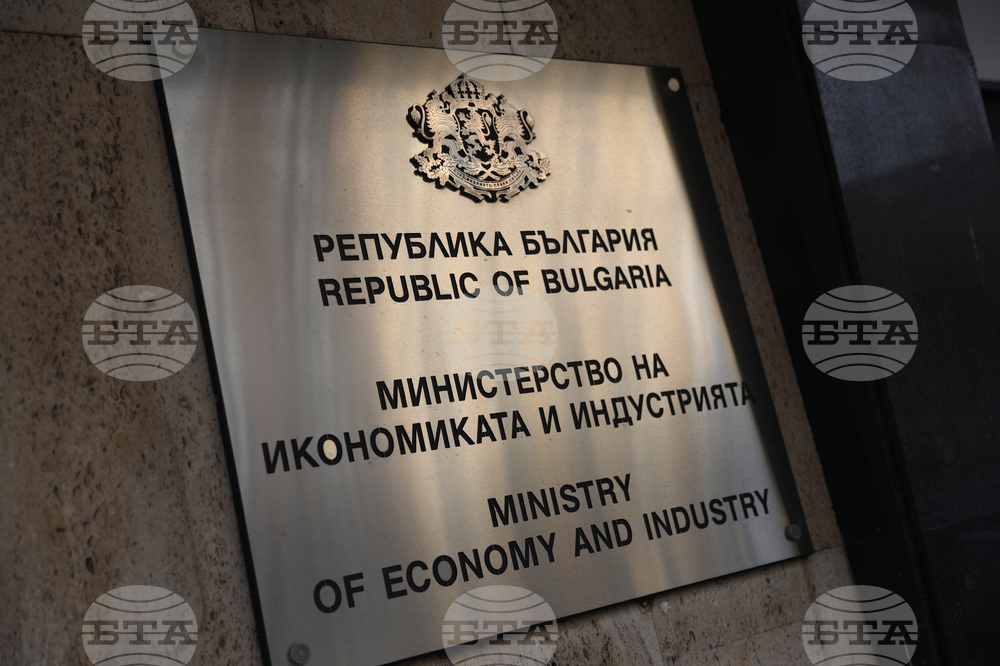
The Ministry of Economy and Industry published its 2025 report on its website on Monday. The signing of a shareholders’ agreement between Rheinmetall and VMZ EAD represents a significant step with long-term economic and geostrategic impact, the report said. The project envisages an investment of EUR 1 billion, the creation of 1,000 new jobs, and expected annual profits of EUR 40 million.
According to the ministry, implementation of the project will lead to the expansion and modernization of VMZ EAD’s production capacity, the completion of the production cycle, and the development of capabilities unparalleled in Europe. The project is expected to strengthen supply chains, facilitate the transfer of know-how, enable the introduction of state-of-the-art technologies, and develop production capacities compatible with EU and NATO standards.
The report said that foreign direct investment in Bulgaria has increased significantly, reaching EUR 2.5 billion by the end of September 2025, an annual increase of 21%. In September alone, inflows amounted to EUR 473 million, which the economy ministry describes as a clear signal of growing confidence in the Bulgarian economy. A key role in achieving this result was played by the National Company Industrial Zones EAD, under the Ministry of Economy and Industry. Over the course of the year, the company attracted more than BGN 40 million in investments to state-owned industrial parks and is currently working on projects worth over BGN 80 million at various stages of implementation, with declared interest from companies from Germany, Italy, and Spain.
At the same time, key infrastructure and digital investments were launched, including projects in the Burgas Industrial and Logistics Park and the Zagore Industrial Zone, as well as a EUR 3 million EU-funded project for the modernization and digitalization of industrial zones. These steps are strengthening the country’s industrial base and enhancing its competitiveness, the report stated.
The ministry added that in 2025 the Bulgarian economy maintained a stable growth and ranked among the leading performers in the European Union. In the third quarter of the year, real GDP growth reached 3.2% year-on-year, placing Bulgaria among the top five EU countries by GDP growth. According to Eurostat data cited in the report, in the second quarter of 2025 compared with the same period in 2024, hourly labour costs rose most sharply in Bulgaria (13.4%), followed by Hungary (11%), Romania (10.4%), and Estonia (10.3%). Bulgaria stands out for combining the highest wage growth in the EU with relatively lower inflation compared to other countries experiencing rapid wage increases, the report said.
Supporting international economic relations was a key priority in 2025, according to the ministry’s report. Through its Trade and Economic Affairs Offices, the ministry assisted more than 1,190 Bulgarian export companies to find partners for joint projects and resolve various challenges. By region, support was provided to over 865 companies in Europe and Central Asia, more than 141 in East Asia, over 158 in the Middle East, and more than 40 in North and Latin America. In parallel, 122 investment projects across various sectors of the economy were either implemented or under negotiation.
Together with the Bulgarian Academy of Sciences (BAS), the Economy and Industry Ministry developed a Programme to improve access to global markets, aimed at facilitating and encouraging the expansion of Bulgarian enterprises into foreign markets through the creation of a sustainable, digitally based export-support ecosystem. This includes the digitalization of information, improved institutional coordination, and the integration of financial instruments to support export activity. The new information system is expected to be implemented in early 2026. In cooperation with BAS, the ministry also developed a dynamic model to assess the impact of new US tariffs on EU goods on the Bulgarian economy.
In partnership with the European Commission, work continues on the development of a National Industrial Strategy for Manufacturing and Mining 2025-2030, which is scheduled for completion in 2026, the ministry reported.
Jointly with the European Investment Bank, the Economy and Industry Ministry is preparing an analysis of small and medium-sized enterprises operating within Bulgaria’s defence industry. The analysis will serve as a basis for developing measures to support their activities and technological advancement.
In the area of consumer protection, concrete legislative steps have been taken to align national legislation with European requirements. Amendments to the Consumer Protection Act have been submitted to Parliament and adopted at first reading, expanding the scope for protecting collective consumer interests and regulating oversight of product safety. The Representative Actions Directive on the collective interests of consumers was due to be transposed into Bulgarian law by the end of 2022. Due to the delay, infringement proceedings against Bulgaria are currently under way, the ministry said.
As part of the accession process to the Organisation for Economic Co-operation and Development (OECD), substantial progress has been made in the area of state-owned enterprise governance. A strategy has been adopted that lays the foundation for consistent reforms and improved corporate governance in line with international best practices, the Ministry of Economy and Industry stated.
/RY/
news.modal.header
news.modal.text