site.btaWith 87% of Levs Withdrawn, Euro Transition Is Almost Complete
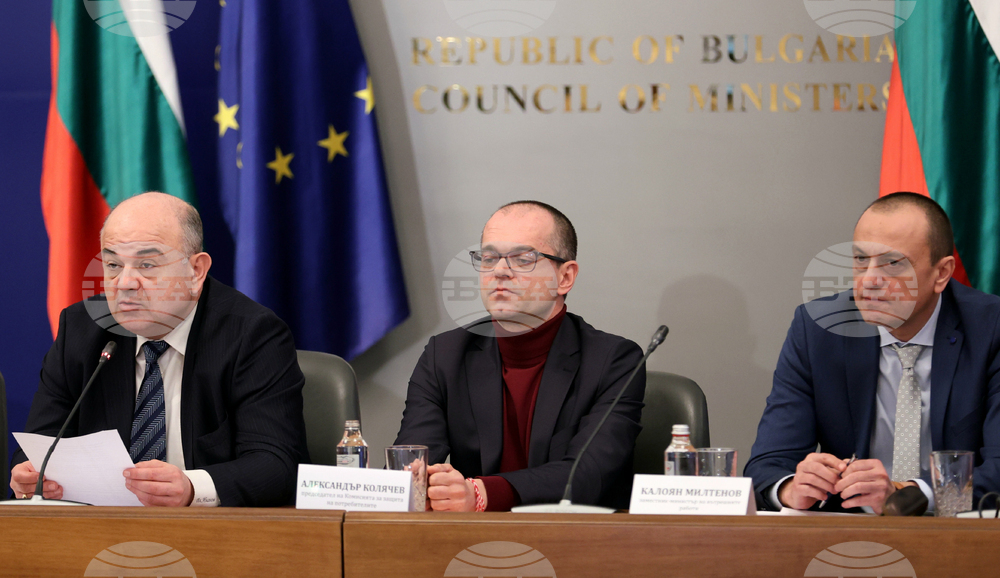
The transition to the euro is nearly complete, as 87% of the lev supply have been withdrawn, and roughly BGN 3.9 billion remain in the hands of citizens, said Vladimir Ivanov, Chair of the Coordination Center under the Euro Mechanism and Chair of the State Commission on Commodity Exchanges and Markets, during a briefing at the Council of Ministers building on Monday.
According to Ivanov, a portion of the remaining levs held by citizens will never be withdrawn, as there is always a certain percentage that remains.
He noted that between February 23 and 27, Bulgarian Posts carried out 13,072 transactions totaling BGN 15 million. Since the beginning of the year up to March 2, 161,000 transactions for exchanging levs for euros were completed, with a total value of BGN 236 million. Ivanov added that tensions at the posts have also decreased.
He recalled that the Bulgarian National Bank will exchange levs indefinitely, while commercial banks and Bulgarian Posts will do so without fees until mid-year.
Between February 19 and 27, the Ministry of Interior recorded 20 new cases of attempted circulation of counterfeit euro banknotes, Ivanov said. Eight pre-trial proceedings have been opened for criminal offences, five administrative files have been registered, and eight inspections related to criminal activity have been conducted, he added. A total of 23 banknotes were seized, including 4 with a denomination of EUR 200, 6 of EUR 100, 8 of EUR 50, 3 of EUR 20, 1 of EUR 10, and 1 of EUR 5. According to him, from the beginning of the year until February 27, the Ministry recorded a total of 163 attempts to circulate counterfeit euro banknotes.
Ivanov emphasized that the Ministry continues to actively implement measures and activities aimed at ensuring public order, citizens’ safety, the protection of the economic interests of businesses, and, consequently, the prevention of criminal threats related to the introduction of the euro.
The Commission for Consumer Protection carried out 201 inspections of commercial establishments and identified 15 violations between February 19 and 25. The commission issued 40 fines, 12 penalty orders, and concluded 23 agreements, Ivanov reported.
According to him, priority inspections focused on detecting price increases in restaurants, cafes, and entertainment venues. In cooperation with the National Revenue Agency (NRA), a total of 146 inspections were conducted at tourist facilities, restaurants, cafes, and confectioneries. Irregularities were found related to incorrect price conversions, lack of dual price display, missing or expired categorization, and absence of posted prices and weight indications in menus and price lists.
Based on complaints received by the CCP, inspections were also carried out at parking lots, car washes, beauty salons, hairdressers, transportation services, locksmiths, tailor shops, vending machines, and other businesses.
Out of a total of 3,752 goods checked, 260 were found to have unjustified price increases, Ivanov noted. These included certain types of fruits and vegetables, medicinal products, dairy products, and cold cuts.
He added that during the past week, the Commission received 1,180 complaints and signals, representing an increase compared to the previous week. From the beginning of the year until February 25, 307 reports of alleged violations of the Law on the Introduction of the Euro by online traders were processed, resulting in 7 fines and 35 violation statements.
The National Revenue Agency, for the period from October 10 of last year to February 26 this year, carried out over 10,163 inspections, which identified 580 violations of the Law on the Introduction of the Euro. A total of 771 fines for administrative violations were issued, along with 180 penalty orders amounting to EUR 450,733.
Ivanov added that between February 23 and 27, the Bulgarian Food Safety Agency carried out 533 inspections of facilities producing foods from the small consumer basket. Irregularities were identified, including gaps in the implementation of internal monitoring programs, non-compliance related to building facilities and technological equipment, shortcomings in food labeling, and other issues. For the identified violations, 21 corrective orders were issued.
From the previous week, non-compliant results for physicochemical parameters were found in two dairy products, Ivanov noted, and orders were issued to take corrective measures. A total of 13 samples of fresh milk, flour, oil, and short-term sausages were collected from the commercial network nationwide and sent for testing. The results of the analyses will be presented next week.
Vladimir Ivanov also reminded that the BFSA is currently conducting active measures regarding the shipments of sunflower from Argentina.
Ivanov announced that the Coordination Center has new members: Acting Deputy Minister of Interior Kaloyan Miltenov, Acting Deputy Minister of Finance Metodi Metodiev, and Acting Deputy Minister of Transport and Communications Dimitar Nedyalkov. Joining the Coordination Center is also the new Executive Director of the Bulgarian Food Safety Agency, Angel Mavrovski.
/RY/
news.modal.header
news.modal.text