site.btaVazrazhdane Leader Kostadinov: Caretaker Cabinet Prepares Vote Manipulation, Settles Scores
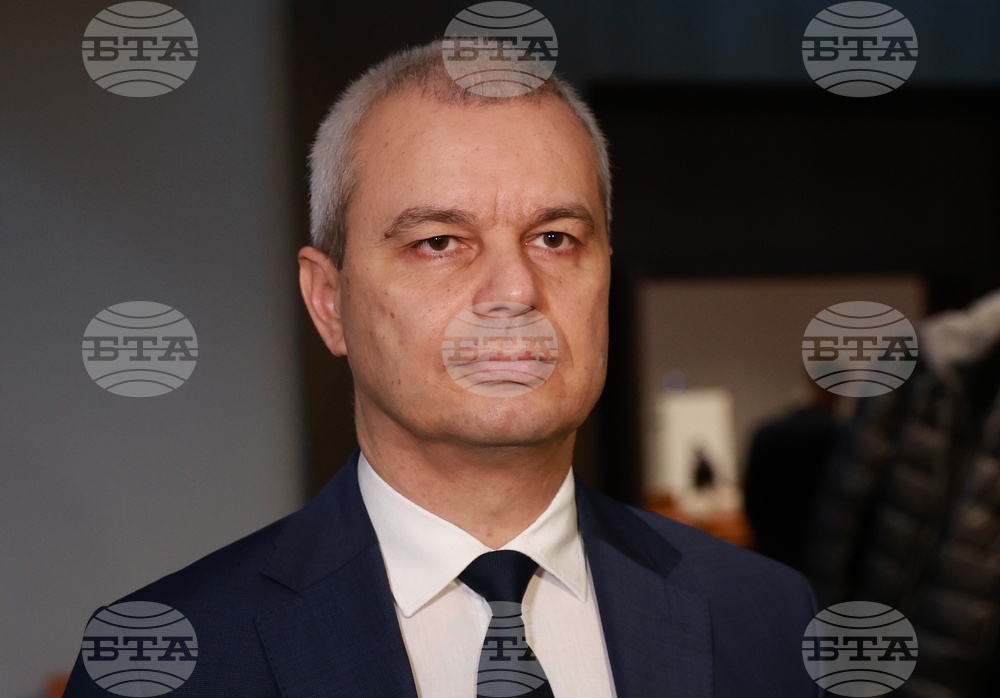
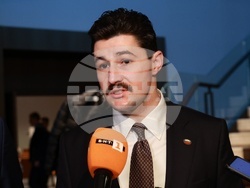
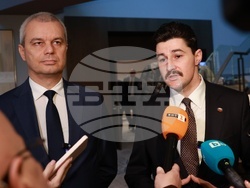
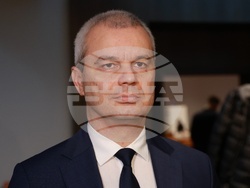
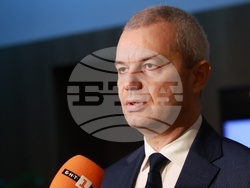
Vazrazhdane leader Kostadin Kostadinov accused the caretaker government lead by caretaker PM Andrey Gurov of preparing election manipulation and clearing the way for a future four-way arrangement involving former president Rumen Radev, Turkiye President Recep Tayyip Erdogan, Continue the Change (CC) and GERB, Kostadinov told reporters on Saturday.
He spoke at a conference on challenges facing sovereign states in Europe organized by Patriots Network and hosted by Vazrazhdane.
Kostadinov also said he was concerned about all members of the caretaker cabinet. He added that the caretaker government’s first moves were aimed at removing some people so it could replace them with its own appointees. The caretaker cabinet was creating the impression it was preparing manipulation in favour of Continue the Change-Democratic Bulgaria (CC-DB) and Radev, he said. He added that voting in Turkiye was being manipulated.
Kostadinov also commented on the resignation of Caretaker Deputy Prime Minister and Minister for Fair Elections Stoil Tzitzelkov, saying it was unprecedented for a deputy prime minister to leave after a single day and adding that he expected more such cases in the cabinet.
Kostadinov said Caretaker Prime Minister Andrey Gurov was the best option among those who agreed to take the caretaker prime minister post because, in his view, Gurov had no ties to GERB leader Boyko Borissov or MRF Chair Delyan Peevski. Kostadinov added that this was where Gurov’s advantages ended. He argued that if Gurov had a statesman’s mindset, he should have proposed ministers from the opposition who were against GERB and Movement for Rights and Freedoms (MRF) – New Beginning, or figures from civil society.
Kostadinov also accused President Iliana Iotova of lying after she said she had spoken with the authors of the proposal to cap the number of polling stations in non-EU countries at 20. He stated that Vazrazhdane authored the proposal and that she had not spoken to them.
He said Vazrazhdane had received information that Caretaker Minister of Health Michail Okoliyski had decided to dismiss the directors of neurological hospitals across the country, including the head of Pirogov. Kostadinov said that if removing Pirogov’s director would guarantee free and fair elections, “I’m all for it,” while adding that Okoliyski still needed to explain how and why this would help.
Kostadinov said Vazrazhdane were also verifying reports that resignations had been demanded from police officers working on the Petrohan case.
The caretaker cabinet led by Andrey Gurov took office on 19 February 2026 after President Iliana Iotova appointed the government and called early parliamentary elections for 19 April 2026. In his first address, Gurov said ensuring fair elections was the cabinet’s top priority and stated explicitly that the caretaker government would neither support nor oppose any political party. He also identified fiscal policy, preparations for euro adoption, and key tasks related to the Recovery and Resilience Plan as priorities.
The first 24 hours were dominated by staffing decisions and administrative signals. Outgoing Prime Minister Rosen Zhelyazkov dismissed all deputy ministers immediately before the handover, and the caretaker government then began making early appointments, including in the Prime Minister’s office and at deputy-minister level. In parallel, caretaker ministers publicly emphasized that state institutions should not be used to influence voters, implicitly acknowledging the risk of election-period pressure exerted through the administration and policy measures.
Against that backdrop, the “fair elections” came into focus. Stoil Tzitzelkov, appointed Deputy Prime Minister responsible for election integrity, faced allegations and cross-party attacks and resigned a day after the cabinet took office; Iotova then signed the decree accepting his resignation.
The dispute over overseas voting, especially in Turkiye, has been intensifying since Parliament adopted amendments on 5 February capping the number of polling stations in non-EU countries at 20, a measure that directly affects the largest non-EU voting hubs, including Turkiye. Iotova vetoed the changes and said she had discussed the issue with the amendments’ authors, a claim Vazrazhdane disputes. During the parliamentary debate, Vazrazhdane MPs explicitly cited polling-station data from Turkiye and arguments about vote concentration to portray the Turkiye vote as structurally “captured.”
/КТ/
Additional
news.modal.image.header
news.modal.image.text
news.modal.download.header
news.modal.download.text
news.modal.header
news.modal.text