site.btaNo Pressure on Government over Peace Board, Outgoing Foreign Minister Says
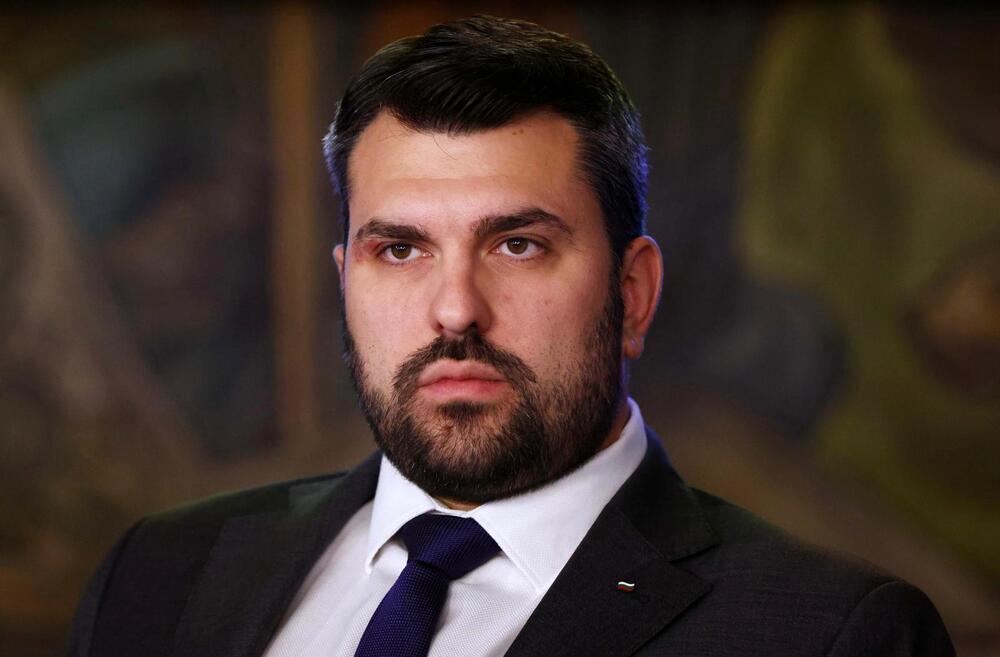
Outgoing Foreign Minister Georg Georgiev said in a television interview on Monday that no pressure had been exerted on the government over Bulgaria’s accession to the Board of Peace.
“Whatever happens, the issue is always framed as some kind of pressure. Can it not simply be accepted that the government acted according to its own logic and based on what it considers Bulgaria’s strategic interest? No one pressured it, no one forced it, no one compelled it,” Georgiev commented.
He noted that he respects all opinions on the matter and said they have their place in the debate in the National Assembly, referring to a position expressed earlier Monday by MRF-New Beginning leader Delyan Peevski.
Asked whether the government’s decision regarding the Board of Peace might be linked to internal reasons connected to the sanctions under the US Global Magnitsky Act, Georgiev said that anyone with even a basic understanding of foreign policy would know this was absolutely impossible. He stressed that the signing of a document as significant as accession to the Board of Peace could not be tied to such an issue.
Georgiev added that bilateral dialogue with the United States covers several topics, including the Lukoil derogation, the modernization of the Bulgarian Armed Forces, and work related to the Kozloduy Nuclear Power Plant. “Bulgaria’s place is fundamentally important for the alliances we are part of. Our positioning on issues of international importance also matters,” he said.
Bulgaria has always pursued a moderate foreign policy that does not allow ultimatums, Georgiev added. He said Bulgarian diplomacy is sufficiently prudent to avoid negative consequences of any kind.
Commenting on the international appearances of former President Rumen Radev, Georgiev said there are pronounced differences between them on a number of foreign policy issues. According to him, the presidential institution has at times been tempted to oscillate between populism and demagogy, attempting to turn foreign policy into domestic policy and to introduce noise into a system that requires calm.
Georgiev said Radev’s future political project would be a good opportunity to see what it means to answer uncomfortable questions, to operate in a controlled environment, and to face political reality. “So far, Radev has been an excellent political analyst. Now, however, he too will have to provide answers,” Georgiev said.
He described as a “betrayal of the slogans they promote” the position of Continue the Change–Democratic Bulgaria regarding possible cooperation with Radev in the next National Assembly, adding that their words and actions often diverge.
In response to a question about an announced protest by transport operators involving border blockades, including in Bulgaria, Georgiev said the authorities are in constant contact to monitor the dynamics of the protests. Representatives of international road freight transport associations from Serbia, Montenegro, Bosnia and Herzegovina, and the Republic of North Macedonia announced protests at border crossings with neighboring Schengen countries, including Bulgaria, on January 26.
The protest is organized in response to the limitation on the stay of professional drivers in these countries to a maximum of 90 days within six months under the new Entry/Exit System (EES) 90/180 rule, introduced in early October 2025. Transport operators argue that the new rule will severely hinder their operations.
/MY/
news.modal.header
news.modal.text