site.btaAustrian Businesses Support Bulgaria's Membership in Eurozone - Expert
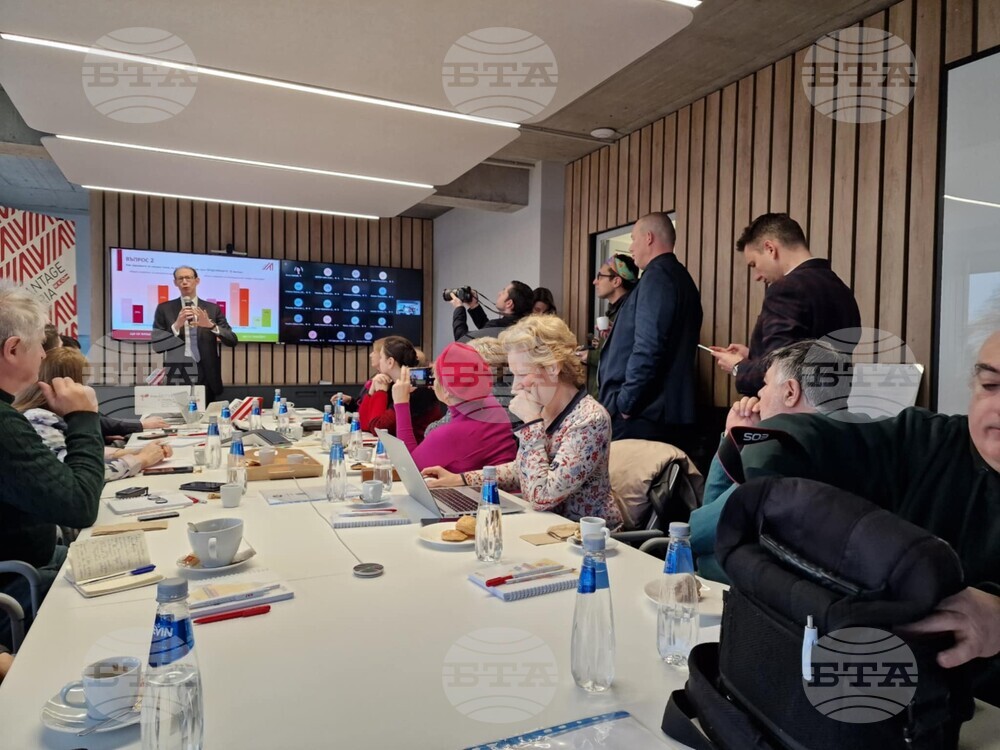
Philippe Kupfer, Commercial Counsellor at the Austrian Embassy in Bulgaria, said during a forum here on Wednesday that Austrian businesses fully support Bulgaria's membership in the eurozone, as the single currency facilitates trade, reduces administrative barriers, and sends a strong signal of stability to international investors. The event was dedicated to presenting the results of the annual survey conducted by Advantage Austria in October and November 2025 on the attitudes of Austrian long-term investors in Bulgaria.
Kupfer pointed out that the euro is an asset for international businesses, as it makes imports and exports cheaper and more predictable. Membership in the eurozone encourages the inflow of foreign direct investment, but it is not the only condition for it, as Bulgaria still faces a number of structural challenges, the expert said.
The data from 100 managers of Austrian companies operating in Bulgaria shows a more stable and optimistic assessment of the economic environment compared to 2024. The share of managers who expect an improvement in the economic climate over the next 12 months has increased to 23% compared to 13% a year earlier.
Kupfer praised Bulgaria's economy for being among the fastest growing in the EU in the last quarters of 2025 with growth of 3.4 and 3.2%. He explained the improved sentiment with signs of recovery in German and Austrian industry, as well as Bulgaria's accession to the eurozone.
The survey also reports more optimistic expectations for corporate performance. Nearly half of those surveyed or 49% expect higher turnover in 2025, and 42% expect more orders, compared to 37% a year earlier. Thirty-six percent of participants expect an increase in production capacity utilization. The majority also say they will maintain or increase their number of employees and the size of their planned investments.
Among the main advantages of Bulgaria as an investment destination, Austrian managers highlight the tax system, the quality and availability of local suppliers, access to credit and capital, and timely payments. However, labour costs are no longer perceived as a key competitive advantage. According to Kupfer, wages in the country have increased by about 66% between the third quarter of 2021 and the third quarter of 2025.
The main weaknesses of the business environment are corruption and crime, bureaucracy, poor infrastructure, labour shortages, and a lack of sufficient political stability and predictability in economic policy. According to 96% of those surveyed, the fight against corruption remains a serious problem.
The survey also examines attitudes towards the implementation of artificial intelligence, with the prevailing opinion being that AI-based products and services will develop rapidly.
EVN Bulgaria Managing Director Dominik Jarmer reported that over the past 20 years, EVN Bulgaria has invested around EUR 1.2 billion. His presentation highlighted the reduction in the average annual power outage for households in Bulgaria to less than an hour, compared to 10 and a half hours in 2005. This indicator in Bulgaria is better compared to Croatia, Romania, Serbia, and Italy.
Billa Bulgaria reported employment of 5,600 people and planned investments of over EUR 43 million for 2026, part of which will be invested in opening between 10 and 13 new stores, as well as renovating 14 existing locations.
Wienerberger reported revenues of EUR 65 million for 2024 and earnings before interest, taxes, depreciation, and amortization of EUR 18 million, as well as employment of 270 people. The company has three production bases in Bulgaria. The one in Lukovit, North Central Bulgaria, produces ceramic blocks; the one near Elin Pelin, Western Bulgaria, is for products made of concrete; and the one in Botevgrad, Western Bulgaria, is for plastic pipe systems.
Nikolay Bankov who is a plant manager for Kronospan in Veliko Tarnovo, North Central Bulgaria, reported on the imposed suspension of the particleboard production line at the plant. He said that the company's investment in the facility amounts to approximately EUR 300 million and provides direct employment to 300 people. Bankov stated that the odours produced by the plant are not hazardous to human health and are a result of drying wood. The company's revenue from this line amounted to EUR 100 million over the last 20 months.
/RY/
news.modal.header
news.modal.text