site.btaDecember 19, 1937: 88th Birth Anniversary of World Famous Jazz Musician Milcho Leviev
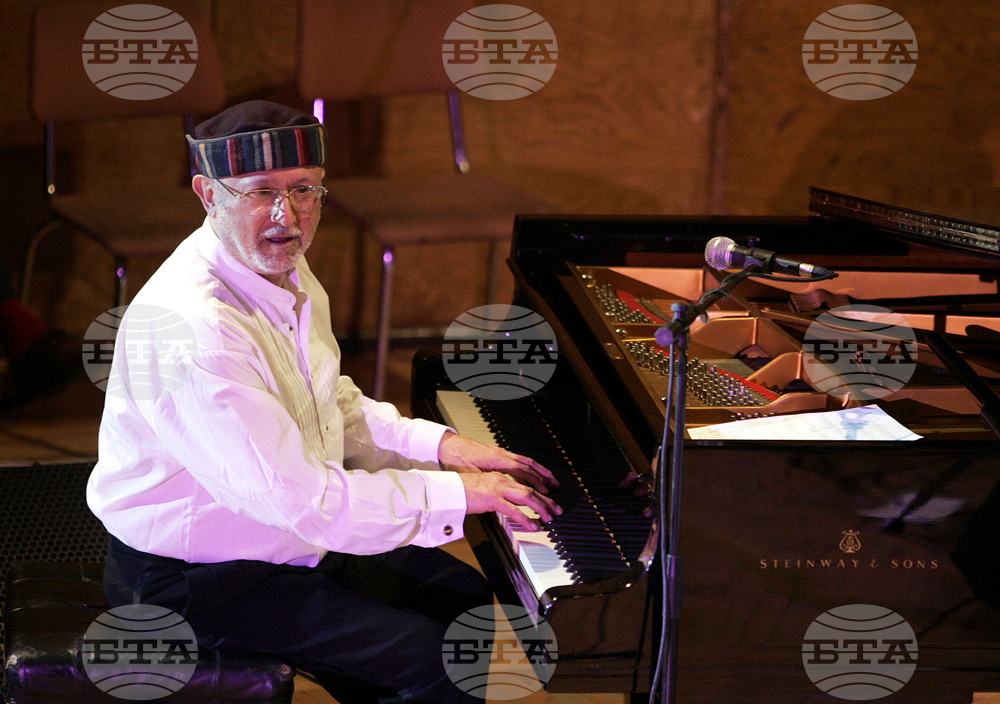
Milcho Leviev, one of Bulgaria's most influential and internationally respected jazz musicians, was born 88 years ago on Friday, on December 19, 1937.
His life and work embodied artistic freedom, imagination and integrity, leaving a lasting mark on world music. Critics describe him as "a volcanic combination of ardent love for jazz and its taste for freedom and improvisation with stern professional discipline," the BTA External Service wrote in 1997 in a report on his decoration with the highest Bulgarian honour, the Order of the Balkan Range, First Class, on the occasion of his 60th birthday.
The following digest is based on a number of English-language items by which the BTA External Service covered the musician between 1996 and 2022.
Born to a Bulgarian Jewish family in Plovdiv (South Central Bulgaria) on December 19, 1937, Leviev graduated from the State Music Conservatory in Sofia, where he studied composition under Pancho Vladigerov and Andrei Stoyanov. He entered the music scene in the early 1960s, at a time when jazz in Bulgaria was officially dismissed as "decadent art." Between 1962 and 1966 he led the Big Band of Bulgarian National Radio, and in 1965 he founded the legendary Jazz Focus '65 Quartet. With works such as Blues in 9 and Blues in 12, he boldly combined jazz improvisation with the asymmetrical metres of Bulgarian folk music, attracting international attention. In 1967, Jazz Focus '65 won the critics' and press awards at the First International Jazz Festival in Montreux, Switzerland.
Leviev's independent spirit often put him at odds with the authorities. In 1968 he was expelled from the Union of Bulgarian Composers after protesting against the undemocratic election of its leadership. Two years later he left Bulgaria, first for Germany, where he was denied political asylum, and then for the United States. BTA quoted him as saying that he emigrated "in order to have the freedom to make the music he wants." He got in touch with trumpeter Don Ellis, who sponsored his application for a political emigre status in the US. Leviev became an American citizen in 1985.
In the US, Leviev's career flourished. He worked closely with Ellis, serving for four years as pianist, arranger and composer in his big band, and collaborated with jazz greats including Billy Cobham, Art Pepper, Carmen McRae, John Klemmer, and Willie Bobo. Many American musicians, he noted with quiet pride, were introduced through him to the odd metres of Bulgarian folk music.
Settling in Los Angeles, Leviev composed major works such as Isaiah's Stone (1975) and the Orpheus rhapsody, sponsored by the National Endowment for the Arts and the American Jazz Philharmonic. His blend of symphonic thinking and jazz improvisation became a hallmark of his style.
Leviev also excelled as an educator, lecturing in jazz composition and improvisation at the University of Southern California and the GROVE School of Music. In Sofia, he conducted master classes at New Bulgarian University. Alongside performing and composing, teaching gave him yet another way to impart his belief that jazz was not merely a genre but a way of thinking. "Jazz is freedom," he said in Milan Ognyanov's documentaries Only Jazz and Milcho Leviev: Life in 33/16.
His achievements were widely recognized. "You are decorated not only for your remarkable performances but because of the fact that you remained loyal to the art at a moment when it did not appeal to the incumbents," President Peter Stoyanov told him, presenting the distinction in 1997. In 1983 Leviev won a Grammy Award nomination for best vocal arrangement for Manhattan Transfer's version of Charlie Parker's Confirmation. He later received honorary doctorates from New Bulgarian University and the Music Academy in Plovdiv. In 2008, for his 70th birthday, he received the Chain of the Order of Sts Cyril and Methodius from Bulgarian President Georgi Parvanov. In 2012, Sofia Municipality conferred on Leviev a Special Award for Lifetime Achievement and Exceptional Merit in Culture.
Despite spending decades abroad, the musician maintained a strong bond with Bulgaria, returning first in 1980 and frequently after the 1989 advent of democracy for festivals and concerts. He regarded himself as a cosmopolitan and resisted easy labels, once saying that he had "no respect for international borders." What mattered to him was sincerity. "Compromises are always needed but I have never made music I do not like," he said, quoted in a BTA story of 1999 .
Milcho Leviev died in Thessaloniki, Greece, on October 13, 2019, aged 81, leaving behind more than 80 albums, film scores, symphonic and chamber works, and generations of musicians inspired by his example. He stands as a symbol not only of Bulgarian jazz but of artistic courage and the enduring belief that music, when made with conviction, can cross any boundary.
/LG/
news.modal.header
news.modal.text