site.btaUPDATED Interior Ministry Registers 18 Attempts at Circulating Fake Euro Banknotes in a Week
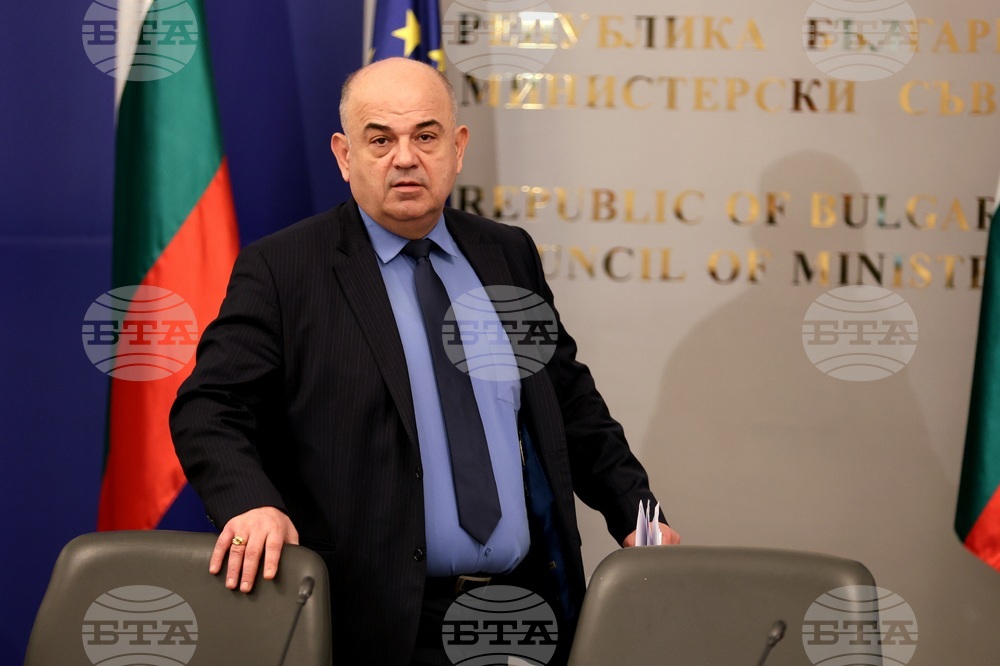
The Ministry of Interior registered 18 new cases of attempted circulation of counterfeit (including prop) euro banknotes between February 6 and 12, Vladimir Ivanov, Chair of the State Commission on Commodity Exchanges and Wholesale Markets and head of the Coordination Centre on Euro Adoption, said on Tuesday.
Ivanov presented the data at the Centre’s regular weekly briefing on Bulgaria’s euro introduction process.
Five pre-trial proceedings have been opened under the Penal Code in connection with the cases. Ten files and three crime checks have also been registered. A total of 2,080 banknotes have been seized, 2,052 in EUR 100 denomination, 17 in EUR 50, six in EUR 20, four in EUR 200, and one in EUR 10, Ivanov said.
From the beginning of the year until February 12, a total of 128 cases of attempted circulation of counterfeit, including prop, euro banknotes have been registered by the Interior Ministry.
Ivanov also reported that on February 10, officers of the Lovech Regional Directorate of the Interior Ministry discovered and seized counterfeit banknotes of various denominations with a total face value of EUR 205,000. The person in possession of the banknotes has been charged and detained by prosecutor’s order. Pre-trial proceedings have been opened under the Penal Code.
He also cited data from the Bulgarian National Bank, according to which BGN 4.8 billion in banknotes and coins remained outside the Bank’s vaults as of February 16, representing 84.5% of the lev cash previously in circulation that has already been withdrawn.
Ivanov also noted that cash circulation is fully supplied with euro banknotes and there are no longer any problems in that regard.
From January 5 to February 13, Bulgarian Posts conducted 132,943 leva-to-euro exchange transactions totaling BGN 205 million. On February 13 alone, 3,219 people were served, exchanging over BGN 5 million, including pre-ordered transactions worth BGN 2.6 million. “The demand for euro banknotes at Bulgarian Posts is already decreasing, as is the public interest in exchanging leva, which is normal given the trend we are observing,” Ivanov noted.
The Commission for Consumer Protection (CCP) carried out over 2,100 inspections from January 1 to February 12 related to the implementation of the Introduction of the Euro in the Republic of Bulgaria Act, covering physical stores and online shops. More than 151 violations were found, 95 agreements concluded, and 64 penalty orders issued. Between February 5 and 12, the CCP conducted 260 inspections of commercial outlets, identifying 17 violations, issuing 26 administrative violation reports, eight penalty orders, and concluding 14 agreements under the Law on Administrative Violations and Penalties. Ivanov added that inspections covered a wide range of outlets, including 35 self-service vending machines nationwide. Five violations of the euro introduction law were noted, mainly due to the absence of dual pricing in leva and euros. Joint inspections were also carried out with the Bulgarian Food Safety Agency (BFSA) and the National Revenue Agency (NRA).
From October 10, 2025, to February 15, 2026, the NRA carried out 8,583 inspections, detecting 509 violations of the Law on the Introduction of the Euro and 247 violations of the regulation on registering and reporting sales through fiscal devices (Ordinance H-18). A total of 613 violation reports were issued and served, and 145 penalty orders amounting to EUR 360,812 were issued, with the process of finalizing administrative and penalty proceedings ongoing.
From February 9 to 13, the BFSA conducted 596 inspections of food production facilities producing items from the basic consumer basket, retail outlets, and catering establishments. 75 orders were issued for non-compliance, including outdated technological documentation, missing finished product tests, regulatory non-conformities, and labeling issues. 15 dairy product samples, including yogurt, cheese, along with two dairy raw material samples, were taken from the retail network and sent to BFSA-accredited laboratories for testing, with results pending. Ivanov noted that laboratory tests on samples taken the previous week showed no deviations.
/RY, VE/
Additional













news.modal.image.header
news.modal.image.text
news.modal.download.header
news.modal.download.text
news.modal.header
news.modal.text