site.btaSofia Economic Forum VI Focuses on Dynamic Developments in Economy, Infrastructure, Energy in SE Europe
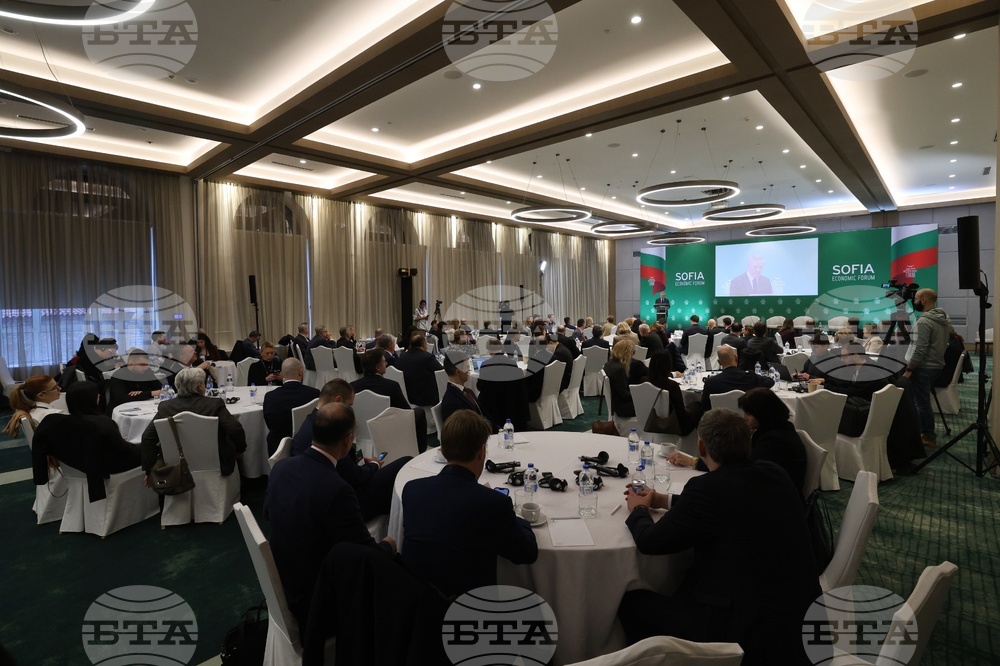
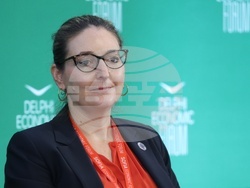
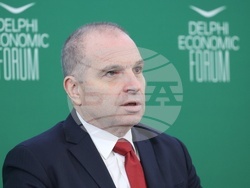
The Sofia Economic Forum VI, organized by the Delphi Economic Forum, was held here on Tuesday.
The main topics of the forum were: the impact of geopolitical changes on the economy of Southeastern Europe; Bulgaria in the eurozone; Bulgaria's strategic role in Europe's energy transition; developing infrastructure and regional integration in Southeastern Europe; attracting foreign direct investment as a driver of business and technological innovation; and tourism as a strategic pillar.
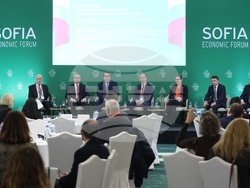
The opening panel was dedicated to geopolitical shifts and their impact on Southeastern Europe. The discussion was moderated by Vessela Tcherneva, Deputy Director of the European Council on Foreign Relations.
Former president (2012-2017) Rosen Plevneliev strongly emphasized the importance of peace and democracy, stressing that sustainable peace is possible only where rules and institutions exist. He argued that the US can no longer serve as a teacher of democracy and said the EU remains the most successful peace project in the world. He called for the protection of democratic values, human rights and the European model of quality of life, and urged greater understanding of the broader global picture in order to safeguard peace.
Former president (2017–2026) Rumen Radev said that Europe has become a hostage to its ambition for moral leadership in a world without rules, where interests are no longer hidden behind values and systems and regulations collapse before new ones are established. According to Radev, the global agenda is increasingly determined by the United States, China, and Russia, and it is evident that further conflicts and confrontations, military, economic, or technological, will continue to arise within spheres of influence. In this world, cheap energy for Europe is no longer accessible, cheap labour is not guaranteed, and cheap capital is gone, he added. Radev stressed that European leaders are beginning to realize that the strategy of achieving peace through strength vis-a-vis Russia is increasingly detached from reality and risks further destroying Ukraine, economically, energetically, and demographically, while creating even greater problems for Europe. Radev said that Bulgaria’s efforts should focus on two main directions: overcoming the negative effects and consequences of the rushed entry into the eurozone and exploiting the opportunities it brings.
French Ambassador Marie Dumoulin said the accumulation of geopolitical shocks is creating lasting uncertainty and undermining the stability of the global order. In her view, Europeans must build their policies on a solid foundation and strengthen the EU's strategic autonomy. The diplomat described Russia's war against Ukraine as the most serious geopolitical shock for the EU, also noting the effects of trade conflicts and increased US tariffs on the European economy, including their indirect impact on Bulgaria through economic ties with Germany.
Elena Poptodorova, Vice President of the Atlantic Club in Bulgaria, described the current state of international relations as a "perfect storm", shaped by wars, customs restrictions, unresolved regional issues in Southeastern Europe, disparities between EU Member States and non-member countries, and the ongoing redefinition of relations with the United States.
Plamen Tonchev, Head of the Asia Department at the Institute of International Economic Relations (IIER) in Greece, said Europe is facing a "triple shock": the return of war to the continent, changes in transatlantic relations, and China's growing economic influence. According to him, Europeans relied on three flawed assumptions: cheap Russian gas, guaranteed security from the United States, and China as a risk-free market and source of investment. "Instead of criticizing Trump's America, Europe should also look for the fault within itself," Tonchev said, challenging both the audience and fellow panelists.
The shared view of participants in a panel dedicated to Bulgaria's euro area membership was that it is a success of strategic importance for Bulgaria that opens up a wide range of opportunities.
Sandra Svaljek, Deputy Governor of the Croatian National Bank, noted that Bulgaria's smooth technical transition is proof of institutional maturity. Drawing on Croatia's three years' experience as a euro area member, she said the adoption of the euro was a major success for her country and delivered all the benefits that had been expected, including an improved credit rating, lower borrowing costs and a stronger position in the eyes of foreign investors.
Lilyana Pavlova, former Vice President of the European Investment Bank, said Bulgaria's euro area membership came at the right moment, as deeper European integration represents a form of protection in a rapidly changing world. Access to affordable financing is a solid foundation for development, provided it is used to boost productivity rather than consumption alone. "Without strong institutions and without stable, long-term political decision-making, we will not be able to fully harness all the opportunities and benefits," she said.
Iliya Lingorski, member of the Governing Council of the Bulgarian National Bank, noted that after years without an active national monetary policy due to the currency board arrangement, Bulgaria is now part of the decision-making process on monetary policy for one of the world's two largest currencies and the largest currency bloc. In his words, the private sector is the true hero of Bulgaria's path to the euro area, as institutions merely provide the framework. The country's economic development and growth under euro area membership will depend on the dynamism of the private sector.
Talking of regional integration, outgoing Deputy Prime Minister and Transport and Communications Minister Grozdan Karadjov said relations between Bulgaria and Greece in transport have never been better, with both countries working to ensure operational compatibility. He, however, highlighted the lack of rail connectivity between Sofia and Thessaloniki, and by extension Athens, and also stressed development along the Danube corridor. He noted that Bulgaria's approach to its third connectivity point with Romania was changed last year: "Instead of being a Bulgarian-Romanian project, we presented it as a European policy."
Regarding energy, outgoing Energy Minister Zhecho Stankov said Bulgaria's energy mix makes it possible to secure the best possible prices for consumers. He pointed to Bulgaria's participation in offshore oil and gas exploration in the Black Sea as a success and highlighted the project to build Units 7 and 8 at the Kozloduy Nuclear Power Plant. From an international perspective, the third key development is the Vertical Gas Corridor, supported by a number of countries between Greece and Hungary. Bulgaria was the first country to begin its actual construction.
Bulgartransgaz CEO Vladimir Malinov stressed the need to strengthen regional cooperation in the energy sector. He urged coordinated efforts that go beyond bilateral agreements. Expanding infrastructure in a single country, he noted, is ineffective if neighbouring states take no action. He also highlighted the importance of promoting public-private partnerships, particularly in the energy sector.
Former environment minister Julian Popov said that solar energy has grown steadily in recent years. Bulgaria is performing well in solar energy development and in installing storage batteries. He added that, globally, Europe lags behind in the electrification of its economy and industry.
/DD/
Additional
news.modal.image.header
news.modal.image.text
news.modal.download.header
news.modal.download.text
news.modal.header
news.modal.text