site.btaLast-Minute Introduction of New Voting Technology Poses Risks that Outweigh Benefits, Think-Tank Warns
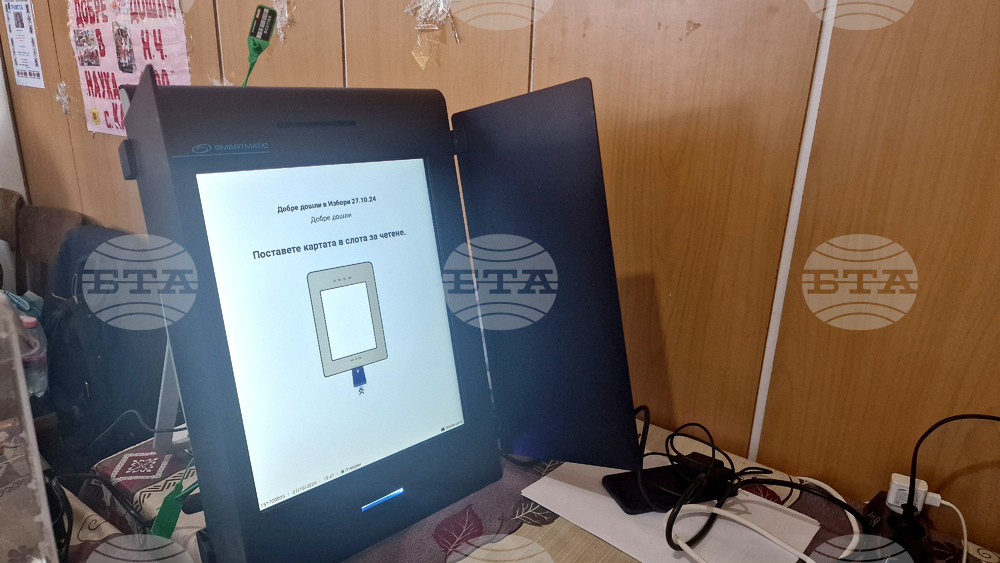
With early parliamentary elections in Bulgaria looming on the horizon, the country's National Assembly is again planning to change the way people vote. Among the proposals currently under consideration in the legislature is the introduction of an entirely new voting technology: optical devices for scanning paper ballots. This is happening weeks before election day, with no clarity about what the devices will look like, how they will function and whether the election administration and voters are prepared for such a change, the Institute for Public Environment Development (IPED) says in an analysis titled "Introduction of new voting technology before elections: international standards and the Bulgarian context." The analysis was published on the blog Open Parliament: Citizens' Voices, on Wednesday.
The analysis was published hours after the parliamentary Committee on Constitutional and Legal Affairs debated at second reading draft amendments to the Election Code during a session that lasted more than thirteen hours, starting on January 20 and finishing in the early hours of January 21. The Committee voted for the introduction of optical scanning devices immediately after the new provisions are gazetted. It supported a proposal that, in the event such scanners cannot be provided for the next parliamentary elections, the elections should be held under provisions of the Election Code in force prior to adoption of the amendments.
The IPED says in its analysis that changing the voting technology is not a technical detail. It directly affects the exercise of one of the fundamental constitutional rights, the right to vote. International standards and established democratic practice indicate that new voting technologies should not be introduced hastily, let alone immediately before elections. Such changes require time, a stable legal framework, broad public consultation, testing and serious preparation of both the administration and voters.
In Bulgaria, electoral legislation suffers from chronic instability, and frequent changes further undermine confidence in the electoral process, the Institute says. The proposed introduction of a new voting technology now carries serious risks of organizational chaos and is highly likely to generate doubts about the legitimacy of the results.
Voting technology and its political use
Over the past five years, voting technology has become one of the main themes in election campaigns in Bulgaria, used to consolidate party bases, the IPED says.
It recalls that machine voting was introduced with the expectation of reducing invalid ballots and limiting possibilities for voter pressure, vote buying and controlled voting. At the same time, some political forces expressed serious concerns about technical problems, errors in handling the devices and mistrust among part of the electorate. These opposing positions did not lead to a sustainable solution but to a series of partial and often rushed amendments to the Election Code.
In an attempt to address these divergent positions, a mixed-voting technology was introduced, allowing voters in larger polling stations to choose whether to vote by machine or with a paper ballot. At the same time, the results of machine voting are not recorded through the machine protocol; instead, the ballots printed by the machines are counted by members of the sectional election commissions in the same way as paper ballots. This approach was presented as a compromise due to the “lack of trust in the machines”. In practice, however, it led to a substantial complication of the electoral process, delays in processing results and an increased risk of errors and disputes.
Against this background, weeks before the next early parliamentary election, another major change in voting technology is being proposed. As early as the beginning of 2025, a broad range of proposals was submitted and approved at first reading in parliament – from the complete abolition of paper voting, through the retention of the mixed model, to the restoration of the possibility for machines to record results at the end of election day. Alongside these, the introduction of entirely new optical devices for scanning paper ballots was also proposed, the analysis goes.
It notes that the fact that such different and mutually exclusive ideas were simultaneously approved at first reading clearly shows the division among political parties, the lack of a common vision and the absence of a long-term strategy for reforming electoral rules. Such an inconsistent and unfounded approach again highlights the risk of decisions being taken “on the move”, under pressure from tight deadlines and due to narrow partisan considerations.
Discussions in the parliamentary Committee on Constitutional and Legal Affairs show that there is currently no clarity about what exactly is meant by "optical scanners," what devices would be used, and how they would be certified and tested. The absence of answers at this stage indicates that the introduction of a new technology within such short time limits raises questions about the readiness of institutions to ensure the normal and lawful conduct of election day, the IPED says.
Introduction of new voting technology: international standards and the Bulgarian context
The introduction of a new voting technology is one of the most significant changes that can be made to the electoral process, the Institute argues. This is why international standards do not view it as a technical issue but as a change that directly affects the right to vote, confidence in elections and the legitimacy of the results.
The most important requirement of these standards, the IPED says, is that electoral rules must be stable and predictable. Voters, parties and the election administration must know sufficiently early how voting will be conducted. When the voting method is changed immediately before elections, this creates confusion, inequality and doubts about the fairness of the process.
International practice is clear that new voting technologies must be introduced gradually. This includes adopting clear legal rules, independent certification of devices, repeated testing, phased introduction and evaluations between elections.
In the present situation in Bulgaria, there is not enough time for such an approach. Not only is there no clarity about what devices would be used, but none of the steps described above will be completed. Even if the devices arrive in the country as quickly as possible after the proposed changes enter into force, the question remains whether, in the remaining weeks before the election, it will be possible to "catch up" with the preparation for introducing the new technology, the analysis goes.
Not least is the question of the preparation of the election administration and informing voters. Sectional election commissions must be well trained, and citizens must be familiar in advance with the voting method. Otherwise, election day will be the first moment at which people encounter the new technology.
The Bulgarian experience with machine voting after 2021 clearly showed what happens when SIKs are insufficiently prepared and when the information campaign is inadequate. Repeating this scenario with a new technology carries a real risk of further compromising the electoral process.
Society must understand how the technology works, how results are verified and who is responsible in case of problems. Lack of clarity creates doubts, even when there are no actual violations.
When the risk of introducing new voting technology outweighs the benefit
According to the IPED analysis, the considerations above lead to the following conclusions: introducing a new voting technology immediately before elections contradicts international standards, does not take account of the real context in the country and overlooks the capacity of the institutions responsible for organizing the electoral process. At present the risk of errors, organizational chaos and subsequent doubts about the results is significantly greater than the potential benefits that such a change might bring.
The debate on introducing technological solutions to the electoral process is important, but it must be conducted with expert arguments, taking into account the necessary time and with broad public support, the Institute says.
/VE/
news.modal.header
news.modal.text