Regulation on EU Regional Policy Mega Fund
![Andrey Novakov: New Regulation on EU Regional Policy Mega Fund to Be Tailored to Bulgarian Environment]()
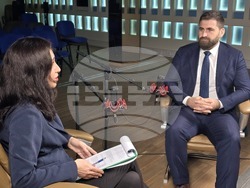
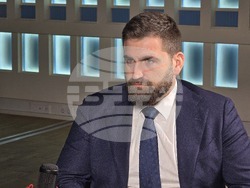
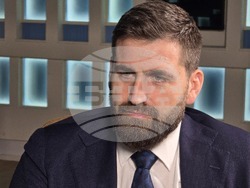
![Andrey Novakov: New Regulation on EU Regional Policy Mega Fund to Be Tailored to Bulgarian Environment]() MEP Andrey Novakov (EPP/GERB), Sofia, February 19, 2026 (BTA Photo/Krassimir Mihailov)
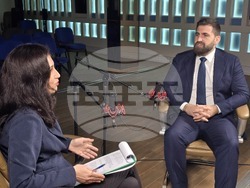
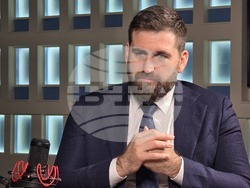
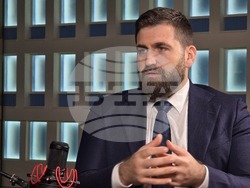
MEP Andrey Novakov (EPP/GERB), Sofia, February 19, 2026 (BTA Photo/Krassimir Mihailov)
![Подкаст - „ЕС право БГ“ - Андрей Новаков]()
![Подкаст - „ЕС право БГ“ - Андрей Новаков]()
![Подкаст - „ЕС право БГ“ - Андрей Новаков]()
![Подкаст - „ЕС право БГ“ - Андрей Новаков]()
![Подкаст - „ЕС право БГ“ - Андрей Новаков]()
![Подкаст - „ЕС право БГ“ - Андрей Новаков]()
![Подкаст - „ЕС право БГ“ - Андрей Новаков]()
![Подкаст - „ЕС право БГ“ - Андрей Новаков]()
![Подкаст - „ЕС право БГ“ - Андрей Новаков]()
![Подкаст - „ЕС право БГ“ - Андрей Новаков]()
![Подкаст - „ЕС право БГ“ - Андрей Новаков]()
![Подкаст - „ЕС право БГ“ - Андрей Новаков]()
site.btaAndrey Novakov: New Regulation on EU Regional Policy Mega Fund to Be Tailored to Bulgarian Environment

In the new EU post-2027 budget, the traditional "operational programmes" will be reduced in favour of unified, performance-based national partnership plans, which will be subject to approval by Brussels. Through them, EU funding for each Member State will be channelled, MEP Andrey Novakov (EPP/GERB) said in BTA’s podcast EU Law BG.
Novakov is one of the three European Parliament rapporteurs on the draft Regulation establishing a European Fund for economic, social and territorial cohesion, agriculture and rural, fisheries and maritime, prosperity and security for the period 2028–2034. The proposal envisages the allocation of more than EUR 780 billion after 2027 through a so-called "mega fund".
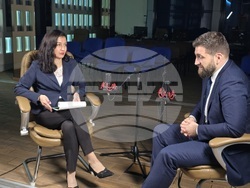
The EU Law BG podcast is an initiative supported by the European Parliament, in which the Bulgarian News Agency interviews Bulgarian MEPs on issues related to the implementation of EU legislation in Bulgaria.
Bulgaria to Have Access to at Least EUR 22 Billion
According to Novakov, under the new model Bulgaria would have access to at least EUR 22 billion. "It is our responsibility to make use of it," he said, expressing hope that the negative experience with the Recovery and Resilience Plan would not be repeated.
Novakov added that this represents the most largescale reform of EU cohesion policy in decades. The goal is to simplify the model and make EU funding more accessible.
"What I will do, as the rapporteur and author of this regulation in the European Parliament, is ensure that it is tailored to the Bulgarian context, especially for those who find it most difficult to understand how EU funding works. I have said many times that I find it troubling when people prefer to take out a bank loan and repay it with interest rather than deal with EU funding," Novakov said.
He described the reform as the most significant overhaul of EU cohesion policy in the past 40 to 50 years. The aim is to simplify the current system for managing EU funds so that EU money ultimately becomes more accessible to citizens.
"Certainly, the beginning will be difficult. There will undoubtedly be some disruptions," Novakov said. "But this is where the European Commission’s role comes in. It must be highly supportive, and we will insist on mandatory provisions for free technical assistance. Every managing authority, every ministry that encounters difficulties, should have direct contact with a Commission official who can provide guidance and support, at least during the first year or two, so that people can adapt to the new way of working."
Greater Role for the Regions
According to Novakov, the new model places strong emphasis on national governments. He said he would work to ensure greater involvement of regions in the planning and allocation of funds.
"If anyone knows best how a project should be implemented, it is the people on the ground. Every policy ultimately becomes regional because that is where it is applied, even if it concerns an international transport corridor," he said.
Among the priorities in the next Multiannual Financial Framework (MFF), Novakov highlighted rural regions. They will continue to receive funding not only for agriculture but also for infrastructure and local development. He linked this focus to the growing trend of young people across Europe choosing to live outside major cities.
He noted that the specific parameters of post-2027 funding will be subject to negotiations in the European Parliament and the Council of the EU, with greater clarity expected by the end of the year.
Air Passenger Rights
Novakov is also the rapporteur on the reform of EU air passenger rights rules, a topic he has worked on for more than a decade. In January, the European Parliament rejected at second reading a proposal by Member States to loosen the existing rules.
If the Council of the EU does not accept the Parliament’s position, a conciliation committee will be convened to reach a compromise.
Novakov pointed out that the EP’s position is backed by a broad majority of MEPs from different countries and political groups. He stated that the European Parliament will not back down from maintaining the three-hour threshold for compensation in cases of flight delays, nor from preserving the current compensation levels. Priorities also include the right to a free small cabin bag and a guarantee that accompanying persons of children under 14 or passengers with reduced mobility will be able to sit together without additional charges.
The proposal for the Regulation of the European Parliament and of the Council establishing the European Fund for economic, social and territorial cohesion, agriculture and rural, fisheries and maritime, prosperity and security for the period 2028–2034 was submitted by the European Commission on July 16, 2025, as part of the Multiannual Financial Framework for 2028–2034.
The Regulation, which aims to consolidate regional, agricultural and other funds into national and regional partnership plans within the EU’s 2028–2034 budget, falls under the joint responsibility of the EP’s Committees on Budgets (BGDG), on Agriculture and Rural Development (AGRI), and on Regional Development (REGI). The European Parliament’s rapporteurs leading the work on the proposal are Karlo Ressler (EPP, Croatia, BUDG), Andrey Novakov (EPP, Bulgaria, REGI), and Elsi Katainen (Renew Europe, Finland, AGRI).
Work on the Regulation will continue throughout 2026 and 2027. The European Parliament is preparing an interim report ahead of negotiations with Member State governments on the Commission’s proposal for the next long-term EU budget. The report is expected to be adopted during the May 25–29, 2026, plenary session.
The EU’s Multiannual Financial Framework sets the Union’s budget for a seven-year period and sets maximum amounts for expenditure for major policy areas, including agriculture and rural development, providing predictability for Member States and farmers. It is adopted jointly by the Council of the EU (unanimously) and the European Parliament (by majority), following a proposal from the European Commission, which prepares the framework and oversees financial management.
Watch the full interview with Andrey Novakov on the EU Law BG podcast channel.
/RD/
Additional



news.modal.image.header
news.modal.image.text
news.modal.download.header
news.modal.download.text
news.modal.header
news.modal.text