site.bta90% of Foreign Funding in Bulgaria Has Come from EU since 1990's - Analysis
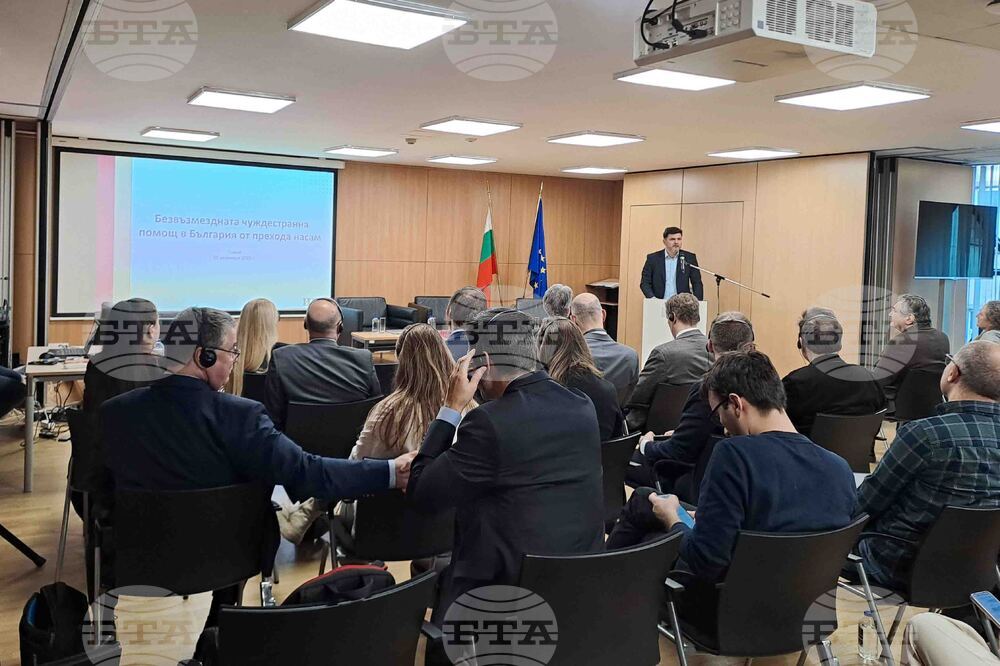
The European Union has contributed about 90% of foreign funding in Bulgaria since the communist regime was overthrown at the end of the 80's and the beginning of the 90's, according to a study on foreign aid in Bulgaria. The study, conducted by the Institute for Market Economics (IME), was presented here on Monday.
IME Chief Economist Latchezar Bogdanov reported that the analysis is based on various publicly available sources, examines foreign aid to Bulgaria without including national co-financing, and does not claim to assess the effectiveness of the use of payments.
The data shows that external support has increased since Bulgaria's accession to the EU, which is also linked to Bulgaria's economic growth. From 1989 to the end of 2024, Bulgaria has received about BGN 70 billion, according to conservative estimates. According to preliminary estimates for 2025 alone, the state has received another BGN 6 or 7 billion, Bogdanov said. Over the last decade, this has amounted to about 3% of average annual GDP. Since Bulgaria's accession to the EU, this funding has contributed to about 7% of the consolidated budget revenue.
The data also shows cyclicality in the management of EU budget funds, as there are peaks in the last year when they can be accessed. Bogdanov described this as a sign of weakness of the Bulgarian government, the administration, and municipalities in managing funds, because, in his words, it would be more logical to have a more even absorption of funds.
The largest share or more than 30% of the grant funding has gone to agriculture. Between 10% and 15% has been invested in transport infrastructure, urban and rural development, the environment, competitiveness and innovation. Nearly 10% has gone to human resources.
Bulgaria has received a total of BGN 3.8 billion from the pre-accession funds. By the end of 2024, the country had received over BGN 35 billion under operational programmes. Under the National Recovery and Resilience Plan for 2021-2026, Bulgaria can receive up to BGN 13.5 billion, but by the end of 2024, only BGN 1.9 billion had been received. After joining the EU, Bulgarian farmers have received over BGN 20 billion from the European Agricultural Guarantee Fund.
IME's analysis also looks at other sources of funding in Bulgaria, such as programmes under the European Economic Area Financial Mechanism (Norway, Iceland, Liechtenstein), with funds reaching BGN 222 million for the 2014-2021 programming period. Most resources were directed towards the poverty reduction and regional development programme and the justice programme, with over BGN 50 million for each. Support for civil society in Bulgaria was provided through programmes set up for non-governmental organizations, accounting for around 7% of the total planned budget for the 2014-2021 period.
Financial support from the US ended with Bulgaria's accession to the EU, with support from the US government amounting to just over BGN 1.2 billion from the early 1990's to 2007. The total value of private donations from various organizations in the US reached BGN 660 million, according to the analysis.
Yordanka Chobanova, Head of the EC Representation in Bulgaria, shared that she is happy that it is precisely the EU, through its solidarity, that has contributed most to Bulgaria's development since the 90's.
/RY/
Additional
news.modal.image.header
news.modal.image.text
news.modal.download.header
news.modal.download.text
news.modal.header
news.modal.text