site.btaNational Network for Children Executive Director Bogdanov: Civic Engagement Is Key to a Stronger Democracy
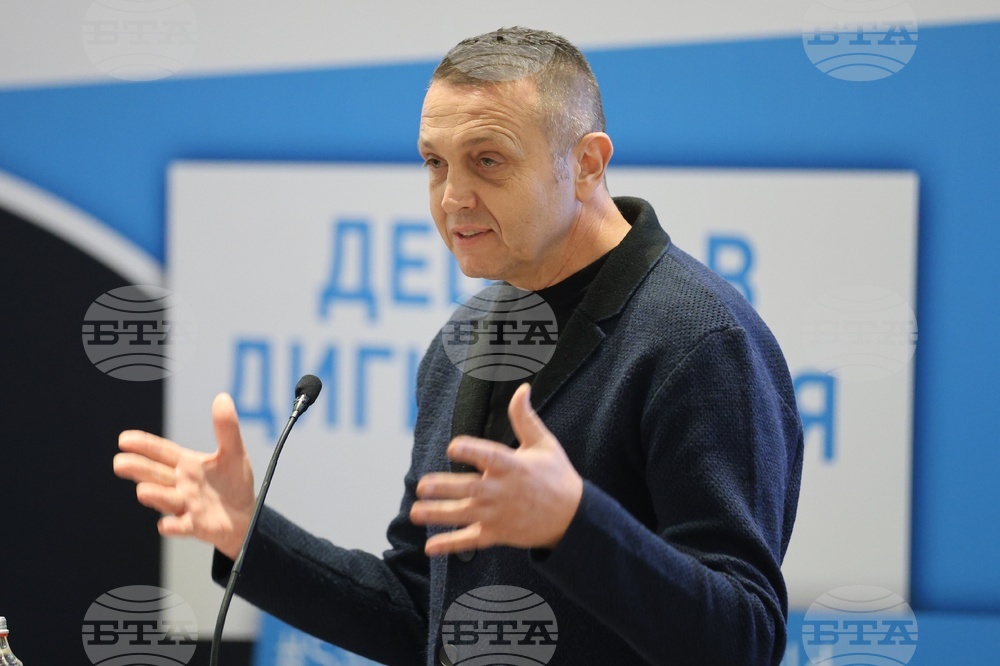
Civic engagement was key to a stronger democracy in Bulgaria, National Network for Children Executive Director Georgi Bogdanov told BTA on Saturday.
The organization coordinated the Networks in Action project, funded under the Swiss-Bulgarian Cooperation Programme’s Civic Engagement and Transparency Facility.
United by the idea of strengthening civil society and boosting citizens’ participation in decision-making, the Club of Non-Governmental Organizations (NGOs) – Targovishte, the Citizen Participation Forum, the AGORA Platform, the Union of Hunters and Anglers in Bulgaria, the Devetashko Plateau Association, the National Youth Forum, and the Swiss Democracy Foundation worked on the project.
Bogdanov visited Targovishte for the 25th anniversary of the Club of NGOs. In an interview with BTA, he outlined the objectives and planned outcomes that the partners aim to achieve under the three-year project. He stressed that citizens’ participation should not be limited to voting in elections, but should extend to all democratic processes related to local and national life.
The project planned civic forums with broad participation, during which a range of initiatives and activities would be implemented. A key priority was supporting youth civic organisations, and the principal long-term objective was to establish and consolidate sustainable civic networks that would remain active in advancing democratic processes after the project’s three-year duration.
"The importance of this initiative lies in the fact that democratic culture in Bulgaria still remains underdeveloped, both among citizens and within institutions. Despite our membership of the European Union, the country continued to have serious gaps in areas such as justice, social policy and policies for children. Citizens were often not actively included in decision-making on issues that directly affected them, whether it was resurfacing streets, building playgrounds or solving environmental problems," Bogdanov said.
In that context, the project sought to encourage people to take a more active role in local and public life. He noted that one of the main problems was inadequate civic education in schools. Children rarely learned how to organize civic initiatives, how non-governmental organizations operate, or how they could engage with them to improve their local environment.
This often fostered the widespread belief that “nothing depends on us,” which he described as the greatest obstacle to active civic engagement. “This is civic apathy, which we have sought to reduce in Bulgarian society and will continue to work to reduce,” he added.
Bogdanov said that when irregularities arise in governance or public life, citizens must have the courage to speak out and defend their interests. He cited recent months’ protests as proof that this is possible, adding that they clearly show young people are not apathetic.
On the contrary, he added, many of them expressed deep concern for the country’s future. The key challenge, however, was to harness that energy sustainably and constructively by encouraging active engagement in political and public life, he said.
Bogdanov also said that although the path to genuine democracy was difficult and it often seemed the country was headed in the wrong direction, citizens’ participation remained decisive.
“Passivity allowed negative developments to take hold, whereas an active civil society could drive positive change. That is why it was important for people not to accept the status quo, but to take responsibility for the decisions and processes within their control,” he said.
In December 2025, 21 representatives of the Networks in Action consortium, including three members of the Club of NGOs – Targovishte team, learned about tools for promoting civic engagement in Switzerland.
/КТ/

news.modal.header
news.modal.text