site.btaRomanian Government Approves Administrative Staff Cuts and Economic Recovery Package
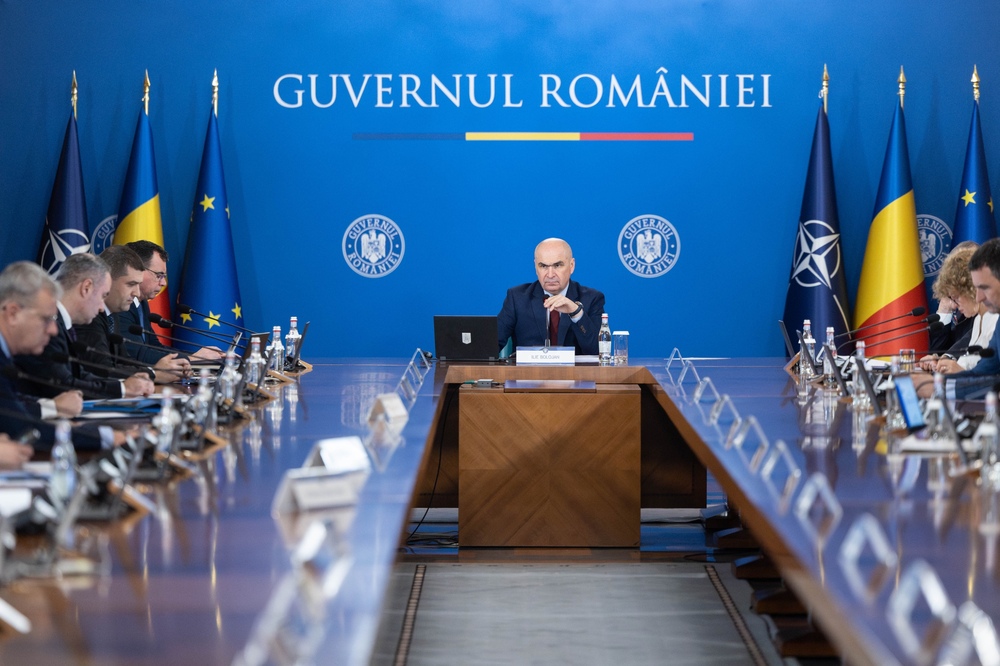
The Romanian Government approved administrative staff cuts and an economic recovery package, following nearly eight months of delay, the Government announced at a press conference on Tuesday evening, broadcast live online.
Romanian Prime Minister Ilie Bolojan said that the measures will lead to an improvement in the quality of public administration in Romania. It will provide better services to the population and will be more efficient, he added.
The reform provides for staff and spending cuts in ministries and municipalities. It will affect 45,700 positions, but the actual layoffs will target approximately 20,000 employees, local media reported. As part of the package, the Government also approved economic recovery measures worth EUR 5 billion for the next six years. The eligibility criteria for the aid schemes will be developed over the next 90 days and discussed with Romanian entrepreneurs.
Finance Minister Alexandru Nazare said that through the economic recovery package the Government is identifying the strategic areas Romania would need in the future, first and foremost to be able to attract major strategic investments. He added that in recent years the country had lost many large-scale investments because it lacked the financial capacity to offer strategic investors the necessary conditions to come to Romania.
The reform of the local administration is part of a third package of austerity measures aimed at reducing the excessive budget deficit the country has struggled with for several years. Romania's budget deficit reached 9.3% of GDP at the end of 2024, the highest level in the European Union (EU). The country risked having its access to EU funding frozen, including funds from the National Recovery and Resilience Plan, unless it convinced the European Commission that it was making sufficient efforts to reduce the deficit toward the 3% threshold set by the Maastricht criteria.
To avoid this scenario, as well as the risk of a downgrade in the country’s credit rating, Prime Minister Bolojan announced a series of austerity measures in July 2025. The Government has already approved two austerity packages, which include a freeze on pensions and salaries, increases in VAT, excise duties, taxes and fees, as well as reforms related to special pensions and state-owned enterprises to curb public spending.
In November, the European Commission agreed not to block Romania’s access to EU funds and accepted a target deficit of 8.4% of GDP by the end of 2025.
The austerity measures sparked protests by employees across various sectors. On September 8, the new school year began with a boycott in a number of schools, as thousands of teachers took to the streets. Their discontent was driven by longer mandatory teaching hours, larger class sizes, school mergers, reduced hourly pay, and other measures. On October 29, thousands of people joined a major rally in front of the government building, organized by the country’s four largest trade union confederations.
/RY/
news.modal.header
news.modal.text