site.btaBulgaria Is Approaching Completion of Key Stages in Construction of Vertical Gas Corridor on Its Territory
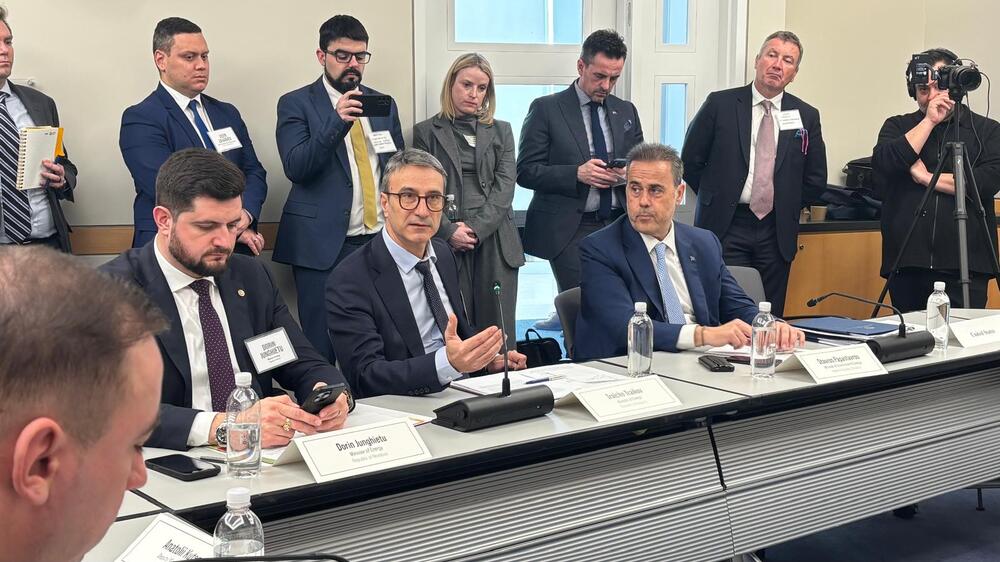
Bulgaria is approaching the completion of key stages in the construction of the Vertical Gas Corridor on its territory. By the end of 2026, two projects under the initiative - which links gas infrastructure from south to north and enables the transmission of liquefied natural gas (LNG), including from the United States, from Greece to Ukraine and other Central and Eastern European countries - are expected to become operational, caretaker Energy Minister Traicho Traikov said during a ministerial meeting in Washington focused on regional gas security and diversification, according to the Energy Ministry's press centre.
Bulgaria is the first country to start actual construction on the Vertical Gas Corridor, positioning itself as a key driver of regional energy security, Traikov said.
Projects aimed at increasing capacity at critical interconnection points - Kulata/Sidirokastro (Greece–Bulgaria) and Negru Voda/Kardam (Bulgaria–Romania) -are currently underway. The Vertical Gas Corridor acts as a “motorway” from south to north, capable of transporting up to 10 billion cubic meters of LNG annually to Ukraine and the wider region via the Negru Voda 1/Kardam interconnection point.
This country has applied for partial grant funding under the European Union’s Modernisation Fund, which, if approved, will help create a competitive tariff structure benefiting both Bulgarian and regional gas network users, the Energy Ministry said.
Next year, interconnection points at Stara Zagora and Komotini (Greece) are expected to be put into operation with increased capacity. Beyond their strategic role in diversifying energy sources, these projects will give natural gas traders greater flexibility in managing supplies and accessing new markets.
“Efforts to diversify the region’s energy supply began in earnest about 17 years ago, immediately after the interruption of Russian gas supplies in 2009. At that time, Sofia, which relies on natural gas heating, literally began to cool down,” Traikov recalled. He noted that the crisis prompted a decisive shift in European policy and led to active European Commission support for interconnectors between Bulgaria and Greece, Romania, and Serbia. “The most important of these is the one with Greece, as it laid the foundation for the Southern Gas Corridor and for everything we are doing today,” the caretaker minister added.
Traikov acknowledged that some past opportunities, such as the failed Nabucco project, were missed, but he said diversification efforts have proven effective. “When the much larger crisis hit in February 2022 and Gazprom demanded payment in rubles, we were ready. We politely refused because it would have violated our contract—and nothing happened. At the same time, Bulgaria received two tankers of American LNG, a clear demonstration that diversification works,” he said.
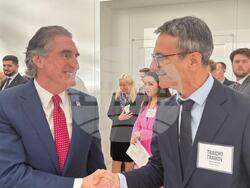
During the Transatlantic Summit in Washington, Traikov signed a declaration supporting negotiations by Bulgargaz for the import of American LNG. The document was signed in the presence of Doug Burgum, Secretary the US Department of the Interior and Chairman of the National Energy Dominance Council, and Chris Wright, Secretary for the US Department of Energy.
Traikov said that this step aligns with Bulgaria’s and the EU’s commitment to phase out Russian gas, including a legally binding ban on Russian LNG and pipeline gas, with full cessation planned by the end of 2026 and autumn 2027, respectively. “Following the phasing out of Russian gas, including LNG, starting next year, much of the gas supply that currently enters ‘through the back door’ will likely become impossible. The Vertical Gas Corridor is therefore not just an infrastructure project - it is a vital tool for regional energy security and real supply diversification,” he noted.
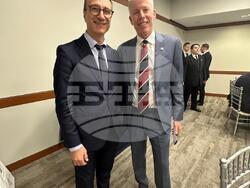
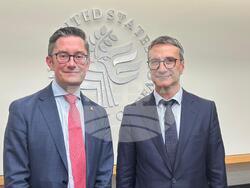
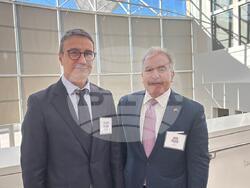
During his visit, Traikov met with Thomas Summers, Senior Vice President of Shell LNG Marketing & Trading, to discuss long-term LNG supply cooperation and the progress of natural gas exploration in the Black Sea. Talks were also held with energy ministers from Romania, Greece, Serbia, Hungary, and Slovakia, as well as Secretary for the US Department of Energy Chris Wright, Deputy Secretary of State Michael Rigas and Under Secretary of State Jacob Helberg, Cheniere President Jack Fusco, Chevron President Freeman Shaheen, and Joshua Volz, special envoy for global energy integration at the US Department of Energy.
During Traikov’s participation in the Transatlantic Summit on Gas Supply Security on February 24–25, it became clear that Bulgaria has the potential to become a leading regional gas distribution and transit hub, connecting Southeast, Eastern, and Central European markets.
/DD/
Additional
news.modal.image.header
news.modal.image.text
news.modal.download.header
news.modal.download.text
news.modal.header
news.modal.text