site.btaCash and Non-Cash Payments after January 1: What You Need to Know
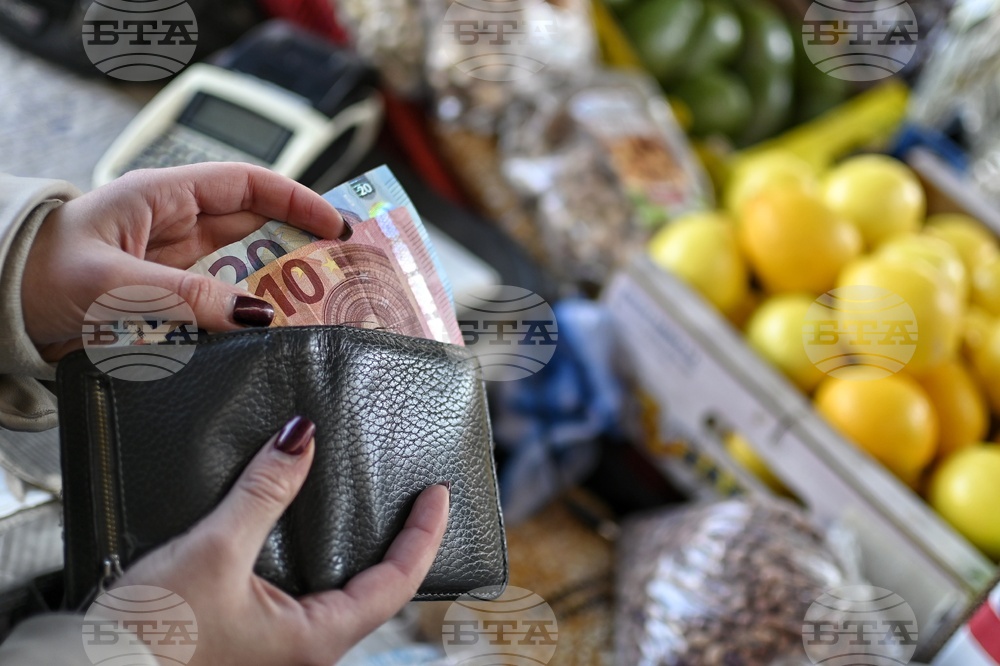
Given the increased interest in the processes related to Bulgaria’s official adoption of the euro, BTA is republishing material originally published on December 23, 2025.
From the beginning of next year, Bulgaria will officially adopt the euro, with a short transition period lasting throughout January. During the first month of 2026, this country will have two legal means of payment – the euro and the lev. During this period of dual circulation, all cashless payments, such as card payments, bank transfers, and others, will be carried out in euros, while cash payments will allow the use of both currencies.
Under the Act on the Introduction of the Euro in the Republic of Bulgaria, citizens will be able to pay in cash at retail outlets using either leva or euros, while merchants will be obliged to give change entirely in only one of the two currencies.
Although the law does not prohibit mixed payments, i.e. using both leva and euros within a single transaction, merchants are free to decide whether to accept such payments. Merchants must place a clearly visible notice in their premises stating whether, during the period of dual circulation, they accept mixed payments in leva and euros.
When it comes to giving change in cash, the rules are much more specific - businesses must give change either entirely in euros or entirely in leva. Giving change in leva is permitted when the merchant does not have sufficient euro cash on hand at that moment.
For example, if a customer purchases a product priced at 5 euros but pays with a 10-euro banknote, the merchant is obliged to give 5 euros in change. If the merchant does not have sufficient cash to give the full change in euros, the change must be given entirely in leva. In this example, that would mean change amounting to 9.78 leva, calculated using the official exchange rate and the standard mathematical rounding rule. The law does not allow mixed change in leva and euros.
The same rule applies if the customer pays in leva. For instance, if a customer pays for goods worth 5 euros (9.78 leva) with a 50-lev banknote (25.56 euros), the merchant must give change entirely in euros, amounting to 20.56 euros. If the merchant lacks sufficient euro cash, the change must be given entirely in leva, amounting to 40.22 leva.
Consumers should note that during the period of dual circulation, when paying in cash, a merchant may refuse to accept more than 50 Bulgarian-lev coins, including stotinki, in a single transaction.
Regarding returns of goods or services, when the consumer has the right to cancel the contract and receive a refund, during the period of dual circulation the merchant must refund the paid amount entirely in euros. If the merchant does not have sufficient euro cash on hand, the refund must be made entirely in leva.
The law also requires merchants, upon the consumer’s request, to provide verbal information on the monetary value of the change or the refunded amount in leva.
Cash payments are limited to euros only when transactions are carried out via machines, devices, and self-service systems, including those without an electricity supply, according to the law. In other words, vending machines will operate only with euros from January 1, 2026.
After the end of the dual circulation period, from February 1, 2026, the lev will cease to be legal tender. From the beginning of February next year, the euro will remain Bulgaria’s sole official currency.
Citizens will be able to continue exchanging leva until the end of 2026 at commercial banks and at Bulgarian Posts outlets, as well as without time limit at the Bulgarian National Bank (BNB).
The BNB will exchange banknotes and coins from leva into euros free of charge, in unlimited amounts and without any time limit, at the official exchange rate. After six months from the date of the euro’s introduction, credit institutions may introduce a fee for the service of exchanging cash banknotes and coins from leva into euros, as well as for cash deposits and the related conversion of lev banknotes and coins into euros in accounts. After June 30, 2026, Bulgarian Posts may also introduce a fee for exchanging cash banknotes and coins from leva into euros.
Until December 31, 2026, credit institutions may not refuse to carry out exchanges or to accept funds for deposit (and the related conversion) into a client’s account in euros. Bulgarian Posts may not refuse to carry out exchanges, except in cases of insufficient cash availability. After this date, credit institutions and Bulgarian Posts EAD may discontinue the service of exchanging cash banknotes and coins from leva into euros.
/КТ/
news.modal.header
news.modal.text