The World Ahead 2026 Sofia Gala Dinner
![Bank of Greece Governor Highlights Adherence to Prudent Fiscal Policy, Strict Bank Supervision as Key Conditions for Economic Success]()
![Bank of Greece Governor Highlights Adherence to Prudent Fiscal Policy, Strict Bank Supervision as Key Conditions for Economic Success]() Bank of Greece Governor Yannis Stournaras at The World Ahead 2026 Sofia Gala Dinner, Sofia, February 12, 2025 (BTA Photo/Blagoy Kirilov)
Bank of Greece Governor Yannis Stournaras at The World Ahead 2026 Sofia Gala Dinner, Sofia, February 12, 2025 (BTA Photo/Blagoy Kirilov)
site.btaBank of Greece Governor Highlights Adherence to Prudent Fiscal Policy, Strict Bank Supervision as Key Conditions for Economic Success
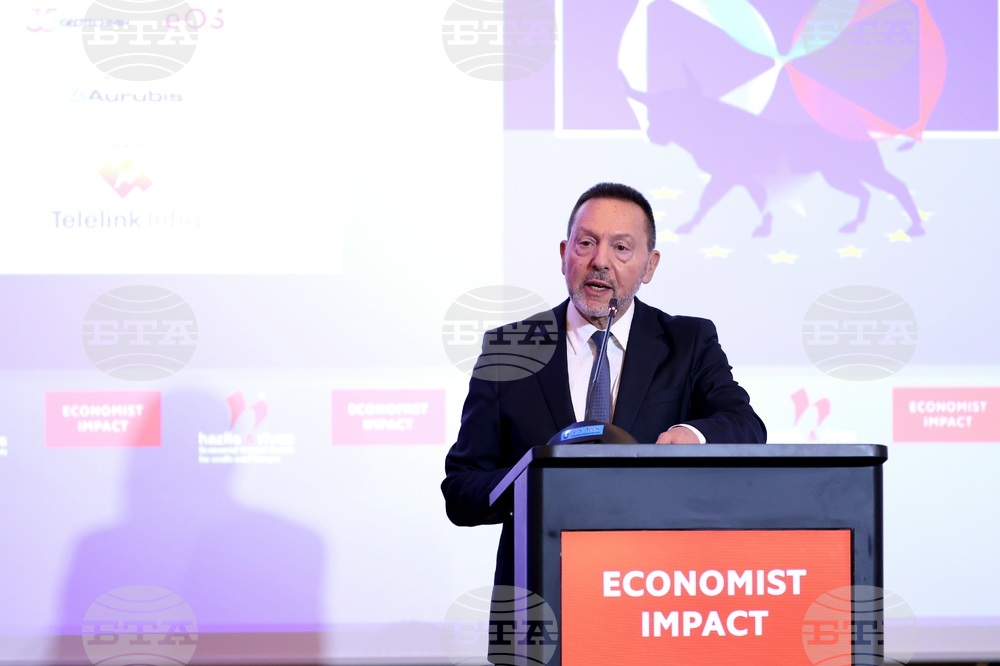
Bulgaria will benefit from the advantages of its membership in the euro area, but key conditions for success are adherence to prudent fiscal policy and strict banking supervision, Bank of Greece Governor Yannis Stournaras said on Thursday at a conference segment of The World Ahead 2026 Sofia Gala Dinner, organized by The Economist in Sofia.
Stournaras welcomed Bulgaria to the euro area and described the adoption of the single currency as a historic moment for the country and a step in the right direction in the integration process, one that will also strengthen the European family.
Joining the euro area will enable Bulgaria to fully reap the benefits of membership in the monetary union, the governor said. According to him, the introduction of the euro in Greece in 2001 brought significant benefits to the country - it eliminated currency risk, reduced transaction costs and facilitated trade, tourism and investment. Membership increased confidence and helped improve inflation expectations, he added.
Stournaras predicted that Bulgaria would experience the same positive effects.
He also pointed out that Greece’s membership in the euro area was associated with many policy mistakes and weaknesses. The Bank of Greece Governor briefly outlined the country’s path in the euro area - from economic prosperity, through the sovereign debt and banking crisis resulting from the emergence of large twin deficits - both current account and fiscal - combined with structural problems, a credit boom, widespread tax evasion, an inefficient social system and other imbalances, to the period of stabilization and recovery.
Adherence to prudent fiscal policy and strengthened banking supervision were a central focus of Stournaras’s remarks. He also recommended careful monitoring of income developments in the economy, pricing dynamics and the presence of strong institutions.
Official guests at the forum included Bulgarian President Iliana Iotova; Bulgarian National Bank Governor Dimitar Radev; ECB Chief Economist Philip Lane; International Monetary Fund (IMF) Regional Representative for Central, Eastern and Southeastern Europe Carlos Mulas Granados, and leading business figures.
/RY/
news.modal.header
news.modal.text