Wrap up
![Euro Changeover Runs Smoothly as Inspections Intensify and Payments Surge]()
![Euro Changeover Runs Smoothly as Inspections Intensify and Payments Surge]() Illustrative photo of a payment in euro, Sofia, January 2, 2026 (BTA Photo/Blagoy Kirilov)
Illustrative photo of a payment in euro, Sofia, January 2, 2026 (BTA Photo/Blagoy Kirilov)
site.btaEuro Changeover Runs Smoothly as Inspections Intensify and Payments Surge
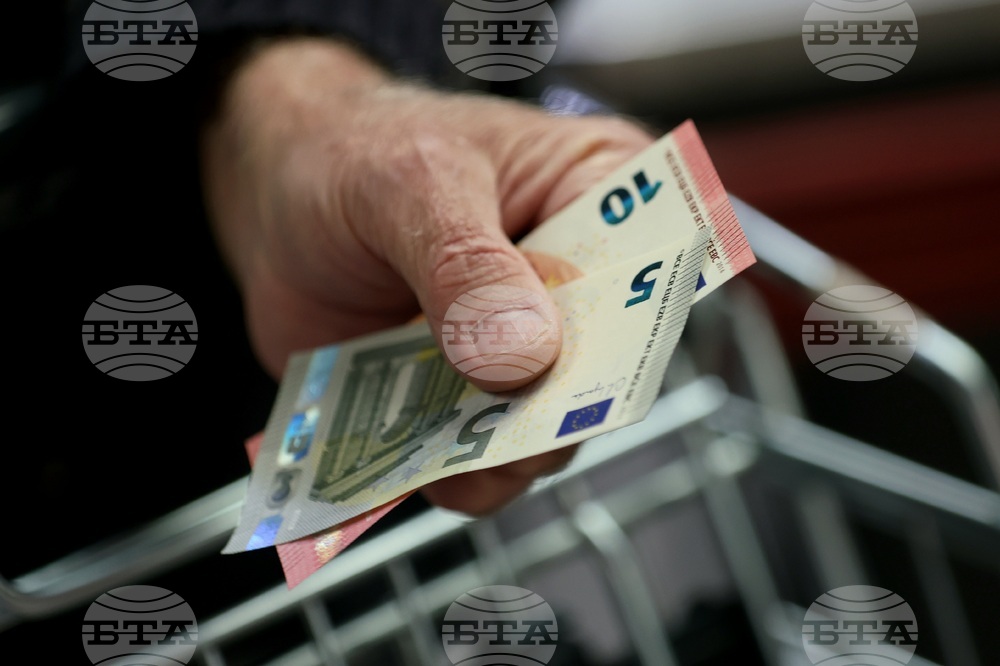
On Saturday and Sunday, in the first days after the euro changeover, banking, payments, retail and public services operated largely smoothly, alongside intensified market oversight and a push for clearer public information.
The head of the Coordination Centre on the Euro Adoption, Vladimir Ivanov, said inspectors have found no breaches in more than 90% of checks carried out since January 1. He said the relevant institutions have received more than 1,500 calls from citizens, adding that the market is functioning normally but that uncertainty will persist for some time, making financial literacy and clear, timely information essential. Inspections are being carried out daily in more than 35 towns and cities, with attention increasingly shifting to services such as hairdressers, car parks, garages, and construction, where “rounding up” is more likely. In food retail, Ivanov said major chains are generally recalculating prices in consumers’ favour, seeking to protect their reputations. He described the banking transition as having gone “almost perfectly”, praising the sector’s performance and noting that any disruptions, where they occur, are minor and technical.
Enforcement activity continued on the ground, including joint inspections by the National Revenue Agency and the Consumer Protection Commission in Plovdiv. Inspectors revisited a grocery store previously found to have excessive price increases on several goods, with a first-offence penalty ranging from the euro equivalent of BGN 5,000 to BGN 100,000. The consumer authority said that since the start of the year most reports have concerned practical issues around payment and change rather than excessive price increases, while noting ongoing sanctions for non-compliance with dual pricing and other labelling requirements. The revenue agency said that when prices rise, traders must provide supporting documents within seven days, with inspectors tracing the supply chain to identify where a violation may have originated and imposing sanctions if increases are economically unjustified.
Payment and card infrastructure showed strong volumes immediately after the switch. Payment service provider Borica reported more than 933,000 POS and ATM transactions worth almost EUR 42 million in the first 48 hours (January 1-2). Cashless payments accounted for more than 86% of transactions by number, while ATM withdrawals and deposits accounted for more than half of the total value. Over the period, the system processed the equivalent of more than five transactions per second, a performance described as the first major stress test of euro transactions.
From the banking-system perspective, Bulgarian National Bank Governing Council member Iliya Lingorski said the switch went smoothly, with payment systems and POS terminals operating steadily after extensive testing with commercial banks. He pointed to significant cash dynamics ahead of the changeover, including large volumes of banknotes withdrawn from circulation in December and in the final business days of 2025. Lingorski described the sector as highly capitalised and liquid, suggesting no abrupt changes in retail deposit and lending rates, and noted that liquidity increased sharply as reserve requirements were reduced from 12% to 1%, alongside access to the European Central Bank and Eurosystem balance sheet.
Retailers, for their part, reported stable operations in the first days. The Association for Modern Trade said major chains planned the transition well, stocked starter packs of euro cash, and avoided speculative rounding, with only isolated issues such as temporary shortages of euro coins in some smaller shops. The association also noted that many consumers initially continued to spend lev cash still on hand, with expectations that most remaining lev banknotes in circulation would be used within a few weeks. On prices, the association argued that increases in some categories are being driven mainly by external factors rather than the currency changeover, while suggesting that some goods could ease in price if international market trends remain favourable.
Key public payment systems also reported continuity. The National Toll Administration said there have been no disruptions in road tolling since January 1, including the issuance of vignettes and route cards and related cash payments at border crossing points. The administration said a one-day vignette will be available from February 3 at EUR 4.06. It also reiterated that toll fees are set to rise from March 1 with the introduction of an additional carbon emissions component, lifting charges by an average of about 30% and applying the largest increases to the most polluting classes, while Euro 6 vehicles and newer models benefit from discounts and electric vehicles are exempt. The stated objective is to accelerate fleet renewal and support a sustained annual reduction in carbon emissions on the path toward a more than 15% cut by 2030.
Authorities say the message for the weeks ahead is straightforward: the technical transition is holding, but oversight will remain intensive, with particular focus on services, price transparency, and accurate information as the market and consumers complete the practical shift to the new currency.
/КТ/
news.modal.header
news.modal.text