Wrap-up
![Bulgaria's Score in Latest Corruption Perceptions Index Worst since 2012, Politicians React]()
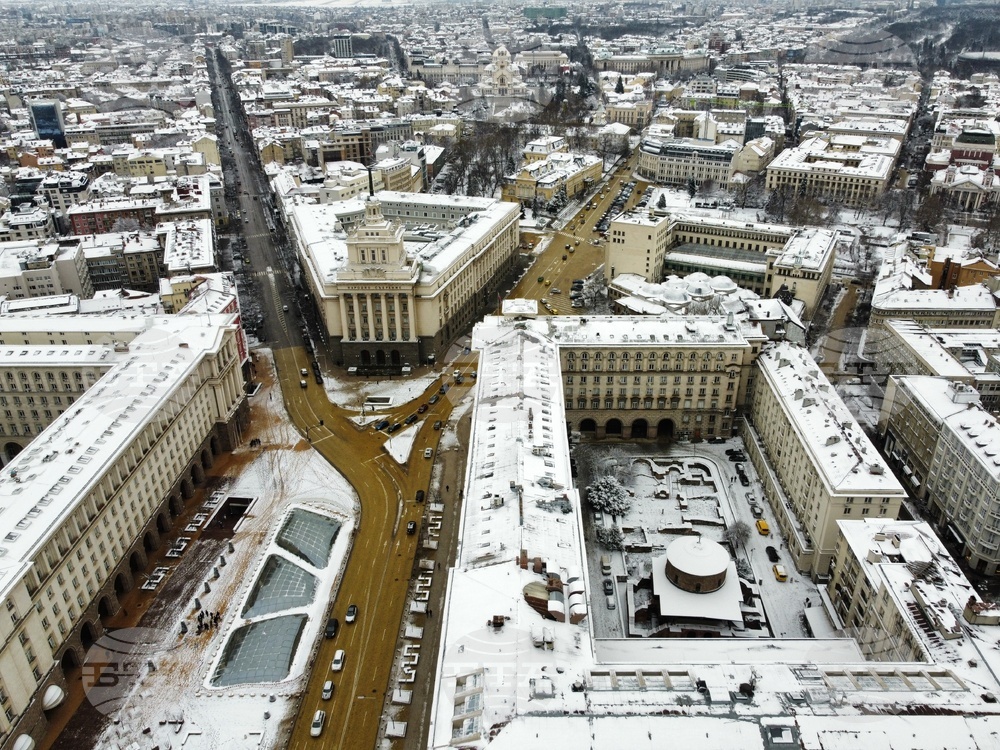
![Bulgaria's Score in Latest Corruption Perceptions Index Worst since 2012, Politicians React]() A bird’s-eye view of the Council of Ministers, Parliament, and President's Administration buildings in downtown Sofia (BTA Photo/Vladimir Shokov)
A bird’s-eye view of the Council of Ministers, Parliament, and President's Administration buildings in downtown Sofia (BTA Photo/Vladimir Shokov)
site.btaBulgaria's Score in Latest Corruption Perceptions Index Worst since 2012, Politicians React
Bulgaria has recorded a record-low score in the Corruption Perceptions Index 2025, falling to 40 out of a possible 100 points this year. The country ranks 84th out of 182 countries and territories, marking its worst result since 2012, according to the annual index published on the website of Transparency International.
The report states that over the past two years alone, Bulgaria’s score has deteriorated by five points - a statistically significant change that demonstrates the impact of the lack of decisive action against kleptocratic networks, years of superficial anti-corruption efforts, growing attacks on civil society, and the repercussions of the first partially annulled elections in the country’s modern democratic history. The closure of the Anti-Corruption Commission and delays in appointing leadership to key regulatory bodies have further exacerbated problems related to governance and accountability.
Within the European Union, progress in the fight against corruption remains stalled, with the regional average score standing at 62 points. Bulgaria once again ranks last among EU Member States, alongside Hungary. The lack of progress on key reforms, failure to implement international recommendations, and ineffective enforcement of anti-corruption legislation place the country in an unfavorable position both within the EU and in its accession process to the Organisation for Economic Co-operation and Development (OECD).
According to the Corruption Perceptions Index 2024, global levels of corruption in Bulgaria were alarmingly high, and efforts to curb it were unsuccessful.
The Corruption Perceptions Index has been published annually since 1995 and scores 182 countries and territories based on perceptions of public sector corruption. It draws on data from 13 external sources, including the World Bank, World Economic Forum, private risk and consulting companies, think tanks and others. The scores reflect the views of experts and businesspeople.
Reacting to the news on Tuesday, Continue the Change leader Assen Vassilev said Bulgaria's low score was no surprise. "Last year we saw the major protests [of December 2025] over the draft state budget and the government's intention to spend citizens' money in an absolutely outrageous manner." He recalled that the budget proposal included BGN 9 billion, which were not earmarked to cover the deficit, but were channelled to the Bulgarian Development Bank, the Bulgarian Energy Holding and other State-owned enterprises.
BSP - United Left MP Nataliya Kiselova said that Bulgaria's record-low score is the result of unfinished work from previous years. "We are trying to do something good, but at the same time we are making things worse," noted the former chair of the National Assembly. She argued that the problem is not limited to the state of the judicial system and the expired terms in office of the Supreme Judicial Council (SJC) and the Inspectorate to the SJC , but also includes the activities of law enforcement agencies and the work of the Anti-Corruption Commission (ACC). According to Kiselova, there is no consensus in society on how the fight against corruption should be conducted – through administrative or criminal law means.
Dobri Mitrev, Chair of the Management Board of the Bulgarian Industrial Association and rotating chair of the Association of Bulgarian Employers' Organisations, commented that the low score "clearly signals a systemic problem that can no longer be attributed to temporary political crises or external factors." For businesses, this means greater uncertainty, higher transaction costs and less predictability in the regulatory environment, he noted. According to him, such results would hinder Bulgaria's progress towards joining the OECD since the fight against corruption and adherence to the rule of law are among the key criteria for OECD membership.
/DS/
news.modal.header
news.modal.text