site.btaBulgaria Has Everything to Start Creating AI models for Businesses - MEP Eva Maydell
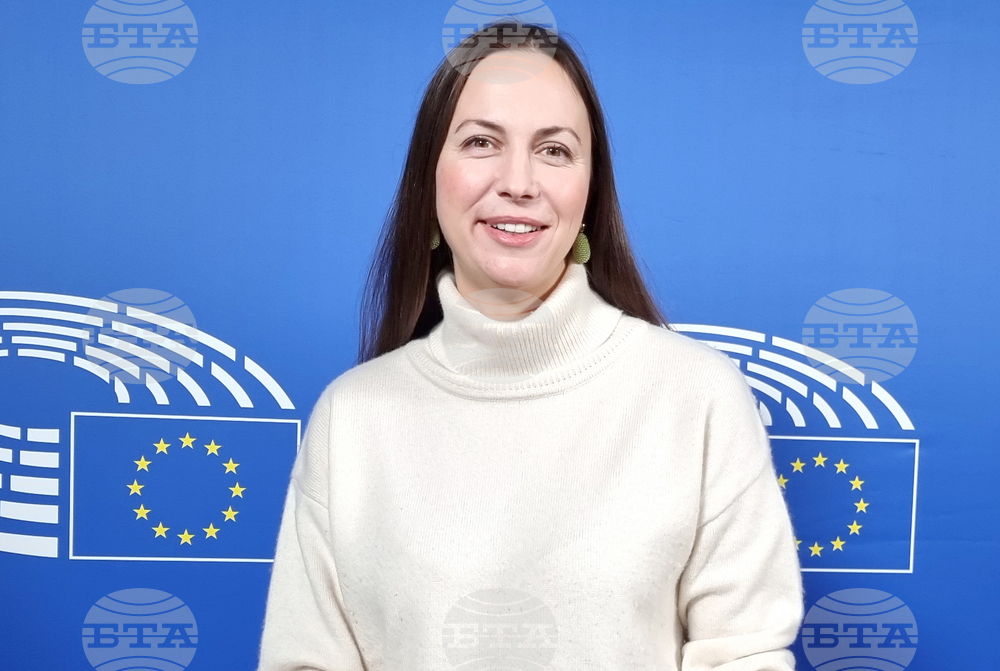
Bulgaria has everything necessary to begin creating artificial intelligence (AI) models for individual businesses to improve efficiency, Eva Maydell, a Member of the European Parliament from the European People’s Party and co-rapporteur on the AI Act, told BTA in an interview.
The interview took place as part of an initiative supported by the European Parliament related to the implementation of European legislation in Bulgaria.
The interview focused on the EU Artificial Intelligence Act (Regulation (EU) 2024/1689 establishing harmonized rules on artificial intelligence), which was approved by the European Parliament in March last year. Its aim is to ensure safety and respect for fundamental rights while fostering innovation. After final review and approval by the European Council, the text officially entered into force on 1 August this year.
According to Maydell, opportunities for Bulgarian companies, start-ups, and research institutions are significant in using the law as a chance for growth and innovation.
“It is important to note that if you develop artificial intelligence in lower-risk categories, the requirements are much lower,” she said. “This means that any company wishing to make its processes or production more efficient with the help of AI can do so without being subject to very strict regulations,” the MEP added.
She also provided further explanation about the so-called AI factories being established across the EU.
According to Eva Maydell, the biggest challenge in implementing the AI Act is how companies that want to develop AI in the areas classified as high-risk are prepared to comply with the law.
“Every day, companies signal that they want a delay in the enforcement of at least some parts of this legislation,” the MEP said.
A few months ago, major European companies, including the German software company SAP and the French AI solutions provider Mistral AI, called on the EU to halt the implementation of the law, arguing that it puts Europe’s ambitions in the field of artificial intelligence at risk.
Maydell also sees a problem in how the European Commission presents the law to businesses.
“The European Commission did not provide sufficient and timely guidance on how to comply with the provisions of this law, and this has created significant dissatisfaction. Increasingly, people are saying that, in fact, this law is intended to halt AI development in Europe, whereas the idea was exactly the opposite. Everyone wanted it to create an atmosphere of trust that would help AI in Europe,” Maydell said.
In preparation for the full entry into force of the law, EU Member States must designate the corresponding national authorities responsible for supervision. However, Maydell explained that a large number of countries have not yet done so and, in general, preparations for implementing the law are progressing slowly.
“Only two or three Member States have adopted legislation on this matter, while in another five there are draft bills,” she noted, adding that Bulgaria has submitted a proposal for such authorities.
All of this is expected to lead to a decision to postpone the entry into force of part of the AI Act, she said.
In addition to the economic benefits and challenges, Maydell also highlighted the impact of artificial intelligence on people’s critical thinking and its influence on education.
“In my observations, using applications like ChatGPT currently does not pose the greatest risks. Much greater risks come from uncontrolled use of social media by children and from generative AI,” she stated.
“We cannot stop children from using them, but adults need to understand what these new technologies offer so that we can explain to children what they should and should not do with them,” Maydell added.
According to her, this is particularly important for teachers, “who will obviously need to change their teaching methods, and probably also their methods of assessment.”
In the 1990s, when electronic calculators became widely available, there were also fears that they would produce generations unable to do basic arithmetic, but education systems managed to adapt, the MEP said. however, the challenge is much greater, because it does not only concern arithmetic but practically everything. Therefore, the modern teacher will likely need to make AI a part of the process, encouraging students to use it in a way that supports their thinking rather than replacing it.
/RY/
news.modal.header
news.modal.text