site.btaConstitutional Law Expert Kiselova: Uncertainty Persists Over Election Rules, Timing and Participants
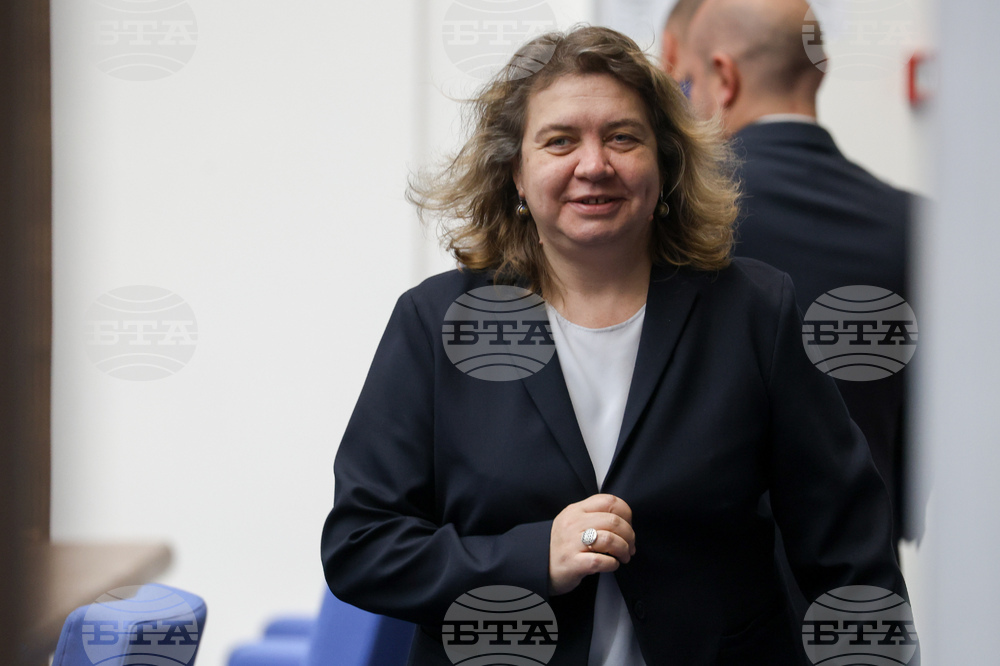
Interviewed by Bulgarian National Radio on Sunday, Nataliya Kiselova MP of BSP-United Left said that uncertainties surrounding snap parliamentary elections concern not only the rules governing them, but also the participants and the timing. She noted that media speculation has increasingly focused on the possibility that Rumen Radev could step down as President to run in those elections.
Bulgaria is headed for snap parliamentary elections after Radev handed the third, and last, exploratory mandate for Cabinet formation to the Alliance for Rights and Freedoms on January 16 and they immediately returned it unfulfilled. The next steps under the Constitution are the appointment of a caretaker government and scheduling parliamentary elections. Until a new parliament is elected and sworn in, the current National Assembly will continue to function.
The procedure for handing government-forming mandates followed the resignation of the government of Prime Minister Rosen Zheyazkov on December 11, 2025, under the pressure of country-wide protests against corruption and the 2026 Budget Bill.
Kiselova, a Constitutional Law lecturer at Sofia University, explained that under the Constitution, if the President and Vice President resign and the Constitutional Court rules on their resignations, the duties of head of State are assumed by the Parliament Chairperson, who also tops the list of eligible candidates for caretaker prime minister. This creates a situation in which one individual could simultaneously hold three roles.
She recalled that this issue was raised as early as 2023, when the BSP parliamentary group asked the Constitutional Court to declare such a concentration of functions unconstitutional, arguing that it violates the principle of separation of powers.
Kiselova further stressed that under the Constitution, if the President and Vice President resign simultaneously or separately, the Constitutional Court must rule separately on each resignation. Until such rulings are issued, both officials continue to exercise their powers. It is theoretically possible that the President could appoint a caretaker government while at the same time standing as a candidate in parliamentary elections.
Regarding the debate on the use of paper ballots and scanning devices or 100% machine voting, Kiselova said changes should not be made to voting technology ahead of the upcoming elections, with hybrid use of the two familiar methods - paper ballots and machine voting - retained for the snap elections and the presidential election in 2026. The introduction of scanning devices could be postponed until 2027, she said.
Kiselova said that under the Constitution, following the failure of three exploratory mandates to form a regular government, the President is required to hold consultations with parliamentary groups and appoint a caretaker government based on a nominated caretaker prime minister. The Constitution does not set a deadline for this procedure.
If the President begins consultations with potential caretaker prime ministers, since not all eligible candidates have declined, he should first hold individual talks with each candidate, followed by consultations with parliamentary groups. Once the composition of the caretaker cabinet is clear, it should be appointed and elections scheduled, said Kiselova.
Background
Under the Constitution, the pool of potential caretaker prime ministers from which the President may choose is limited to the Chairperson of the National Assembly (Raya Nazaryan), the Governor or a Deputy Governor of the Bulgarian National Bank (Dimitar Radev, Petar Chobanov, Andrey Gurov and Radoslav Milenkov), the President or a Vice-President of the National Audit Office (Dimitar Glavchev, Margarita Nikolova and Silvia Kadreva) and the National Ombudsman (Velislava Delcheva) or a Deputy Ombudsman (Maria Filipova).
The GERB party has taken a political decision that Parliament Chair Raya Nazaryan will not take on the role of caretaker prime minister. On January 18, Nazaryan said that her position remains consistent and unchanged in refusing to take the post of caretaker prime minister, as the arguments supporting it have not changed.
Bulgarian National Bank Governor Dimitar Radev told BTA on December 23 that he would not accept the position of caretaker prime minister, as this would call into question the independence of the bank.
Ombudsman Velislava Delcheva said on January 11 that the ombudsman and their deputy should be removed from the list of senior public officials eligible to become caretaker prime minister. She argued that the independence of the ombudsman from the executive must be maintained.
Bulgarian National Audit Office President Dimitar Glavchev was appointed caretaker prime minister on two separate occasions in 2024.
/DD/
news.modal.header
news.modal.text