site.btaSystem for Agricultural Market Information Reports Market Balance after Early-Month Seasonal Price Rise
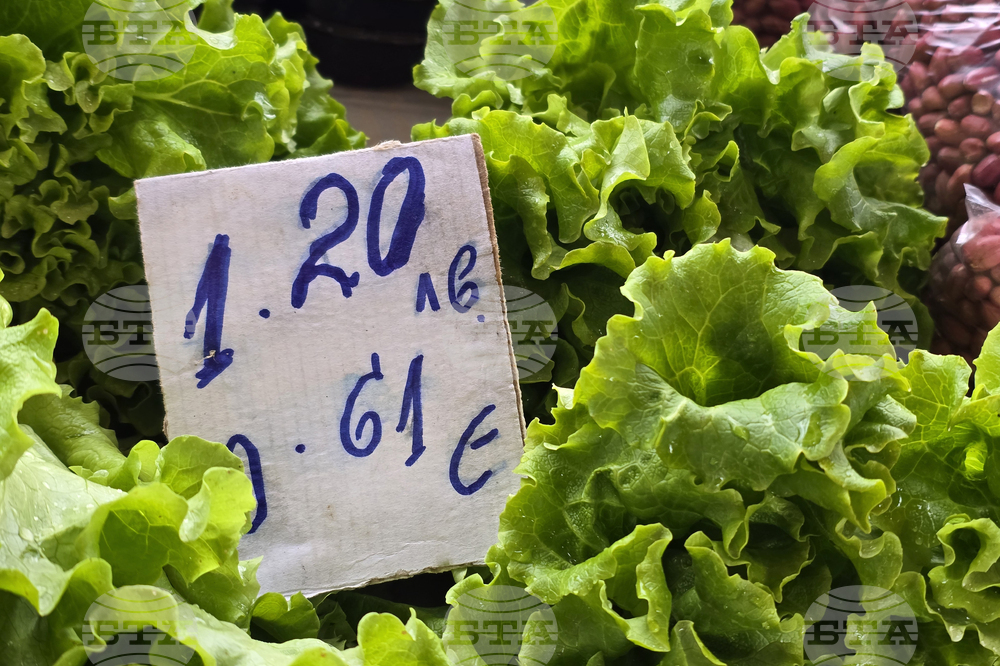
The ninth week of 2026 was marked by moderate corrective dynamics in the fruit and vegetable sector and continued stability in meat, dairy and bakery products, according to the weekly operational analysis of the Bulgarian System for Agricultural Market Information (SAPI).
The data confirm a trend towards market balancing following the seasonal price increases observed at the beginning of the month, SAPI said in its retail consumer price report as of February 25, 2026.
Products with the Largest Price Changes
The reporting period showed significantly weaker price dynamics compared to previous weeks, with changes registered in only 40 products, mainly of a corrective nature. The most notable movements were concentrated in seasonal vegetables and fresh fruit.
Celery heads (400-500 g pack) rose sharply by 21% to an average national price of EUR 1.29 per piece, driven by limited supply and seasonal demand. A bunch of celery leaves increased by 15% to EUR 0.62 per piece.
Leeks (bundle of five) rose by 17% to EUR 2.36 per bundle, reflecting higher transport costs and stronger pre-spring consumption.
Grey mullet increased by 10% to EUR 6.78 per kilogramme, influenced by seasonal demand for locally sourced Black Sea fish.
Gherkins rose by 4% to EUR 3.07 per kilogramme.
In contrast, strawberries fell by 5% to EUR 8.56 per kilogramme due to increased imports from southern regions. Cauliflower declined by 3% to EUR 2.70 per kilogramme. Eggplants and zucchini dropped by 2% each, to EUR 4.04 and EUR 3.97 per kilogramme respectively, reflecting corrective movements after February's seasonal rise.
Sector Overview
The meat and poultry segment remained fully stable across key products. Pork leg with bone stood at EUR 5.63 per kilogramme, boneless pork neck at EUR 7.89. Frozen and chilled chicken remained around EUR 4.26 per kilogramme, while chilled chicken fillet was priced at EUR 8.19. Lamb remained stable at EUR 14.33 per kilogramme. Medium eggs were priced at EUR 0.28 per piece and large eggs at EUR 0.30, without weekly change.
In dairy products, only fresh bottled cow's milk rose slightly by 1% to EUR 1.81 per litre. Other dairy prices remained unchanged. UHT milk ranged between EUR 1.61 and EUR 1.99 per litre depending on fat content. Yellow cheese from cow’s milk ranged between EUR 12.26 and EUR 16.59 per kilogramme. Cow's white brined cheese (15 kg container) stood at EUR 8.63 per kilogramme, while vacuum-packed sheep's cheese was EUR 15.18 per kilogramme. Yoghurt averaged EUR 0.79 per cup.
Bread and staple foods recorded minimal corrections. Type 500 flour fell by 1% to EUR 0.99 per kilogramme, and sugar declined by 1% to EUR 1.25 per kilogramme. All types of bread (white, "Dobrudzha" and wholemeal) remained stable between EUR 1.52 and EUR 1.80 per kilogramme. Sunflower oil was unchanged at EUR 2 per litre.
Mixed dynamics were observed in fruit and vegetables, with predominately price declines. Apples rose by 3% to EUR 2 per kilogramme, lemons by 3% to EUR 2.69, and pears by 2% to EUR 2.85. Meanwhile, oranges fell by 2% to EUR 1.88 per kilogramme. Tangerines, green and red peppers and greenhouse cucumbers declined by 1% to EUR 2.05, around EUR 3.93 and EUR 3.68 per kilogramme respectively. Greenhouse tomatoes decreased by 1% to EUR 2.67 per kilogramme.
Overall Assessment
The weekly market analysis confirms a stabilisation process following the seasonal peaks at the beginning of February. Core food categories - meat, dairy, bread and basic staples - demonstrate notable resilience, indicating balanced market conditions.
The corrective movements in the vegetable sector are seen as a healthy market signal ahead of the gradual transition to the spring season, when increased local production is expected.
As March approaches, higher supply of seasonal vegetables may exert downward pressure on prices in greenhouse categories. The only potential risk factors identified are lamb and eggs in the period around Easter, the report notes.
/YV/
news.modal.header
news.modal.text