site.btaBNB Governor: State Has a Foothold Even When Politics Is in Crisis
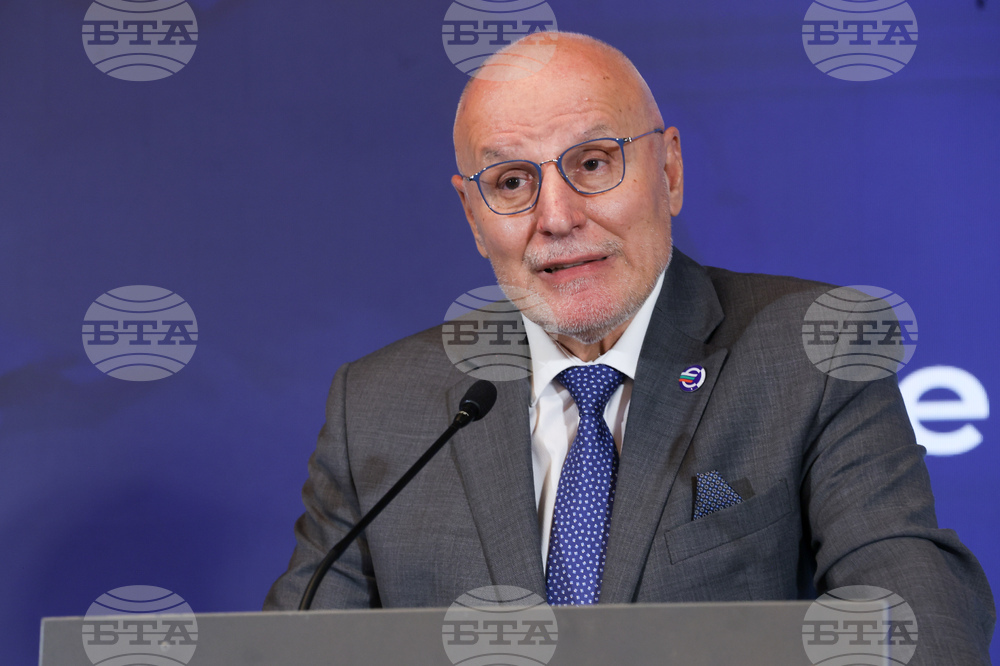
In the conditions of ongoing political instability, the resilience of the state depends on the stable functioning of its core public institutions, said Bulgarian National Bank (BNB) Governor Dimitar Radev in an interview with BTA. According to him, the central bank plays a key role in maintaining economic and financial stability, including during periods of severe political crises. Radev stressed that he would not accept the position of caretaker prime minister, as this would call into question the independence of the bank. He also noted that the prospect of joining the euro area creates a stricter and more predictable framework for economic governance and is viewed positively by financial markets.
In the interview, Radev also commented on the issue of extending the current budget into 2026, stating that under the circumstances this is “the most adequate possible option,” as it allows for the maintenance of fiscal discipline and the preservation of relative economic stability.
Here follows the full text of the interview.
Q: Mr. Radev, we have found ourselves with an outgoing government once again within a short span. This time it is days away from Bulgaria entering the euro area. What is your comment?
A: The state is not limited to the framework of specific governing mandates. Its resilience is based on the functioning of its core public institutions. When they operate in a stable and predictable manner, even significant political crises can be overcome without major economic shocks. The current situation represents a test for the institutional framework, which still has certain deficiencies, but I am convinced that the BNB is a key institution with the capacity to withstand it.
Q: People often associate political instability with economic risk. Is this justified?
A: Not automatically. The real risk arises when political instability is combined with a lack of responsible and consistent decision-making. In our case, the problem is not the rules themselves, but their inconsistent application. This once again highlights the importance of institutions and the ability of the political class to build a stable and predictable institutional framework.
Q: What is the role of the central bank in such a situation?
A: Its role is to ensure stability and predictability, even when the political environment is unstable. We do not interfere in the political process, but we ensure that the fundamentals - the monetary system, the banking sector, and the confidence of citizens and businesses in them - remain stable. This is how relative calm is maintained during periods of heightened uncertainty.
Q: Does joining the euro area change things?
A: Definitely. The euro area limits the scope for political and economic improvisation and requires a higher degree of discipline. This reduces the impact of domestic political fluctuations and global uncertainty, while at the same time creating a clearer and more predictable institutional framework for economic governance.
Q: The extension of the budget is often perceived as a weakness. What is your opinion?
A: The absence of a regular budget is not desirable, but in the current situation it is the most adequate possible option. It allows for the preservation of relative fiscal discipline amid political turbulence. The budget should serve the stability and sustainability of the state, not short-term political goals.
Q: Can institutions make up for the lack of political stability?
A: To a certain extent, yes. They can provide time and relative calm, but they cannot replace political responsibility. Ultimately, strategic decisions must be taken by those to whom society has entrusted that role.
Q: Under the Constitution, you are among possible caretaker prime ministers. Would you accept?
A: Absolutely not. The independence of the central bank is a fundamental principle. Calling it into question would undermine trust not only in the BNB, but in the entire institutional system, especially at a moment of historic change of the monetary regime.
Q: How do financial markets view Bulgaria in the current situation?
A: Financial markets are pragmatic. They assess whether there are clear rules, whether institutions function effectively, and whether the strategic direction is credible. The prospect of euro area membership has a clearly positive effect in this regard, regardless of the current domestic political challenges.
Q: What are the broader implications from what is happening today?
A: Stability is not a given. It is maintained through discipline, strong institutions, and long-term thinking. When these elements are absent, the cost is ultimately borne by society as a whole.
Q: What is your message ahead of the holidays?
A: The state has a foothold even when politics is in crisis. This does not solve all problems, but it provides grounds for relative calm and moderate optimism.
On the eve of the Christmas and the New Year holidays, I wish everyone health, peaceful holidays, and time with their loved ones. May the new year bring confidence, reason, and stability.
/PP/
news.modal.header
news.modal.text