site.btaBulgaria Must Not Accept a Two-Speed Europe, MEP Tsvetelina Penkova Says
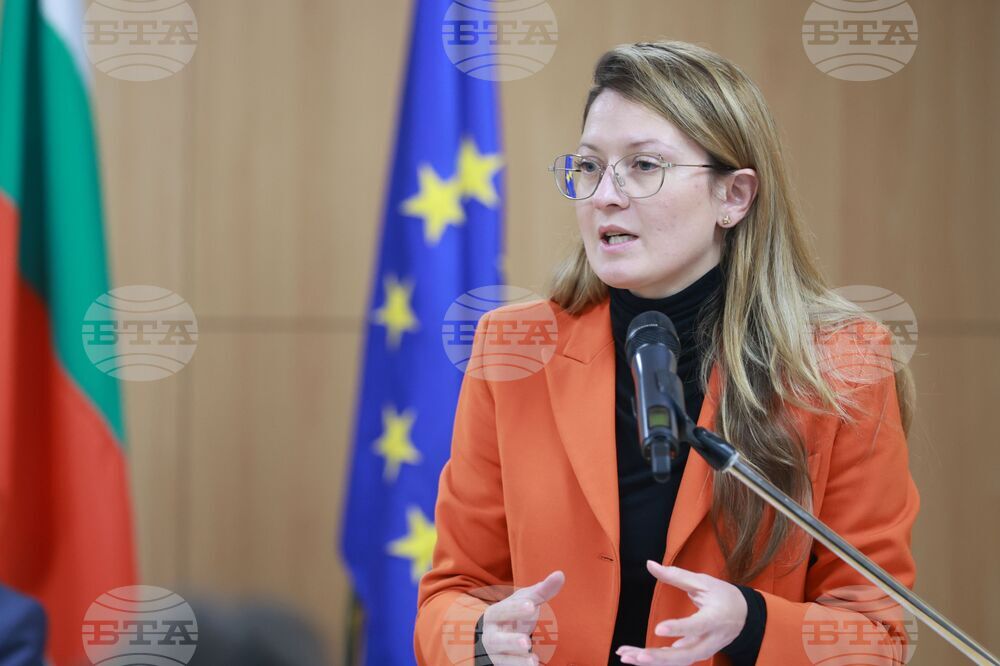
Speaking at a discussion titled “A Two-Speed European Union: Challenges for Bulgaria” at the House of Europe in Sofia on Friday, MEP Tsvetelina Penkova (Progressive Alliance of Socialists and Democrats/BSP and Vice-Chair of the European Parliament’s Committee on Industry, Research and Energy) said that any talk of a two-speed Europe must not be allowed, as it is dangerous in the medium and long term for the region Bulgaria is obliged to defend.
Penkova said that European solidarity should not be measured by declarations or political positions, but by economic growth, real connectivity, the absence of barriers, the free movement of people, goods and capital, and by genuine social policies. She stressed that over the next 12 months, European solidarity will be put to the test to see whether wealthier countries are willing to make compromises and take a step back so that all Member States can move forward together toward a common standard.
According to Penkova, a two-speed Europe already exists in the energy sector due to the differences in electricity prices between Northern and Southeastern Europe, caused by insufficient connectivity in the EU’s power transmission network. “That is precisely why we are working to resolve this problem,” she said. “On this issue, Bulgaria is not only a leader in theory but also in practice, thanks to its geographical position for building electricity interconnections. The Bulgarian team will lead the negotiations and will be the main driving force behind this key and important legislation in the European Union from now on,” the MEP added.
She also emphasized the link between economic progress and development, noting that Europe is currently making a major mistake by allowing European economies to compete with one another based on different indicators and principles. “It is time to understand that if we are talking about European competitiveness, we must compete with countries or markets outside the European Union,” Penkova said. She highlighted ongoing efforts to create the so-called “28th regime” in order to reduce legislative fragmentation that hinders entrepreneurship, small and medium-sized enterprises, and start-ups within joint European projects.
This fragmentation, Penkova said, is a major problem for Bulgaria and places smaller countries at a disadvantage. It must be overcome in order to achieve a more accessible and simpler single market, because at present the European single market is not functioning properly.
As a short-term challenge, she pointed to cohesion policy in the context of negotiations on the next seven-year EU budget and the risks related to how cohesion funding may be treated. According to Penkova, the role of Bulgaria and of Southeastern Europe as a whole is crucial and must be strong in order to secure a fair principle for the distribution of European funds.
/RY/
news.modal.header
news.modal.text