Artificial Intelligence and Ethical Standards in the Media roundtable
![BTA Director General Says Media Should Not Fear AI, but Learn and Use It]()
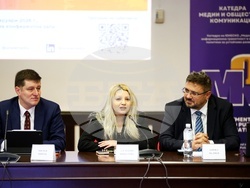
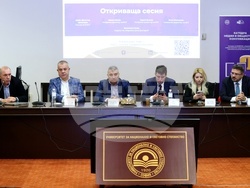
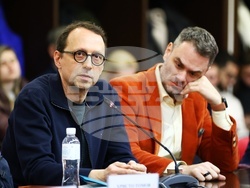
![BTA Director General Says Media Should Not Fear AI, but Learn and Use It]() From left to right: BNR Director General Milen Mitev, UNWE Media and Public Communications Department Head Mariya Nikolova, BTA Director General Kiril Valchev (BTA Photo/Minko Chernev)
From left to right: BNR Director General Milen Mitev, UNWE Media and Public Communications Department Head Mariya Nikolova, BTA Director General Kiril Valchev (BTA Photo/Minko Chernev)
![УНСС - кръгла маса - „Изкуствен интелект и етични стандарти в медиите“]()
![УНСС - кръгла маса - „Изкуствен интелект и етични стандарти в медиите“]()
![УНСС - кръгла маса - „Изкуствен интелект и етични стандарти в медиите“]()
![УНСС - кръгла маса - „Изкуствен интелект и етични стандарти в медиите“]()
![УНСС - кръгла маса - „Изкуствен интелект и етични стандарти в медиите“]()
![УНСС - кръгла маса - „Изкуствен интелект и етични стандарти в медиите“]()
![УНСС - кръгла маса - „Изкуствен интелект и етични стандарти в медиите“]()
![УНСС - кръгла маса - „Изкуствен интелект и етични стандарти в медиите“]()
![УНСС - кръгла маса - „Изкуствен интелект и етични стандарти в медиите“]()
![УНСС - кръгла маса - „Изкуствен интелект и етични стандарти в медиите“]()
![УНСС - кръгла маса - „Изкуствен интелект и етични стандарти в медиите“]()
![УНСС - кръгла маса - „Изкуствен интелект и етични стандарти в медиите“]()
![УНСС - кръгла маса - „Изкуствен интелект и етични стандарти в медиите“]()
![УНСС - кръгла маса - „Изкуствен интелект и етични стандарти в медиите“]()
![УНСС - кръгла маса - „Изкуствен интелект и етични стандарти в медиите“]()
![УНСС - кръгла маса - „Изкуствен интелект и етични стандарти в медиите“]()
![УНСС - кръгла маса - „Изкуствен интелект и етични стандарти в медиите“]()
![УНСС - кръгла маса - „Изкуствен интелект и етични стандарти в медиите“]()
![УНСС - кръгла маса - „Изкуствен интелект и етични стандарти в медиите“]()
![УНСС - кръгла маса - „Изкуствен интелект и етични стандарти в медиите“]()
site.btaBTA Director General Says Media Should Not Fear AI, but Learn and Use It
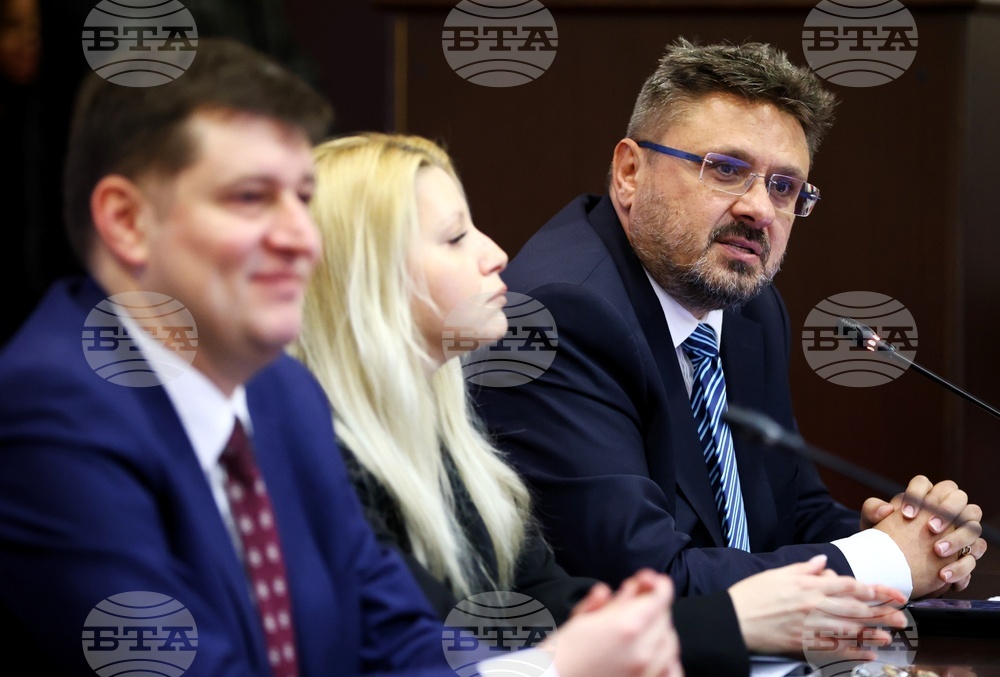
People should not fear artificial intelligence (AI), but rather learn about it and use it, said Bulgarian News Agency (BTA) Director General Kiril Valchev at a roundtable discussion on “Artificial Intelligence and Ethical Standards in the Media” held Tuesday at the University of National and World Economy (UNWE).
According to him, the printing press made knowledge widespread, while artificial intelligence now makes it instantaneous. Traditional media, however, remain responsible for the credibility of contemporary knowledge, because AI cannot replace the journalist - the reporter on the ground who creates the information that AI can then use.
The BTA Director General noted that on February 16 the Agency will mark its 128th anniversary. “BTA remains to this day the oldest national Bulgarian media outlet operating under the same name, and we strive to be leaders in a practical sense - by supporting all Bulgarian media and seeking leadership in three areas: rules, training and use,” Valchev said.
“I believe that BTA will become the first Bulgarian media outlet - and among the first in the world - to introduce written AI rules as part of its ethical code as of February 16. Second, BTA has already launched a new programme in which young staff mentor older colleagues. Twenty-five junior reporters, editors and other employees will serve as paid mentors to senior colleagues in the digital sphere. They will teach them how to use artificial intelligence, how to make better use of social media, and how to work with video and other software tools. This idea is borrowed from the Italian news agency ANSA,” the Director General explained.
The third direction, he added, is that starting next week BTA will establish a new structure called the BTA Institute (BTA-I), modeled on Reuters and Xinhua.
Valchev also outlined the main principles governing the use of AI in BTA’s editorial process.
“BTA uses AI solely as a supporting tool in editorial work, without replacing journalists. The gathering, verification and presentation of facts remain entirely the responsibility of the reporter and editor. AI is applied only if it supports BTA’s core values - accuracy, impartiality, speed and reliability - without compromising them. Every piece of content processed with AI is subject to mandatory editorial review before publication. BTA never disseminates content without human involvement and final approval,” he stressed.
“AI is never credited as an author, bears no responsibility, and only one exception is allowed, borrowed from Reuters - the extraction of individual informational highlights in bullet-point form, with an explicit indication that AI has been used,” he added.
According to Valchev, permissible uses of AI at BTA include transformational tasks involving the processing of already collected information to increase efficiency without creating original content, as well as spelling and grammar correction, which existed even before the advent of AI.
“AI may also be used for editing for clarity and style. We can consult it for more concise phrasing without altering meaning. It is also applicable in summarizing existing information - particularly from voluminous sources - and in translating content into foreign languages. In the past, the Agency accessed information in seven or eight languages. This time, we will change our approach and attempt to produce news targeted at our neighbours - in Turkish, Greek, Serbian, Romanian and possibly Albanian. Again, this will always be subject to review by an editor who knows the respective language,” the BTA Director General noted.
The use of AI is also permitted at BTA for transcription and processing of recordings, as well as for extracting data from documents in order to speed up workflows.
Valchev pointed out that there are also prohibited applications and clear limitations. “At BTA, AI is not used to create content from scratch. The generation of entirely new texts that are not based on information gathered and verified by a reporter is prohibited. AI cannot be an author of news and is not used to write or complete materials containing unverified or non-existent facts,” he emphasized.
“Another major issue is preventing plagiarism, that is, respecting copyright. Journalists must be particularly careful in this regard. Responsibility for fact-checking and accuracy remains entirely with the journalist,” the Director General said.
Speaking about the BTA Institute, Valchev explained that the idea is to invite 15 organizations in Bulgaria working in the field of AI. The main goal is for this structure not only to support BTA, but also to make freely accessible products available to all Bulgarian media. According to him, Bulgaria has enormous scientific potential. Many of these organizations already have their own products, which simply need to be adapted for use by Bulgarian media. BTA is already working on implementing these products first within the Agency and subsequently across other media outlets.
Valchev stressed that it should not be forgotten that software requires hardware first. Without renewing equipment - phones, computers - AI cannot function at all. “Before investing in artificial intelligence, we must invest in natural intelligence,” he noted. "Salaries in public media, as well as in private media, remain dramatically low compared to similar sectors, such as education. The difference is about 25%, which is why many choose to leave journalism to become PR specialists or teachers," he explained, adding that this situation must finally change.
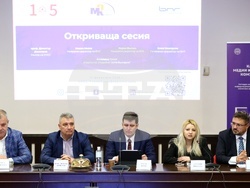
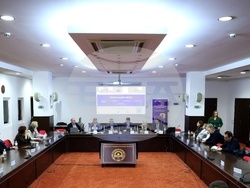
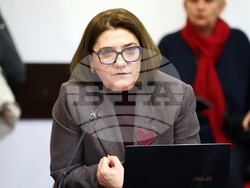
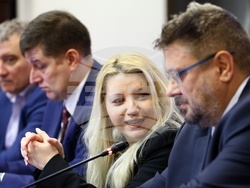
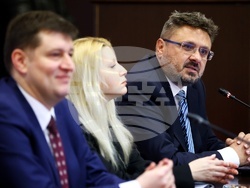
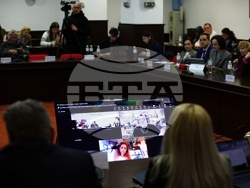
Participants in the roundtable included also Bulgarian National Radio Director General Milen Mitev, Bulgarian National Television Director General Emil Koshlukov, as well as publishers, representatives of the academic community, media professionals, regulatory and industry organizations, and professional unions.
/RD/

Additional







news.modal.image.header
news.modal.image.text
news.modal.download.header
news.modal.download.text
news.modal.header
news.modal.text