Analysis
![How Middle East Conflict Affects Fuel Prices in Bulgaria and Its Neighbours]()
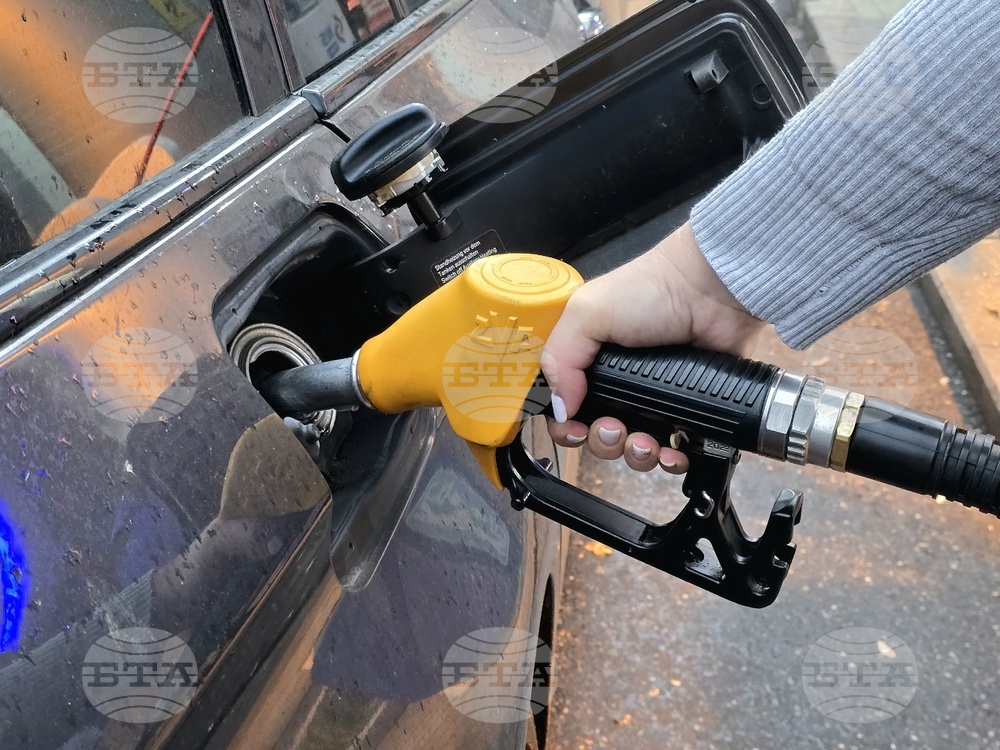
![How Middle East Conflict Affects Fuel Prices in Bulgaria and Its Neighbours]() A person fueling their vehicle at a Serbian petrol station (BTA Photo/Emil Conkic)
A person fueling their vehicle at a Serbian petrol station (BTA Photo/Emil Conkic)
site.btaHow Middle East Conflict Affects Fuel Prices in Bulgaria and Its Neighbours
Fuel prices at petrol stations have been edging up in recent days in the Balkan countries in the wake of the military escalation in the Middle East and concerns over disruptions in global crude oil supplies.
In Bulgaria, fuel prices have increased for both the most popular A95 gasoline and diesel. According to data from the specialized platform "Fuelo", A95 gasoline Thursday costs EUR 1.28/l, and diesel costs EUR 1.33/l. On February 25, diesel sold for EUR 1.28/l, and A95 gasoline for EUR 1.25/l, according to data from the specialized platform.
Caretaker Energy Minister Traicho Traikov said Thursday that a recent three-euro-cent rise in fuel prices reflects the increase in global crude oil prices and does not signal a sharper surge. He stressed that unless the situation in the Middle East escalates significantly, there is no reason to expect a substantial jump in international markets. Traikov added that he had spoken with Rumen Spetsov, the special commercial administrator of the Burgas oil refinery, who confirmed that supply volumes are secured until the end of April and that deliveries come from various sources. According to the minister, a 20% increase in fuel prices would require a roughly 60% spike in crude oil prices, a scenario he described as far from current realities.
The conflict in the Middle East has started driving up fuel prices in Romania. The price of standard gasoline exceeded RON 8 per liter (EUR 1.57/l) at all Petrom gas stations after OMV Petrom increased the prices of both gasoline and diesel by approximately 15 bani per liter (0.03 euro cents), local media reported.
Lukoil also made a similar price increase - by 15 bani/liter for diesel fuel and 14 bani/liter for gasoline, with the new prices at gas stations in Bucharest being 8.41-8.42 lei/l for diesel and 8.06-8.11 lei/l for standard gasoline.
Prices continued to rise Thursday, according to data from the Webshow website, where the average price of standard gasoline reached RON 8.22 (EUR 1.61) per liter, and of standard diesel RON 8.61 (EUR 1.69) per liter.
Local media noted that fuel prices in Romania are mainly influenced by the price fluctuations on international prices but also by the level of taxes, excise duties and VAT, which represent a significant part of the final price paid at the gas station. Analysts warn that if tensions in the region continue to push up oil prices, the rise in fuel prices could continue in the coming period.
Earlier this week, Romanian Energy Minister Bogdan Ivan said that there was currently no real reason for the price of fuel to reach RON 10 (EUR 1.96) per liter in the context of the conflict in the Middle East. A day later he did not rule out such a scenario.
Local media reported that fuel prices in Greece continue to rise steadily amid international tensions and rising oil prices. The average price of unleaded gasoline in the country ranges between EUR 1.74 and 1.77/l, while diesel is between EUR 1.53 and 1.59/l, a slight increase compared to previous days.
According to industry representatives, international price increases are already affecting prices in Greece, with increases in refineries of approximately 6 euro cents per liter for diesel and around 3 euro cents for gasoline, which will likely continue to be gradually passed on to prices at gas stations. Authorities are conducting market inspections to prevent speculative price hikes.
According to local media reports, at some places in the country motorists are queueing up to fill up their tanks before prices go through the roof. In the capital Athens, there were no queues at gas stations.
Greece's Deputy Prime Minister, Kostis Hatzidakis, said that there is no problem with energy security in the country despite the situation in the Middle East. He stressed that the government is closely monitoring the situation and that the supply of energy resources to the market is proceeding normally.
In Turkiye, a special system for regulating fuel prices, called the buffer price system, has been introduced since the night between March 4 and 5. The measure allows Turkish authorities to reduce the excise tax on fuels by up to 75%, significantly lowering the increase in fuel prices for end consumers.
The Haberler website reports that after the introduction of the measure at the gas stations in Turkiye, an increase of TRY 0.92 (EUR 0.01) per liter for gasoline and TRY 3.11 (EUR 0.06) per liter for diesel was observed. The price increase without the buffer price system would have been TRY 3.68 (EUR 0.07) per liter for gasoline and TRY 12.44 (EUR 0.24) per liter for diesel, the media outlet also notes.
According to data cited by the publication, as of noon on March 5, fuel prices in the three largest cities in Turkiye were as follows:
- In Istanbul – TRY 59.34 (EUR 1.16) per liter of gasoline and TRY 63.53 (EUR 1.24) per liter of diesel.
- In Ankara – TRY 60.29 (EUR 1.18) per liter of gasoline and TRY 64.61 (EUR 1.26) per liter of diesel.
- In Izmir – TRY 60.57 (EUR 1.19) per liter of gasoline and TRY 64.92 (EUR 1.27) per liter of diesel.
In the Republic of North Macedonia, there has also been an increase of MKD 1 (EUR 0.02) in the price of gasoline, with unleaded Eurosuper BS-95 being sold for MKD 74.50 (EUR 1.20) and Eurosuper BS-98 for MKD 76.50 (EUR 1.24) per liter, while diesel remains unchanged at MKD 71.00 per liter, according to data from the Makpetrol platform.
Queues of motorists filling up their tanks and refilling cans can be seen at gas stations due to fears of possible shortages and further price increases. The Ministry of Energy has assured the population that the state's oil reserves are stable and ensure security of supply for citizens and the economy.
In Serbia, where fuel prices have been controlled by the state for years, the price of a liter of Eurodiesel for the period from Saturday, February 28, to Friday, March 6, cannot exceed RSD 200 per liter (EUR 1.70), while the price of gasoline is limited to RSD 181 (EUR 1.54) per liter. The Serbian website K1info has noted that both petroleum products during the specified period are RSD 2 (EUR 0.04) more expensive than the price that was in force previously, when Eurodiesel cost RSD 198 (EUR 1.68) per liter and gasoline RSD 179 (EUR 1.52) per liter.
The website recalled that on January 24, the Serbian government extended the Decree on Limitation of Prices of Petroleum Products, which will be in force for another 60 days.
The regulation states that the highest retail price including VAT is set for Eurodiesel and BMB 95 gasoline based on the average wholesale price of these products on the territory of Serbia, increased by RSD 20 (EUR 0.17 euros) per liter.
/VL/
news.modal.header
news.modal.text