Artificial Intelligence and Ethical Standards in the Media roundtable
![University of National and World Economy Can Contribute to AI's Application, Rector Says]()
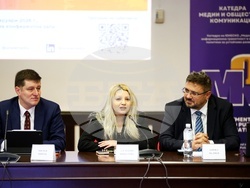
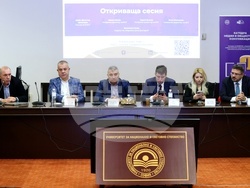
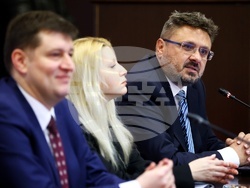
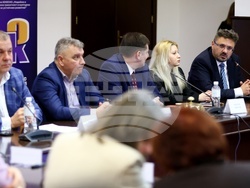
![University of National and World Economy Can Contribute to AI's Application, Rector Says]() From left to right: BNT Director General Emil Koshlukov, UNWE Rector Dimitar Dimitrov, BNR Milen Mitev, UNWE Media and Public Communications Department Head Mariya Nikolova, BTA Director General Kiril Valchev, Sofia, February 10, 2025 (BTA Photo/Minko Chernev)
From left to right: BNT Director General Emil Koshlukov, UNWE Rector Dimitar Dimitrov, BNR Milen Mitev, UNWE Media and Public Communications Department Head Mariya Nikolova, BTA Director General Kiril Valchev, Sofia, February 10, 2025 (BTA Photo/Minko Chernev)
![УНСС - кръгла маса - „Изкуствен интелект и етични стандарти в медиите“]()
![УНСС - кръгла маса - „Изкуствен интелект и етични стандарти в медиите“]()
![УНСС - кръгла маса - „Изкуствен интелект и етични стандарти в медиите“]()
![УНСС - кръгла маса - „Изкуствен интелект и етични стандарти в медиите“]()
![УНСС - кръгла маса - „Изкуствен интелект и етични стандарти в медиите“]()
![УНСС - кръгла маса - „Изкуствен интелект и етични стандарти в медиите“]()
![УНСС - кръгла маса - „Изкуствен интелект и етични стандарти в медиите“]()
![УНСС - кръгла маса - „Изкуствен интелект и етични стандарти в медиите“]()
![УНСС - кръгла маса - „Изкуствен интелект и етични стандарти в медиите“]()
![УНСС - кръгла маса - „Изкуствен интелект и етични стандарти в медиите“]()
![УНСС - кръгла маса - „Изкуствен интелект и етични стандарти в медиите“]()
![УНСС - кръгла маса - „Изкуствен интелект и етични стандарти в медиите“]()
![УНСС - кръгла маса - „Изкуствен интелект и етични стандарти в медиите“]()
![УНСС - кръгла маса - „Изкуствен интелект и етични стандарти в медиите“]()
![УНСС - кръгла маса - „Изкуствен интелект и етични стандарти в медиите“]()
![УНСС - кръгла маса - „Изкуствен интелект и етични стандарти в медиите“]()
![УНСС - кръгла маса - „Изкуствен интелект и етични стандарти в медиите“]()
![УНСС - кръгла маса - „Изкуствен интелект и етични стандарти в медиите“]()
![УНСС - кръгла маса - „Изкуствен интелект и етични стандарти в медиите“]()
![УНСС - кръгла маса - „Изкуствен интелект и етични стандарти в медиите“]()
site.btaUniversity of National and World Economy Can Contribute to AI's Application, Rector Says
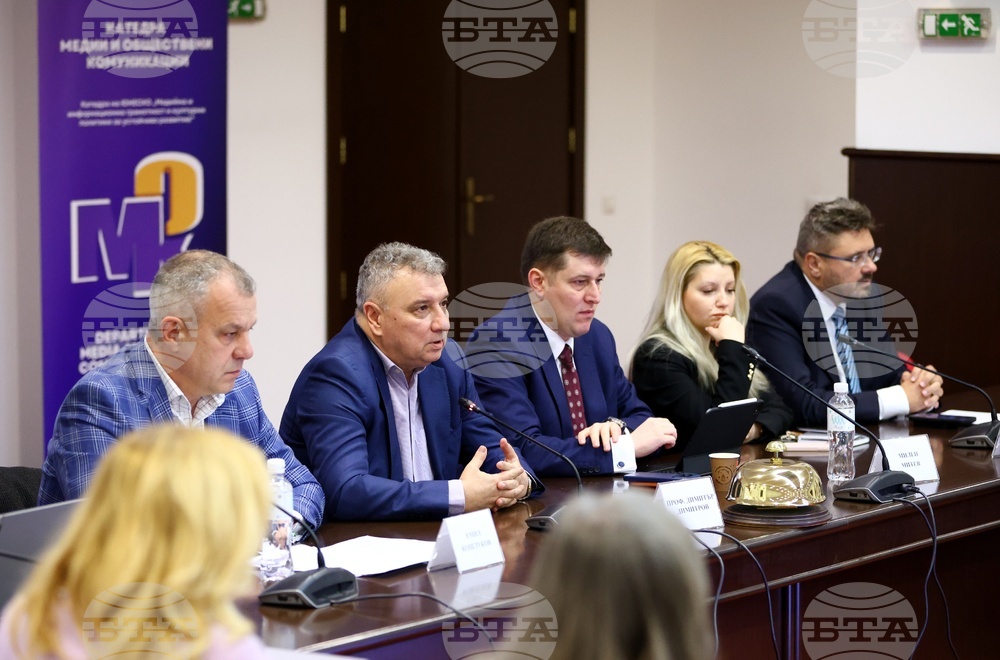
The University of National and World Economy (UNWE) can contribute to artificial intelligence and its application, UNWE Rector Prof. Dimitar Dimitrov said at a roundtable discussion held at the university on Tuesday on the topic “Artificial Intelligence and Ethical Standards in the Media”.
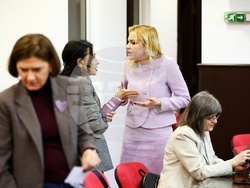
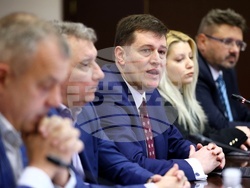
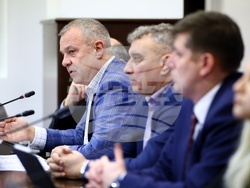
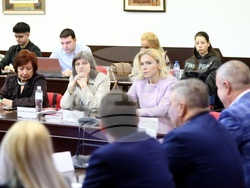
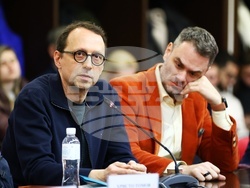
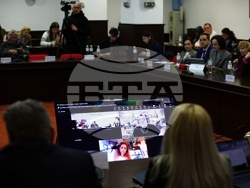
Participants in the roundtable included Bulgarian News Agency Director General Kiril Valchev, Bulgarian National Radio Director General Milen Mitev, Bulgarian National Television Director General Emil Koshlukov, as well as publishers, representatives of the academic community, media professionals, regulatory and industry organizations, and professional unions.
“The issue of artificial intelligence in the media is very interesting and will continue to be discussed, because not everything can be covered at today’s roundtable here at UNWE,” Prof. Dimitrov said.
He noted that “UNWE, as always, is a suitable platform for such a discussion as today’s - an academic discussion, held calmly, without political bias or institutional bias, as we have done over the years when discussing other topics in a similar format, with the participation of such serious media outlets and so many people engaged with artificial intelligence”.
“Some may ask why the topic of media is being discussed at UNWE. At UNWE we have a very strong department under the auspices of UNESCO that deals with media - two degree programmes in the fields of media, economics and journalism. In addition, communication, media literacy and financial literacy all require the involvement of the media and of people who understand media and understand that the topic of artificial intelligence is something that, in one way or another, must be discussed with society,” Prof. Dimitrov explained.
“We have been actively working in the field of artificial intelligence for several years, even though we are not a technical university, but artificial intelligence has many aspects. We have several master’s programmes that actively incorporate both the concept and content of artificial intelligence in education, sociology, economics and information technologies. In all other bachelor’s programmes - more than 40 in total - artificial intelligence is becoming increasingly prominent. It is most prominently used by students, who use it on their phones to solve test questions,” the UNWE rector added.
In conclusion, Prof. Dimitrov said that UNWE is undergoing a transformation “so that the use of this very powerful tool - artificial intelligence - is both ethical and does not encourage plagiarism. At first there were voices calling for it to be restricted or banned, but at the same time its enormous potential, especially in the field of economics, must be harnessed. Last year, by a decision of the Council of Ministers, a research institute for artificial intelligence in economics was established at our university. We have a very solid foundation for this - a big data centre and many departments working in the field. Research in artificial intelligence will therefore continue, and of course ethical issues are among the matters we must address.”
/RD/
Additional





news.modal.image.header
news.modal.image.text
news.modal.download.header
news.modal.download.text
news.modal.header
news.modal.text