site.btaOutgoing Transport Minister Defends Rail Transport Tender as Mandatory NRRP Reform, Rejects CC-DB Criticism
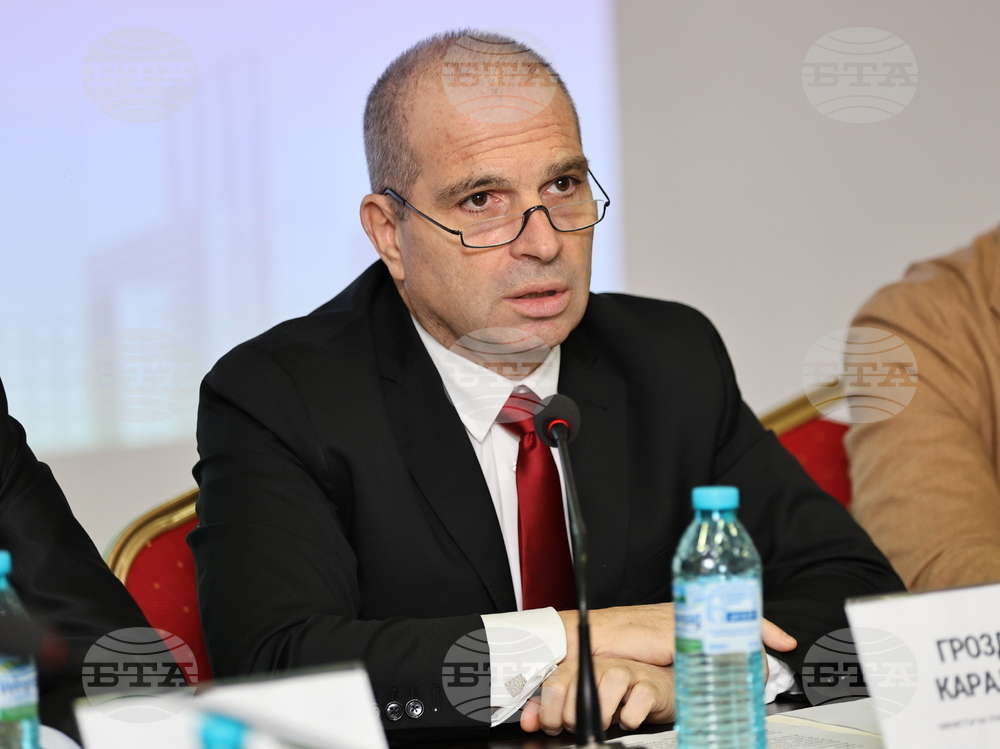
Outgoing Deputy Prime Minister and Transport and Communications Minister Grozdan Karadjov rejected criticism from the Continue the Change-Democratic Bulgaria (CC-DB) coalition regarding the procedure for awarding the public service contract for passenger rail transport. He stressed that the tender is a mandatory reform introduced precisely by CC-DB under the National Recovery and Resilience Plan (NRRP). In a post on his official Facebook page on Saturday, Karadjov commented on the declaration submitted by the coalition calling for the termination of the procedure.
Karadjov said that the reform was adopted by a decision of the Council of Ministers in 2022 by the government headed by Kiril Petkov as prime minister and was approved by the European Commission as a condition for receiving funding for new rolling stock. According to him, the tender is not a political initiative but an NRRP commitment linked to a specific milestone on which financing depends.
Karadjov recalled that the Plan explicitly stipulates that the new public service contract must be awarded through an open, non-discriminatory and competitive procedure, divided into separate lots, with the aim of opening the market to competition. He said this is precisely what the European Commission requires.
He dismissed claims about the creation of “regional monopolies”, arguing that the alternative would be a single nationwide contract, which in practice would guarantee a full monopoly and would contradict the NRRP. According to Karadjov, the existing model has resulted in outdated rolling stock and systemic problems in rail transport.
Addressing criticism about “hastily licensed companies”, Karadjov said that licences for passenger rail transport are issued under European rules, are granted for an unlimited period and are subject to regular oversight. They do not require prior experience, but compliance with clear criteria for safety and financial stability.
He added that the procedure is transparent, has been discussed with trade unions and stakeholders, presented to Parliament’s Transport Committee, and is under constant monitoring by the European Commission. In his view, allegations of a “pre-arranged tender” are unfounded.
Karadjov argued that the contracts must be signed by the end of the year in line with NRRP commitments. Halting or restarting the procedure would jeopardise the implementation of the Plan and could lead to the loss of European funding, including more than EUR 600 million for new trains, as well as the repayment of advance payments already received.
On December 15, Karadjov announced that contractors had been selected for three separate passenger rail transport lots, provisionally designated as Western, Northern and Southern. The Northern and Southern lots were awarded to Ivkoni Express, the only other company to submit bids, while the state-owned BDZ Passenger Transport retained the Western lot.
In a declaration read out in Parliament Friday, CC-DB called for the immediate termination of an ongoing procedure to award passenger rail transport contracts and for the launch of a new tender prepared with the assistance of international consultants from countries such as Germany or the United Kingdom.
If the procedure is not halted immediately and a new one is not announced, CC-DB intends to refer the case to OLAF, the European Public Prosecutor’s Office, the EU Commissioner for Transport, and the managing authority of Bulgaria’s Recovery and Resilience Plan, in order to prevent further damage to a sector of vital importance to Bulgarian society, said MP Stela Nikolova.
According to Nikolova, the decision taken by the Transport Minister has placed Bulgaria on the brink of signing a 12-year contract for passenger rail services that would create a private monopoly, guarantee it substantial state subsidies, and grant it the use of new trains purchased with EU funds. She said the circumstances surrounding the procedure point to a pre-determined outcome of the tender and political protection.
CC-DB argued that it is wrong when an outgoing minister determines the future of the entire rail sector for the next 12 years under conditions "that raise well-founded suspicions of corruption and a pre-arranged procedure with a single winner". Nikolova added that it was equally unacceptable that the sole private bidder has no prior experience in passenger rail passenger transport, calling this "a perfect recipe for chaos".
She further said it was improper and inconsistent with good European standards for Ivkoni Express to simultaneously receive monopoly status, state subsidies and the right to operate new trains purchased with EU funding. According to Nikolova, under the guise of liberalization, the procedure effectively reveals a scheme for the appropriation of state assets and funds in a sector that can only have a future if genuine competition and quality are ensured.
/KK/
news.modal.header
news.modal.text