site.btaNorth Macedonia PM Mickoski Sets Two Conditions for Constitutional Amendments
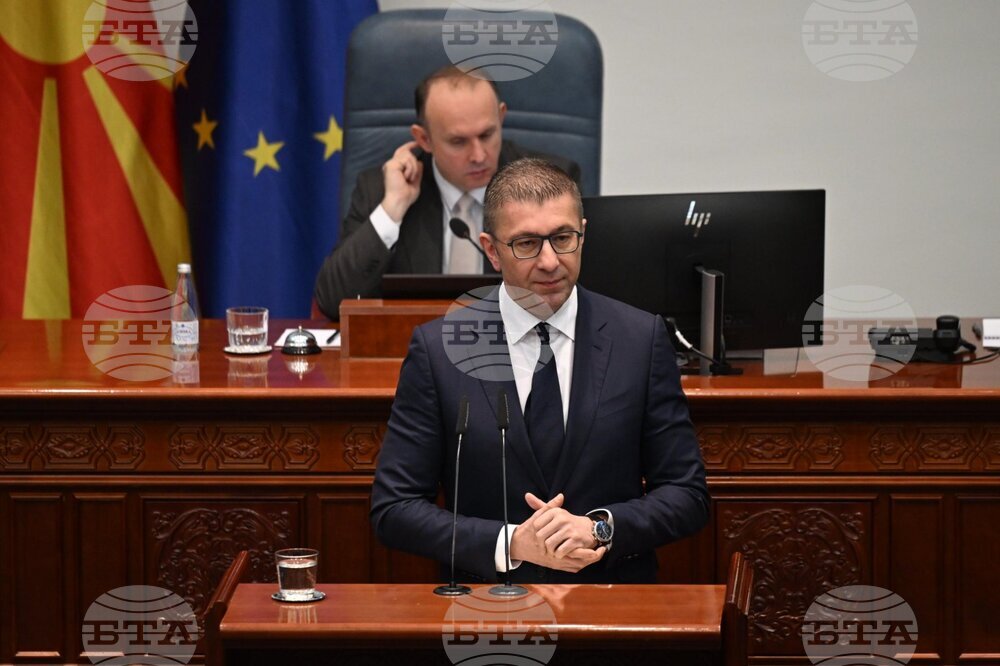
North Macedonia will not introduce constitutional amendments until at least two conditions are met, North Macedonia's Prime Minister Hristijan Mickoski said from the parliamentary rostrum on Thursday in response to a question about the country’s path toward EU membership.
Mickoski said that the first condition was for the Macedonian community in Bulgaria to be granted the rights guaranteed under international law and international human rights conventions. He stressed that he was not seeking changes to Bulgaria’s Constitution, but the fulfilment of this requirement. As a second condition, he said guarantees were needed for Macedonia’s national identity and the Macedonian language, as well as assurances that there would be no further bilateral vetoes. He added that the country, which he argued had repeatedly demonstrated its desire to be part of the European family, should no longer be humiliated or subjected to new obstructions for subjective reasons. Mickoski emphasized that constitutional amendments require 80 votes in Parliament and advised lawmakers not to support such changes without at least these two guarantees.
In response to a question from Skender Rexhepi of the European Front, Mickoski reiterated that as long as he remained prime minister, no constitutional amendments would be made unless these two conditions were met. He said he was prepared to pursue this position to the end, even if it were his last political act.
Earlier, Rexhepi had proposed that all 120 MPs in Parliament adopt a “resolution to protect the Macedonian language” and proceed with constitutional changes, arguing that the future of citizens depended on the decisions of Parliament and the government.
Mickoski, in turn, called for the adoption of a joint resolution establishing a unified, statesmanlike position that no concessions would be made on any issue in the future without meeting these minimum conditions.
Rexhepi responded that constitutional amendments would eventually take place, but the key issue was how much time North Macedonia would lose, noting that the situation in the country was bleak, with no clear perspective, no “light at the end of the tunnel,” and widespread apathy.
Mickoski countered that the serious damage to the country’s EU integration process had been done in 2022, when the then government accepted the EU negotiating framework.
Under the current conditions for opening accession talks with the European Union, North Macedonia is required to amend its Constitution to include the Bulgarian community in its basic law.
/RY/
news.modal.header
news.modal.text