site.btaEU's Schengen Area New Entry Rules Threaten North Macedonia's Economy and Investment - Transport Minister
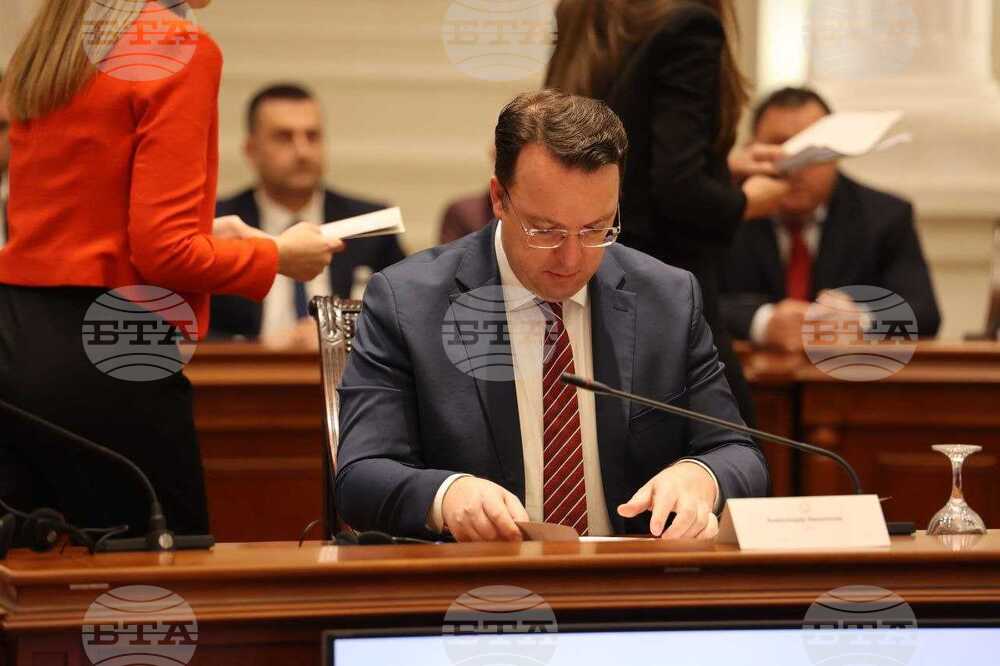
North Macedonia's Deputy Prime Minister and Transport Minister Aleksandar Nikoloski said the rules under the EU's new Entry/Exit System (EES) 90/180, introduced in the Schengen border-free area in October 2025, harm the country's domestic economy; they will dramatically reduce carriers' operations, while the transport sector and the steel industry will be directly affected.
Local media have quoted him as saying that Skopje has been in talks with the EU for over a year, but has found no understanding. In December, Nikoloski met in Brussels with the European Commissioner for Transport, Apostolos Tzitzikostas, and the Director-General for Mobility and Transport at the European Commission, Magda Kopczynska. "I tried to explain to them that what they are doing will spell death for the region's economy and lead to the closure of numerous foreign investments coming from EU Member States," said Nikoloski. He disagrees with the official response from an EC spokesperson, who stated that there is no difference between the current and new rules and that travellers can stay 90 days within a 180-day period in the Schengen Area.
The government in Skopje has tasked the Ministry of Foreign Affairs and External Trade to approach the EU with a request to postpone the new entry/exit rules.
"The problem runs deeper. This will affect export companies. Theoretically, if we destroy the transport sector and business in [North] Macedonia, it will directly impact more than just transport, and I do not think even the EU fully understands the problem we are facing," Nikoloski said.
According to him, there are also issues with cargo certificates and steel export quotas. He argued that the Western Balkans region cannot be treated as "third countries" for steel exports, and that regional states cannot be "within the same quota as China".
"The EU is about to set quotas that will likely be filled by China and India in the first two months of the year. After that, a 50% tariff will apply, which will effectively mean no steel imports into the EU because it will be uncompetitive, and this will cause the steel industry to collapse," Nikoloski said. He added that discussions with business representatives have made it clear this will affect not only direct jobs that will be lost, but also the core operating margins of companies.
Representatives of freight transport associations from Serbia, Montenegro and Bosnia and Herzegovina, joined by their colleagues from North Macedonia, have announced protests at border crossings with Schengen countries on January 26. The aim is to draw attention to the long-term consequences for the economies not only of countries outside the agreement, but also of EU Member States that have signed it, once the new EES 90/180 rule comes into effect on April 10.
/YV/
news.modal.header
news.modal.text