site.btaBulgarian Scientist Maps Antarctic Seabed Near Livingston Island Base
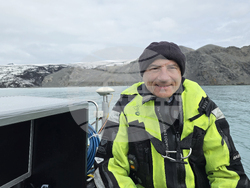
Engineer geophysicist Kiril Velkovsky is creating a high-precision underwater map of the area around the Bulgarian Antarctic base on Livingston Island. "Our data will be submitted to the International Hydrographic Organization for the creation of a precise navigational chart of the region. This chart will be registered in global databases and will represent a significant Bulgarian contribution to international data repositories," Velkovsky said in an interview with the Bulgarian News Agency.
Velkovsky works closely with the Centre for Underwater Archaeology in Bulgaria, where he is directly responsible for all geophysical activities, including equipment, instruments, measurements, and data processing. He is part of Bulgaria’s 34th Antarctic Expedition and this year is expanding his seabed mapping project from the waters of Emona Bay near Bulgaria’s St. Kliment Ohridski base to the nearby False Bay.
"The idea to come here is a joint initiative of the Centre for Underwater Archaeology and the Bulgarian Antarctic Institute," Velkovsky explained. "The invitation came from the Institute, which wanted to take advantage of our equipment and expertise. They fully provide the logistics and organization of the expeditions, while the Centre supplies the technical equipment and expert work."
According to Velkovskiy seabed data have multiple layers of importance and are already being used in several fields.
"First, they support navigation, which is especially important for our base, as boats can move much more safely in the bays when the depths are known, particularly in coastal areas," he added. "The second key application is in geology and geomorphology. We provide a solid, measured foundation on which geologists and geomorphologists can base their analyses, conclusions, and scientific research."
Bathymetry is also valuable for biology and ecology. The seabed is scanned using side-scan sonar, which identifies bottom types such as gravel, bare rock, sand, or silt.
"This is important for them, because different seabed types correspond to different habitats, making it easier to collect samples from the specific type of floor," Velkovski explained.
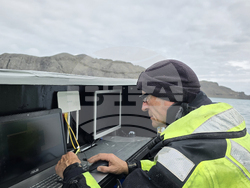
He added that the project uses a multibeam echo sounder with 512 beams, which sends ultrasonic pulses to the seabed and receives the returning echo. By measuring the travel time of the signal, water depth at specific points is calculated.
"This specific environment limits us to working from an open boat, which creates serious challenges," the geophysicist said. "It is cold, we are highly dependent on weather conditions, and measurements cannot be carried out in rough seas." Floating ice fragments, which have broken away from nearby large glaciers also interfere with the precision of the equipment.
Velkovsky’s project is linked to the work of another scientist from the 34th Bulgarian Antarctic Expedition. While seabed measurements are being conducted, physicist Oleg Vasilev is surveying the coastline, creating a terrain model of the land.
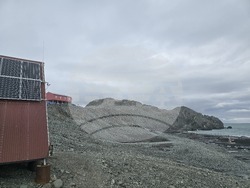
"One of our goals is for the final product to merge land and seabed into a single model, from the hills behind us all the way to the centre of the bay," Velkovsky said. "This will provide a comprehensive picture of the region’s geomorphology and topography, and I am convinced it will be extremely useful."
He also noted that last year’s seabed maps revealed significant glacier retreat in both Emona Bay and the nearby False Bay.
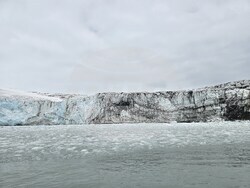
"I found maps dating back to 1991, produced by Spanish expeditions. Over the past 35 years, Pimpirev Glacier has retreated by about 1.5 kilometres. In False Bay, the process is even faster, the glacier at the head of the bay has retreated by more than 1.5 kilometres in just 15 years," the scientist explained.
According to Velkovsky, it is possible that existing maps of Livingston Island no longer reflect the actual geography of the land and surrounding waters.
"The seabed of our bay reaches Pimpirev Glacier and is deepest precisely in that area, which is unusual, as bays typically become shallower toward the shore. This raises the possibility that Livingston Island may not be a single landmass, but rather a group of islands connected by a common glacier. On one side, the end of the bay is very deep, and on the other, according to studies by Spanish researchers, the land beneath the glacier lies 40 to 120 metres below sea level. If the ice melts, there would be water rather than land," he explained.
Velkovsky emphasized the need for specialized equipment to determine ice thickness and to establish whether there is land or water underneath. This will confirm whether the island is connected by solid ground or only by ice. This project is expected to be pursued in future Bulgarian Antarctic expeditions.
Bulgaria’s research vessel St. St. Kiril and Metodii (RSV 421) departed for Antarctica from Varna (on the Black Sea) on November 7. After a month-long voyage across the Atlantic Ocean, the ship arrived at the Argentine naval base in the city of Mar del Plata on December 13, 2025. BTA has had a national press club on board since 2022 and another on Livingston Island since February 2024.
The news pieces of the BTA special correspondents on RSV 421 and Antarctica are freely available in Bulgarian and English on the agency's website. They can be used free of charge by all media with reference to BTA.
/RD/

Additional

news.modal.image.header
news.modal.image.text
news.modal.download.header
news.modal.download.text
news.modal.header
news.modal.text