site.btaUPDATED Parliament Rejects Presidential Veto on Election Code Amendments
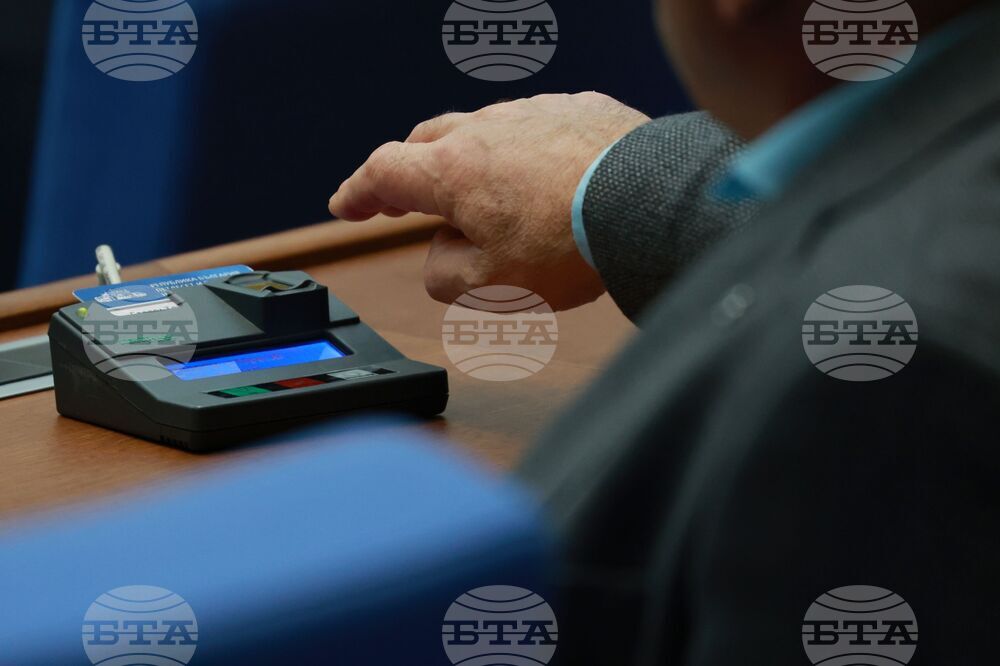
Parliament Wednesday rejected President Iliana Iotova's veto on amendments to the Election Code. The controversial revisions slash the number of polling stations in Bulgarian elections in countries outside the EU.
The vote against the veto was 126-86, with 11 abstentions.
The President imposed her suspensory veto the amendments that limit to 20 the number of voting sections in any country which is not an EU Member State, not counting the voting sections at Bulgarian embassies and consulates. As she did so, she argued that regardless of their whereabouts, Bulgarian citizens enjoy all rights and obligations under the Constitution, and the State is obliged to ensure equality in the exercise of franchise. She reasoned that the amendments as adopted jeopardize the principle of universal suffrage proclaimed in the Constitution. She cites a Constitutional Court decision enjoining the State to ensure to each Bulgarian citizen conditions to exercise their franchise freely and without obstacles of any nature whatsoever. Also, she pointed out that the revisions deliberately bar Bulgarian voters outside the EU from the exercise of their right to vote. "The difficulties may be posed by the remote location of the voting section, the large number of citizens who have expressed a wish to vote, and the number of those who can effectively exercise this right to polling day. Such Bulgarian citizens will thus find it difficult or impossible to comply also with the principle of compulsory voting as included in the Election Code," the reasoning reads.
The vote of the MPs from the Socialists' BSP-United Left group was critically important for the fate of the veto and what happened was that the group split halfway with some backing it and other voting to defeat it, essentially securing the votes to override the veto.
The amendments to the Election Code were supported by the parliamentary groups of GERB-UDF, Vazrazhdane, three deputies from MRF-New Beginning, eight from BSP-United Left, the group of There Is Such a People, and two independent MPs.
The "against" votes came from Continue the Change-Democratic Bulgaria (CC–DB), Alliance for Rights and Freedoms (ARF), Velichie, 24 deputies from MRF-New Beginning, seven from BSP-United Left, and three MPs not affiliated with any parliamentary group. Deputies from MECh and one independent MP abstained.
During the debate, Petar Petrov of Vazrazhdane, the sponsor of the texts, argued that the motives for the presidential veto were unfounded, were "political hypocrisy" and a harbinger of President Iotova's bid for president in the autumn. He stated that the principle of equality guaranteed by the Constitution was being violated with the formation of an Overseas constituency as over 147,000 Bulgarians abroad who voted in the last elections, would have been electing only four MPs. For comparison, he said that just over 145,000 voters in the Varna constituency elects 16 deputies.
Atanas Zafirov of BSP-United Left asked, "How will these four MPs maintain contact with their constituents in Australia, the US, and other countries?”
According to Vazrazhdane leader Kostadin Kostadinov, nearly 3 million Bulgarians live abroad, which translates into 75–80 parliamentary representatives.
Assen Vassilev of CC-DB said that Vazrazhdane’s claims that the Overseas constituency restricts citizens’ rights are false, and that the real limitation comes from the cap of 20 polling stations outside the EU.
Kostadinov argued that the December 2021 amendment proposal aimed to stop "interference in our internal affairs by a foreign state, namely Turkiye".
"If such interference existed, would over 40,000 Bulgarian citizens in Turkiye have voted, when approximately 500,000 live there?" asked independent MP Mumyun Mumyun.
Nadejda Iordanova of CC–DB said her coalition is concerned over the state of Bulgarian democracy: six days after the election was scheduled, changes are being made to limit the voting rights of citizens outside the EU. She emphasized that the 20-station limit poses serious obstacles and asked why the proposal was based on data from the last parliamentary elections, which had low turnout. She called it an "ugly political deal", where some parties seek an advantage and others seek to punish voters.
Hamid Hamid of MRF-New Beginning announced that his group would not support the amendments, arguing that the right to vote cannot be limited beyond what the Constitution allows. He recalled that over the past 30 years, voting restrictions based on residence were discussed for local and European elections and said that the next parliament would propose eliminating such restrictions.
The debate also included references to the so-called “revival process”. Borislav Gutsanov of BSP–United Left urged MRF–New Beginning and Vazrazhdane not to politicize the issue.
Yavor Haitov of ARF confirmed that his group would support the veto, emphasizing that the interests of Bulgarian citizens come first, regardless of location. He added that focusing on Turkiye distorts the legal debate, while issues affecting citizens in the U.S. and the U.K. are also important.
Nataliya Kiselova of BSP-United Left stressed the importance of where polling stations outside embassies and consulates are established. She noted that changing the rules just before the elections undermines trust in the process. According to her, the President’s veto is justified, and socialists are not participating in political deals in the last weeks.
Sevim Ali (ARF) emphasized that exercising the right to vote is every Bulgarian citizen’s duty, and the state must ensure it. She added that if the amendments are passed again, ARF would take the matter to the Constitutional Court.
Steliana Bobcheva (Velichie) said she would support the veto because the adopted changes impose restrictions on Bulgarians abroad and last-minute changes undermine trust in the election process.
Independent MP Andrey Chorbanov noted that both positions—supporting and opposing the veto—have valid motives and relate to ensuring fair elections. He said the constitutional right to vote is not being removed, as anyone can vote if they travel to a polling station abroad.
/RY/
news.modal.header
news.modal.text