site.btaPresident Iotova Starts Talks with Parties in Parliament on Caretaker Prime Minister
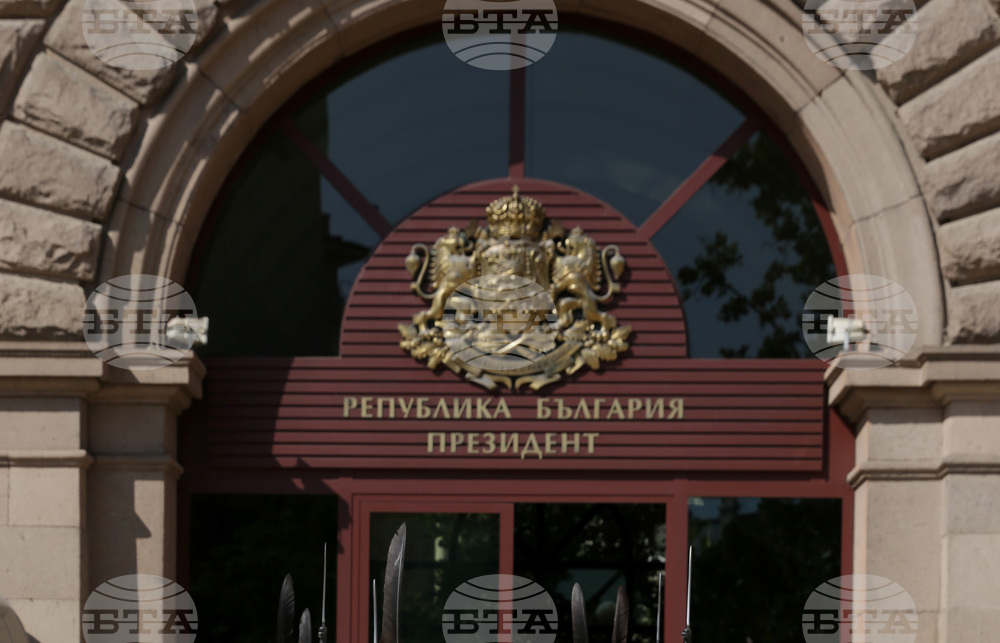
President Iliana Iotova will begin consultations with parliamentary floor groups on appointing a caretaker prime minister, the President’s administration said here on Monday.
Iotova will meet representatives of GERB-UDF and Continue the Change-Democratic Bulgaria (CC-DB) on Tuesday.
Prime Minister Rosen Zhelyazkov announced the resignation of his Cabinet on December 11, 2025, at an emergency press conference in the National Assembly, amid mass protests initially triggered by the draft 2026 budget and broader public discontent over governance and corruption.
Parliament accepted the resignation on December 12, 2025, by 227 votes in favour, with none against and no abstentions, which formally put the Cabinet out of office and set in motion the constitutional procedure for forming a new government.
Following the resignation, then-President Radev launched consultations with parliamentary groups and began handing exploratory mandates to form a new regular government. The first mandate, to GERB-UDF, and the second, to Continue the Change–Democratic Bulgaria, were returned unfulfilled. The third mandate, handed to the Alliance for Rights and Freedoms, was returned immediately on January 16, 2026.
Under the Constitution, a government in resignation continues to perform its functions until a new regular cabinet is elected or a caretaker one appointed; if all three mandates fail, the head of state must appoint a caretaker cabinet and schedule early parliamentary elections within two months.
On January 19, 2026, Radev announced he would step down and tendered his resignation to the Constitutional Court a day later.
The Constitutional Court ruled on January 23 that his mandate ended early, and Vice President Iliana Iotova assumed the presidency for the remainder of the term.
In the days that followed, Iotova opened the constitutional procedure for appointing a caretaker prime minister and began consultations with eligible office-holders.
Ahead of the talks, President Iotova said the schedule for consultations on appointing a caretaker prime minister and caretaker government was almost ready, and that she would follow the Constitution strictly and would not allow the process to become a mere formality. The pool of eligible nominees was outlined as the National Assembly chair, the Bulgarian National Bank governor/deputy governors, the Bulgarian National Audit Office president/vice presidents, and the Ombudsman of the Republic of Bulgaria or a deputy ombudsman.
The first meeting was with National Assembly Chair Raya Nazaryan, who said that a political figure should not serve as caretaker prime minister because impartiality is required and the choice could raise suspicions of interference in the electoral process; the meeting was held behind closed doors.
The presidential press service then released the timetable for the remaining separate sessions: central bank governor and deputy governors on January 28, ombudsman and deputy ombudsman on January 29, and audit office president and vice presidents on January 30.
The talks continued with the central bank leadership. Dimitar Radev said accepting the caretaker PM post would violate Bulgarian and European rules and could destabilize the central bank and affect Bulgaria’s representation on the European Central Bank Governing Council; Petar Chobanov and Radoslav Milenkov also said they would not accept; Andrey Gurov said he was ready to take the responsibility under clear principles and no hidden conditions, emphasizing neutrality and fair elections.
In the sessions with the ombudsman institution, Velislava Delcheva said the ombudsman has no place in the executive branch and stressed the need to preserve independence in line with European and international standards, while Maria Filipova said she would accept to serve as caretaker prime minister if selected.
The meetings concluded with the Bulgarian National Audit Office leadership, held in separate closed-to-the-media sessions. Dimitar Glavchev said he was inclined to accept if asked and pointed to his prior experience as caretaker prime minister; Margarita Nikolova and Silvia Kadreva also declared readiness, with the audit office officials joining the two candidates who had already signalled willingness.
After completing the round of meetings, Iotova said she would announce the caretaker prime minister after consultations with parliamentary parties, and described the talks with nominees as substantive and responsible, covering tasks for the coming months, restoring trust in elections, euro-related issues and the price shock, foreign policy and institutional coordination.
/RY/
news.modal.header
news.modal.text