site.btaKosovo in 2025: Political Tensions and Ongoing Dialogue Efforts
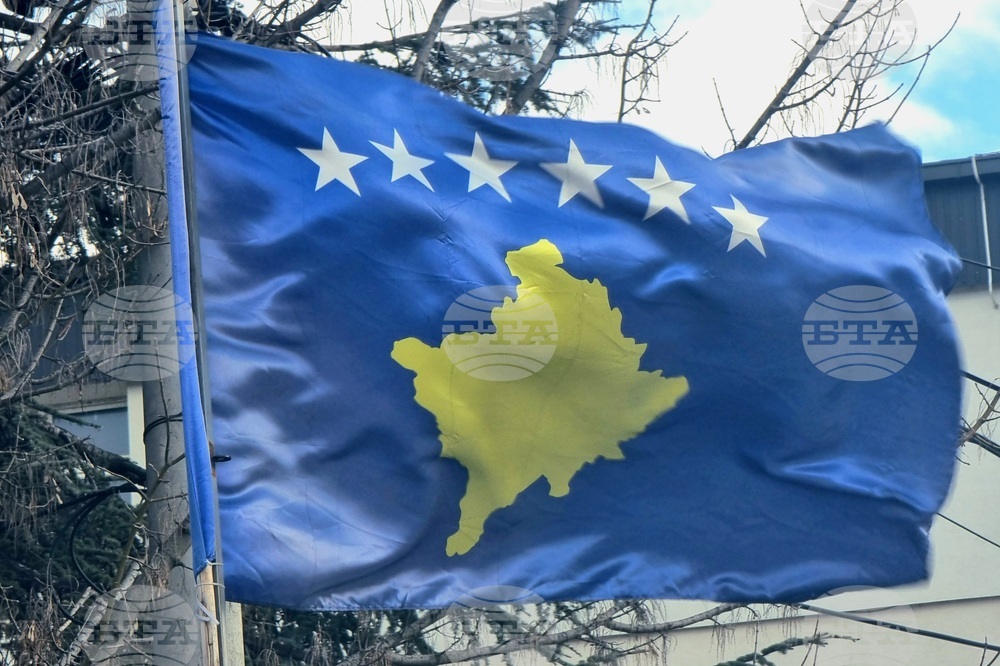
For most of 2025, Kosovo was defined by political crisis. After the regular parliamentary elections on February 9, no party won the 61-seat majority in the 120-member parliament, leading to institutional and political deadlock and the inability to form a government.
Political crisis
Almost seven months after the elections and following 57 unsuccessful attempts to constitute the parliament, the institution elected its speaker on August 26. The full complement of five deputy speakers was secured on October 10. After two unsuccessful attempts by the ruling left-wing nationalist Vetevendosje (LVV) movement under Prime Minister Albin Kurti to form a cabinet – the maximum number of attempts allowed under the constitution – Kosovo moved towards early elections on December 28.
The vote held this past Sunday proceeded peacefully, and the counting of ballots was record fast. Support for the parties was 95 percent clear on the same evening, in contrast to the regular parliamentary elections when preliminary results were published 11 days later.
According to the full preliminary data published on Tuesday by the Kosovo Central Election Commission (CEC), LVV won 49.34% of the vote. The preliminary data do not include votes from abroad or from conditional voting stations, nor those of persons with special needs, which are expected to be counted in January.
The EU High Representative for Foreign Affairs and Security Policy, Kaja Kallas, said in a statement after the vote that following the political deadlock after the February elections, the EU looks forward to the swift formation of the new parliament and government in Kosovo.
Local elections
Although the country was largely “on pause” due to blocked institutions following the regular parliamentary elections in February, some events brought a measure of dynamism.
Kosovo’s citizens went to the polls four times in total this year – for the regular and early parliamentary elections and in two rounds of local elections in October and November.
The local elections not only changed the political map of Kosovo but also brought an important development. The largest party representing Kosovo Serbs, the Serb List, which enjoys support from Belgrade, won in all ten predominantly Serbian municipalities. Ethnic Serb mayors took office in early December in four municipalities in North Kosovo, more than two years after the political crisis had led to tensions and clashes with NATO peacekeepers.
This led to the partial lifting of sanctions that the EU had imposed on Kosovo in June 2023. European Commission President Ursula von der Leyen announced that following the partial removal of EU measures against Kosovo, EUR 205 million is expected to be allocated to the country at the start of next year.
Relations with Serbia
Despite these developments, the dialogue to normalize relations between Belgrade and Pristina remains stalled – except that after the mandate of the previous EU special envoy Miroslav Lajcak expired, a new envoy, Peter Sorensen, was appointed. The Kosovo Prime Minister has not met with Serbian President Aleksandar Vucic since an attack in the village of Banska in September 2023.
Serbia does not recognize the independence of Kosovo declared in 2008. The two sides have engaged in a dialogue to normalize relations with EU mediation since 2011 and have reached several agreements, though not all have been implemented. Progress in this process is key to both countries’ aspirations for EU membership.
Ties with the United States and the wider world
Another “pause,” this time in Kosovo’s relations with its key partner, the United States, occurred in September.
On September 12, the US announced that it was suspending the strategic dialogue with Kosovo indefinitely. A statement from the US Embassy indicated that Washington took the drastic step due to concerns over the actions of the outgoing government in Pristina, which had increased tension and instability and limited the US’s ability to work productively with Kosovo on shared priorities. The reason cited was recent actions and statements of outgoing Prime Minister Albin Kurti, which had called into question years of progress, though no further details were given.
In recent years, Kurti has been criticised by Kosovo’s international allies for certain decisions in North Kosovo – a predominantly Serbian area – related to the replacement of Serbian vehicle registration plates with Kosovo plates, the removal of the Serbian dinar as a means of payment, and the closure of institutions operating under the Serbian system, according to the Albanian edition of Radio Free Europe.
This year, Kosovo authorities also opened a new bridge in the ethnically divided town of Mitrovica in North Kosovo, used by both Serbs and Albanians. This followed criticism from the US and the EU regarding the government’s plans to reopen the old Ibar River bridge, a symbol of division and the site of numerous clashes between the two communities, which had been closed for more than 25 years.
Prime Minister Kurti stated in December that his country’s relations with the US are very good and that major disagreements have always been related to Serbia and its structures, never bilateral issues.
Among the good news for Kosovo this year was the recognition of its independence by four more countries – Kenya, Sudan, Syria, and the Bahamas – bringing the total number of states recognizing Kosovo to 121 worldwide.
Defence projects
In the field of defence, among other developments, Kosovo signed a framework agreement with a US company to purchase modern mobile artillery systems “HawkEye” and officially received anti-tank weapons from Germany, including the well-known Panzerfaust 3 system, as well as thousands of kamikaze combat drones Skydagger from Turkiye.
The construction of Kosovo’s first ammunition factory and a drone design laboratory is also underway. This project, to be carried out by the Turkish state company MKE (Makine ve Kimya Endustrisi – Machinery and Chemical Industry Company), is expected to be completed in 2026.
A key event was a defence cooperation agreement signed between Kosovo, Albania, and Croatia on March 18. The trilateral declaration of cooperation sparked strong reactions in Belgrade.
Former KLA commanders' prolonged detention
In 2025, public dissatisfaction over the prolonged detention of former commanders of the disbanded Kosovo Liberation Army (KLA) – Hashim Thaci, Kadri Veseli, Rexhep Selimi, and Jakup Krasniqi – at the Special Court for Kosovo in The Hague escalated into protests. Peaceful demonstrations in support of the former KLA leaders were held in Pristina, The Hague, Tirana, Strasbourg, and Skopje.
The four former KLA commanders were arrested in The Hague on November 4 and 5, 2020, after confirmation of the indictment against them for alleged war crimes and crimes against humanity committed during the Kosovo war of 1998–1999. Thaci, Veseli, Selimi, and Krasniqi pleaded not guilty and denied all charges. Their trial at the Special Court for Kosovo began on April 3, 2023, and was scheduled to conclude in December 2025.
Tackling illegal migration
Another significant development this year was the public confirmation that Kosovo is considering building return centres for asylum seekers whose applications have been rejected by the United Kingdom. The Prime Minister stated at the end of October that Kosovo “wants to assist” the UK in tackling illegal migration in exchange for support in strengthening its security against threats from Serbia and Russia.
It was also reported this year that Belgium is negotiating with Albania and Kosovo to rent or construct a prison for foreigners without the right to reside in the EU.
Against the backdrop of these and many other events that brought dynamism to a country “on pause” due to internal political crisis, Kosovo enters 2026 prepared to unblock the work of its institutions following the parliamentary vote at the end of the outgoing year.
/VE/
news.modal.header
news.modal.text