site.btaBalkan Rivers in Decline: Threats to Europe’s Last Wild Waterways
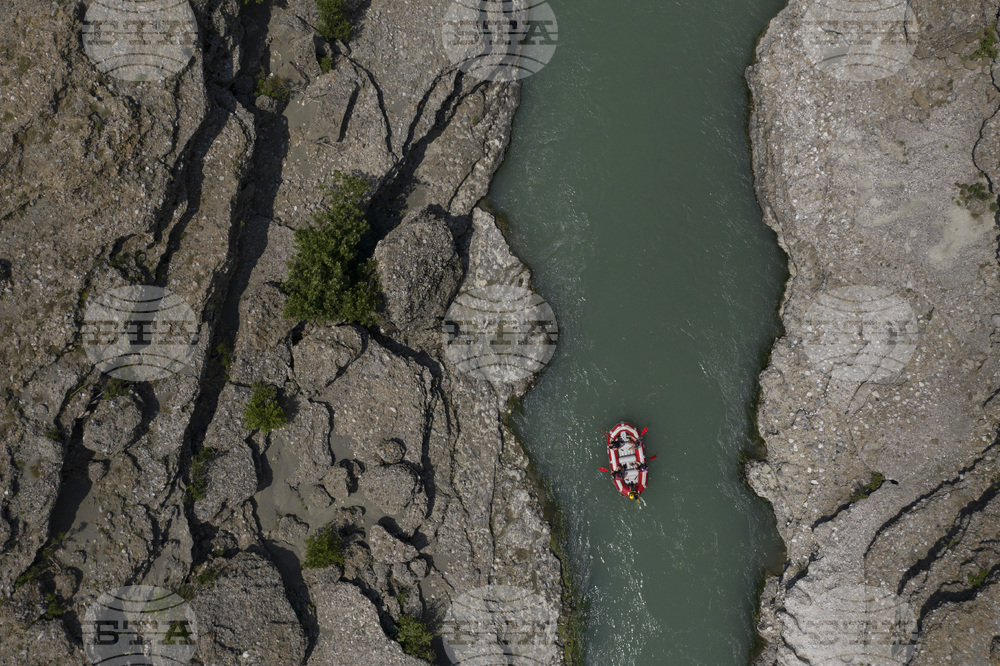
Thousands of kilometres of rivers across the Balkans are facing growing threats as hydropower development, dams, and infrastructure projects take a heavy toll on the region’s iconic waterways, according to a major new study released Thursday. The research, conducted over 13 years by Dr Ulrich Schwarz of Fluvius Vienna and commissioned by EuroNatur and Riverwatch for the Save the Blue Heart of Europe campaign, assessed 83,824 km of rivers across 11 countries. The findings reveal a steady decline in nearly natural rivers, from 30% in 2012 to just 23% in 2025, a loss equivalent to 2,450 river kilometres. At the same time, severely modified river stretches, including impoundments and dams, have increased.
Balkans-wide Trends
The assessment paints a worrying picture for larger rivers, which are most affected by dams, channelization, and sediment disruption. Since 2012, river impoundments have increased by 18%, from 2,224 km to 2,626 km. Smaller headwater streams remain largely in better condition, though pressures are beginning to spread.
Hydropower development continues to be the main driver of river degradation, while water abstraction, sediment extraction, and infrastructure construction also play a role. Nevertheless, conservation efforts have had some success, protecting roughly 900 km of rivers by halting planned hydropower projects.
Among the larger rivers, only 23% are nearly natural, 43% show slight modifications, 27% are moderately to extensively modified, and 7% are severely modified. The most impacted basins include the Drina, Neretva, Vardar/Axios, Devoll, and Drin.
Despite these declines, the Balkans still boast a higher proportion of nearly natural rivers than the European average, underscoring the region’s status as the continent’s last stronghold of wild rivers.
Country Spotlight: Albania
The decline is particularly pronounced in Albania, where nearly natural river stretches dropped from 68% to just 40% over the same period.
However, there are bright spots. In 2023, the Albanian government granted national park status to the Vjosa River, which is one of Europe’s last truly wild rivers, successfully blocking nearly 40 planned dams. Legal victories like this have safeguarded about 200 km of large rivers and 700 km of smaller streams in recent years.
Bulgaria
Bulgaria’s rivers present a mixed picture, but overall more than half of the network remains either slightly modified or nearly natural, reflecting the country’s resilient freshwater landscapes.
Of the total assessed river length, around 8,000 km are slightly modified, while nearly 5,300 km retain a nearly natural state, most often in smaller rivers that have so far escaped major human intervention. Moderately and extensively modified stretches affect roughly 4,100 km in total, while severely modified or impounded sections are comparatively limited, covering just 600 km.
The impacts of hydropower and dam construction are concentrated in specific areas such as the upper Iskar and Arda basins, yet Bulgaria still boasts largely free-flowing rivers like the Danube and the Maritsa, as well as pristine sections in the Black Sea coastal catchments and parts of the Upper Arda basin. These remaining pockets of intact waterways underscore that, despite development pressures, significant fragments of Bulgaria’s river heritage continue to thrive.
The Blue Heart at Risk
The Balkans’ rivers are often referred to as Europe’s "Blue Heart", home to exceptional biodiversity and a rare example of largely intact freshwater ecosystems. Yet the report warns that unless hydropower expansion and other pressures are carefully managed, the region could see continued loss of these precious natural waterways.
/DD/
news.modal.header
news.modal.text