site.btaPolitical Divide in North Macedonia over Prime Minister Mickoski’s Davos Visit
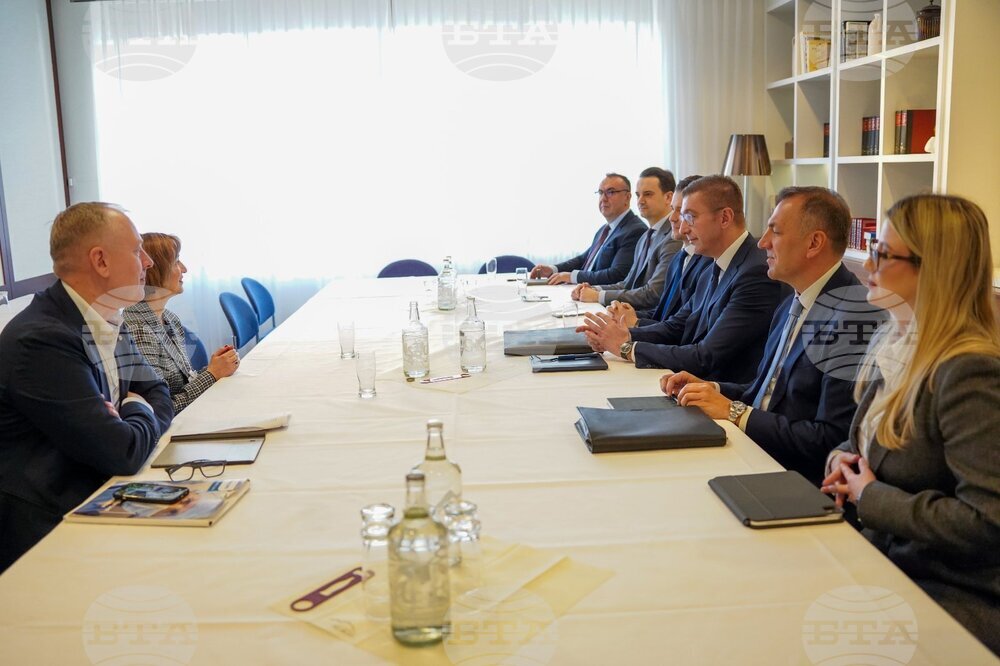
The visit of North Macedonia's delegation led by Prime Minister Hristijan Mickoski to the World Economic Forum in Davos was received controversially, primarily in political terms. For the opposition Social Democratic Union of Macedonia (SDSM), the visit revealed the full isolation to which Mickoski’s policies have led the country, while the governing parties say SDSM is attempting to divert public attention.
North Macedonia's delegation travelled to Switzerland earlier this week, announcing a “series of bilateral meetings with representatives of leading global companies and financial institutions,” participation in “panel discussions related to sustainable development,” in the leaders’ closing session, and in “public debates focused on artificial intelligence, energy, and new pathways for economic growth in Europe.”
Prime Minister Mickoski reported on his meetings in Davos through video addresses posted on his Facebook profile.
“Let us summarize the benefits of our Prime Minister’s stay in the Swiss city. In the same city where, alongside Mickoski’s calls from the venue, world leaders were arriving, delivering historic speeches and outlining the new world order,” the website Racin.mk wrote on Friday.
The outlet lists the prime minister’s meetings and panel participations, noting the lack of detailed information.
At a panel related to artificial intelligence and data centres, Mickoski said he presented key national energy projects.
“I am convinced that they attracted significant attention from a large number of investors who contacted me after the panel and with whom we exchanged contacts. I invited them to come to [North] Macedonia to see the potential we have and the investment opportunities. I am convinced that these projects will be successful, will add value to [North] Macedonia's economy, and will improve the quality of life of [North] Macedonia's citizens,” Mickoski said from Davos.
“Still… it is our right to ask whether the representatives of the ‘literal world leadership in the energy business, companies coming from all continents’ have names and surnames, whether they have positions, and which ‘companies coming from all continents’ we are talking about,” Racin.mk wrote in its analysis.
Among the people Mickoski mentioned in his summaries of the days in Davos were U.S. Energy Secretary Chris Wright, with whom he participated in an energy-related panel, the owner of the Hungarian company 4iG, which received a licence for a third mobile operator in the country, and a bilateral meeting with Borjana Kristo, Chair of the Council of Ministers of Bosnia and Herzegovina.
The opposition SDSM said that instead of meetings with European and world leaders, the Prime Minister held contacts with a limited number of partners, including 4iG, which they say is not an ordinary market player but is closely linked to Hungarian Prime Minister Viktor Orban and his party.
“This is not a coincidence, but part of a broader plan to isolate our country from the EU, fuelled by the anti-European campaign that Internal Macedonian Revolutionary Organization – Democratic Party for Macedonian National Unity (VMRO-DPMNE) has been conducting for some time, rejecting the reforms and compromises necessary for European integration… SDSM is following with deep concern the latest developments in our country’s telecommunications sector, which reveal a chain of influence stretching from Budapest through Belgrade to Skopje,” SDSM said in a statement.
“[North] Macedonia's delegation in Davos held numerous meetings with high-ranking representatives of international institutions and the business community, participated in an energy-focused panel where the country’s priorities, economic policies and investment opportunities were reaffirmed. Unlike the time of SDSM, when the state was synonymous with corruption, crime and damaged international credibility, today [North] Macedonia is recognized as a serious and stable partner with a clear vision for economic growth and regional cooperation. The opposition’s accusations are an attempt to divert public attention from their own lack of ideas, programme and trust, and the only ones isolated at this moment are precisely SDSM,” the government told TV 24.
“At yesterday’s luncheon panel on economy and investments in Davos, I spoke about the strategic steps we are taking as a state in the areas of artificial intelligence, energy and long-term development… We are strengthening our electricity transmission networks, but at the same time we are strengthening our gas transmission lines. In this context, we are building a gas interconnector with Greece and starting construction of a gas interconnector that will connect the country with Serbia. These are strategic projects of essential importance not only for our country, but for the entire region. In addition, I spoke about the construction of three large dams that will create three significant reservoirs of clean drinking water. Given climate change, the region will have a growing need for such reserves to ensure long-term water security and stable supplies of clean water,” Mickoski wrote on his Facebook profile on Friday, announcing that he was returning home.
On Thursday, media in North Macedonia reported extensively on the creation of the Board of Peace, noting that neither the Prime Minister nor the President of North Macedonia have so far received invitations to join it, unlike Albania, Kosovo and Bulgaria.
“U.S. remains a key global power and, for Europe and the Balkans, an indispensable security factor. Administrations and styles may change, but interests – by which I mean security, stability, trade, technology and energy – remain. Our task is to be a country that knows what it wants, a country that can be trusted, and a country that is part of the solution rather than part of the problem. That is why my message is this: [North] Macedonia is not moving by inertia, nor is it clinging to ‘fashionable’ geopolitical trends. We are progressive in our ambition. We want to be a modern European country, with strong institutions and a strong economy,” Foreign Affairs and Foreign Trade Minister Timco Mucunski said in an interview for the outlet Lokalno. According to him, at a time when many leaders in Davos are talking about the “collapse of the old world order,” the most important thing for the country is to remain “cautious and with a clear compass.”
/VE/
news.modal.header
news.modal.text