site.btaNSI President Warns of Significant Risk of Deceased People Featuring in Voter Rolls If Last Population Census Is Used for Upcoming Elections
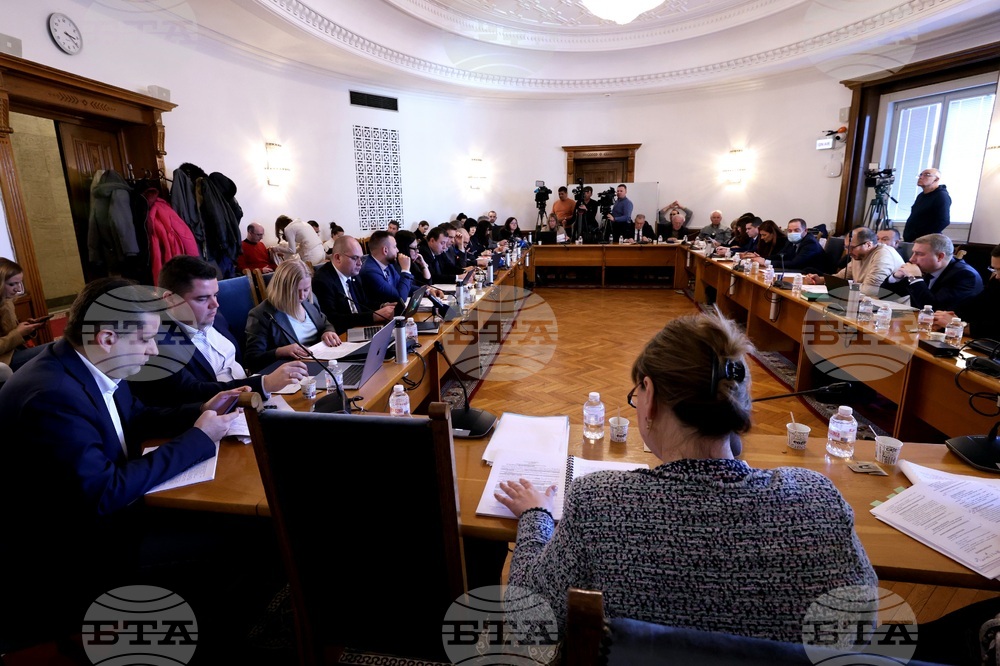
The last population census was conducted in September 2021 and, according to a rough estimate, the number of people who will have died by the time of the elections will exceed half a million, meaning there is a significant risk that deceased individuals could be included in the voter rolls, National Statistical Institute (NSI) President Atanas Atanasov said during the second reading of the bill amending the Election Code, which was discussed by the Committee on Constitutional and Legal Affairs on Tuesday.
Atanasov commented on a proposal by There Is Such a People (TISP) for voter rolls to include all Bulgarian citizens who meet the constitutional requirements “according to NSI data based on the results of the most recent population census.” He added that the difference between the population calculated by the NSI and the population entitled to vote under the Constitution is substantial.
According to him, the NSI is authorised to provide only aggregated information and not individual data, which is prohibited by European regulations as well as by the Statistics Act and the Census Act. Atanasov noted that the NSI has no legal grounds to provide personal population data.
Public Works Ministry's Directorate General Civil Registration and Administrative Services (GRAO) expert Petya Bulanova said the proposal may not be very reasonable, but if it is adopted, it should explicitly regulate what data the NSI is to provide and to whom. She noted that the data in GRAO’s population register are up to date. Bulanova added that many Bulgarian citizens who were not counted in the census would have to go through a procedure to submit an application for inclusion in the voter rolls.
During the debate, it also became clear that around one million people were not counted in the most recent national census for various reasons.
TISP MP Nikoleta Kuzmanova said that European regulations allow for the exchange of confidential data and that there is no problem with this taking place between two state institutions. She also added that the Statistics Act contains exceptions related to data.
GERB-UDF MP Branimir Balachev said that it would be best for GRAO and the NSI to cooperate, noting that GRAO’s data are the most accurate and that through them deceased individuals would be removed from the voter rolls.
Continue the Change - Democratic Bulgaria Co-Floor Leader Nadejda Iordanova and Deputy Floor Leader Stoyu Stoev raised the question of which of the two lists would take priority if the NSI and GRAO work together, especially in the event of discrepancies, as it is unclear according to what criteria, what procedure and who would make the decision. They also asked where a person would vote if they were counted in one settlement and later changed their address to another multi-member constituency.
The Vazrazhdane parliamentary group said it would not support the proposal. According to MP Tsveta Rangelova, “it is irresponsible to restrict or cast doubt on the constitutionally guaranteed voting rights of Bulgarian citizens.” She added that there were concerns about a desire for uncontrolled additions to voter rolls in small polling stations in small settlements, where people know each other well and could easily add voters.
Velichie MP Yuliana Mateeva said that she would also not support the proposal, noting that against the backdrop of all the other major changes, reformatting the voter rolls in such a manner would be an additional complication.
During the debates, questions were also raised by CC-DB and Vazrazhdane regarding the software of the optical scanning devices, as well as the status of the machines – namely the impossibility for the machines and their software to be state-owned by Information Services due to legal restrictions.
“We have reached the point where the Election Code is so detailed that it has turned into an instruction manual – this is not how laws are written,” CC-DB's Co-Floor Leader Iordanova said, adding that it cannot be detailed on some issues and not on others.
Velichie MP Mateeva asked what would happen to the Election Code if voting with optical scanning devices fails and the system reverts to the previous model, given that the provisions related to it have been removed from the Code. Committee on Constitutional and Legal Affairs Chair Anna Aleksandrova (GERB-UDF) said the issue would be resolved through a provision in the transitional and final provisions, which would regulate that, in the event of a return to the old system, procedures would continue as before. She recalled that BSP - United Left have announced they would propose the amendments enter into force in 2027.
The meeting of the legal committee was the third consecutive session dedicated to reviewing the proposed amendments to the Election Code.
/MR/
news.modal.header
news.modal.text