site.btaKukeri Bring Surva Rituals to Veliko Tarnovo
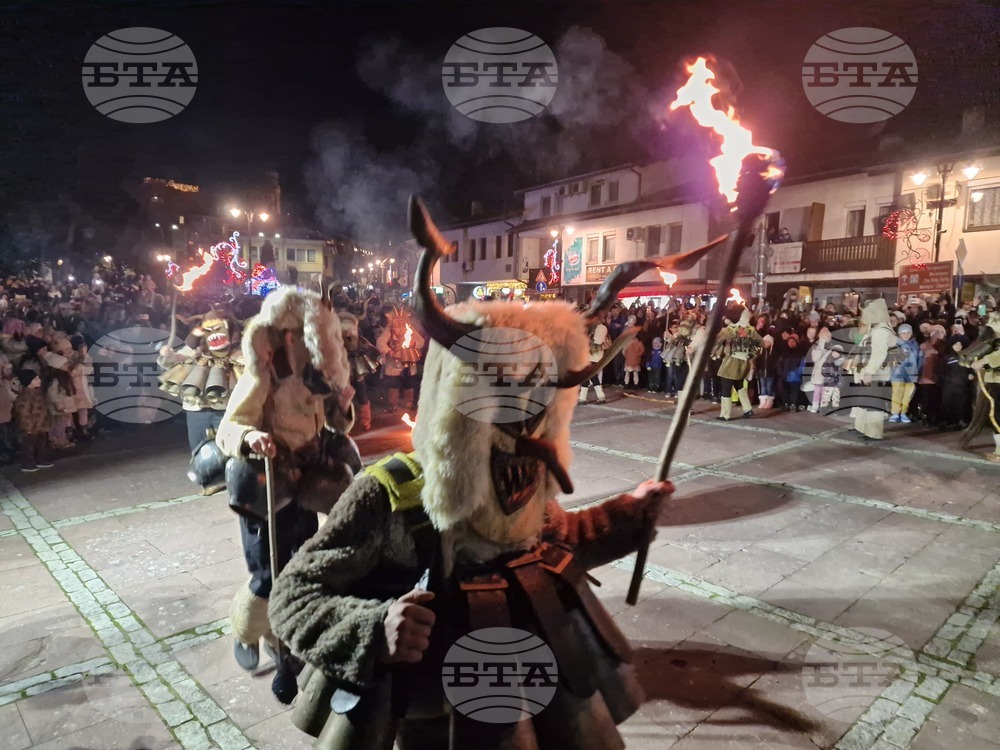
Kukeri from Meshtitsa village performed Surva rituals from the Pernik region in Veliko Tarnovo on Friday.
The more than century-old group performed rites symbolizing purification, the expulsion of evil forces, and blessings for health, fertility, and prosperity in the new year.
With their masks and heavy bells, the participants turned the historic area in front of Tsarevets Fortress into a stage for living Bulgarian folklore. The show Living Heritage – Kukeri on a Tarnovo Stage drew the interest of many people, who filled the square, applauded the performers and, at the end, joined them for a large horo dance.
The Surva ritual was more than a celebration, Zhana Yordanova, chair of the Peyo Yavorov-1926 Community Centre in Meshtitsa village near Pernik, told BTA. It was a living link between past and future, between the faith of the ancestors and hope for tomorrow.
For the event in Veliko Tarnovo on Friday, 50 people arrived, though the troupe sometimes numbered up to 120. The participants’ ages also varied, with the youngest around 3 years old and the oldest almost 80. Although, traditionally, kukeri rites were performed only by men, more and more women joined the group in recent times. They took part mainly in the wedding ritual, which residents of Veliko Tarnovo and visitors to the city saw.
Over the years, the Surva performers in Meshtitsa village dressed in the same way they did now. They wore a leather coat on their back, black trousers and leather leggings. The costumes weighed differently because they included different sets of bells. In the past, these bells belonged to the group, but later they became personal items bought with the participants’ own money. In that way, they possessed real wealth, Yordanova said.
On Friday, the audience saw the Welcoming the Surva Performers custom, typical of Central Western Bulgaria, Yordanova said. One part of the group played the role of wedding guests. The bride was always the central figure in the wedding ritual, and her role was played by a man who was masked and dressed in traditional costume.
The groom was also an important participant. In modern practice, he could wear traditional costume or a suit. The hosts were usually represented by an elderly woman and man, symbolizing the home, the family hearth and continuity. Another important character was the priest. The other part of the troupe were the bell-ringers, wearing masks made from horns and hides of domestic animals, attached to wooden frames. These masks were made by the participants themselves. The bell-ringers wore them to chase away evil spirits and unclean forces, and to bring a fertile and healthy year.
The kukeri group from Meshtitsa village near Pernik, led by group leader Nikolay Petrov, was among the best-known and most authentic formations at the International Festival of Masquerade Games Surva in Pernik, event organizers from Veliko Tarnovo Municipality said. The group took part in hundreds of events in Bulgaria and abroad, and its skill and dedication received many awards.
Friday’s event also included young musicians from the Potomtsi School for Folk Instruments at the Napredak-1870 Community Centre in Lyaskovets, led by Stefan Pechikamakov, and presenter Kiril Milushev, an actor at the Konstantin Kisimov Music and Drama Theatre in Veliko Tarnovo.
Immediately after the kukeri performance, the audience watched the Tsarevgrad Tarnov – Sound and Light show, which marked 40 years in 2025. Friday’s event opened the municipality’s cultural calendar for 2026.
The celebration will continue on Saturday, when the kukeri from Meshtitsa will take part in a festive parade along the central streets of Veliko Tarnovo. The procession will set off from Samovodska Charshia and finish in front of the municipality building. This will require temporary changes to traffic arrangements, the municipal administration press service said.
Kukeri are members of masquerade groups who wear traditional/masquerade costumes and take part in ritual performances and festivals. Their role in the custom is going house-to-house to chase away evil spirits and usher in spring. Their masks may include elements (e.g., mirrors) intended to chase and repel evil spirits.
/КТ/
news.modal.header
news.modal.text