site.btaWithout Investments in Energy Grid, Solar Power Could Become a Problem, Says BASEL Chair
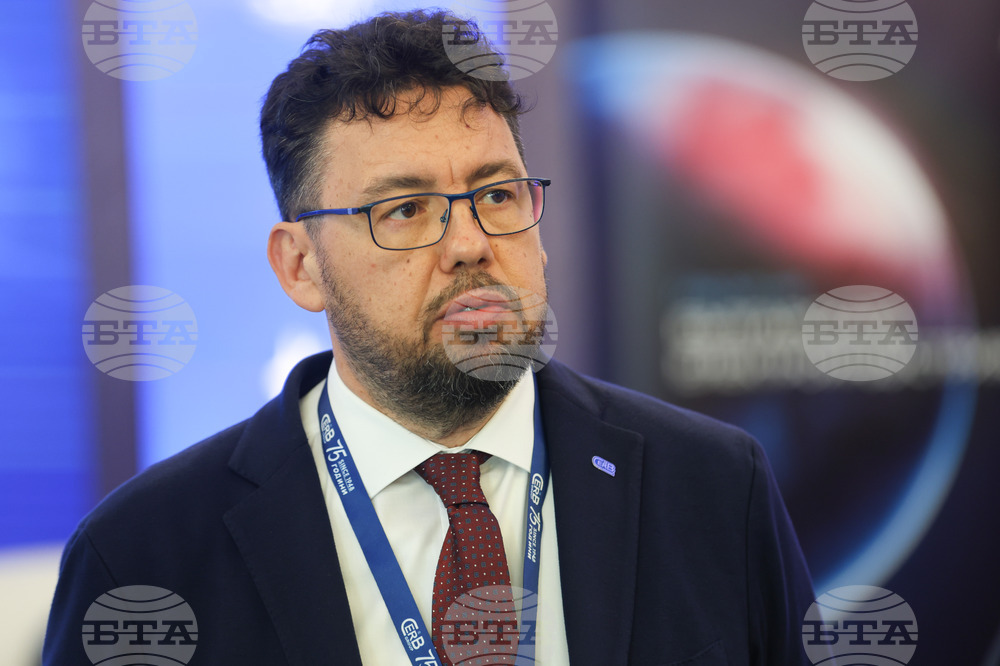
Without significant investments in the energy grid, storage, and energy management, solar power could turn from a solution into a problem, said Dr. Eng. Dimitar Beleliev, Chairman of the Board of the Bulgarian Association of Electrical Engineering and Electronics (BASEL), Chairman of the Board of Directors of the Central Energy Repair Base, and founder of AmonRa Energy. He commented on the sector's challenges in an interview for BTA on Sunday.
Beleliev noted that Bulgaria is already a leader in the growth of solar capacity and in interest in renewable energy sources (RES), but from now on the real challenges begin. “The main problem is that huge solar plants are being built on a relatively small and unprepared electricity grid. This leads to limitations, imbalances, and real technical risks for the system. The question is no longer how many megawatts we will install, but how we will integrate them. The State’s role is crucial here, and I hope this is understood and addressed in time. At the moment, the state is a passive observer,” he said.
According to Beleliev, Bulgaria’s future leadership in RES should focus on the quality of integration, not just the quantity of capacity.
He added that the biggest mistake in the RES sector is the belief that bigger plants are always better. “Scaling up individual units is harmful to the grid and increases system risks. A truly good system relies on distributed generation, which is more flexible, more resilient, and closer to the real needs of the economy,” he said.
Asked about the best energy solution for Bulgaria, solar, batteries, or a mix of sources, Beleliev said the answer is solar systems combined with appropriately sized batteries located near consumers. “This is the most important factor. When energy is produced and stored close to consumption, significant costs for transmission and balancing are eliminated, grid load is reduced, and system resilience increases. Centralized solutions have their place, but the future lies in a decentralized model that turns consumers into active participants in the energy system, rather than passive payers of network costs,” he explained.
Regarding the reliance on emergency rather than planned maintenance in Bulgaria, Beleliev noted that historically, the country has lacked a culture of prevention. “Since the era of a centrally planned economy, focus was mainly on repair after failure rather than prevention. In modern energy systems, prevention is a key factor for stable and efficient production. Planned maintenance, diagnostics, and timely modernization are significantly cheaper and more reliable than emergency repairs. This is not only a matter of investment but also a management philosophy,” he said.
Beleliev also emphasized distortions in the energy sector labour market. He argued that the State artificially inflates employment, often without regard to efficiency, which leads to low motivation and draws personnel away from the private sector. “At the same time, loss-making enterprises are maintained, blocking resources and human potential. Businesses offer clear approaches, real labor market rules, incentives for skills and productivity, and an end to subsidizing inefficient structures. Only a competitive environment can retain and develop personnel. Examples of state enterprises with staff exceeding those of comparable private companies are more than enough,” he said.
He called for liberalization of the energy sector as soon as possible. “Only a free market can solve many of the chronic problems in Bulgarian energy, inefficiency, cross-subsidies, and lack of transparency. Delays only deepen imbalances. Targeted support mechanisms can be found for consumers who need it, without blocking the market. Currently, over one-third of the market does not function freely,” Beleliev warned.
He added that Bulgaria’s electricity industry is traditionally a strong exporter, while the domestic market is dominated by imports. “Price competition with companies from China, Turkey, and other countries is practically impossible due to the use of non-market subsidy mechanisms. The solution is to restore the logic that European funds support European producers. The European Commission has allowed member states, in strategic sectors, to limit participation in tenders to European producers, CEFTA countries, or states with free trade agreements with the EU. This is already established practice in several European countries,” he said, stressing that Bulgaria should adopt it as soon as possible.
Asked about the potential for rooftop installations in Bulgaria, Beleliev said the potential is huge. “In Sofia alone, there is capacity for around 500 MW of rooftop systems. These capacities can be integrated quickly without additional grid load and without conflict with agriculture or infrastructure. Rooftop systems are the most logical path for sustainable RES development in Bulgaria. Efforts must be focused in this direction,” he said.
Beleliev noted that Bulgaria’s eurozone membership opens new opportunities, especially in terms of trust, predictability, and access to capital. “For the energy and electrical engineering sector, this means easier financing for long-term investments, lower currency risk, and better integration with European markets,” he said.
He added that the eurozone is not only a financial instrument but also a sign of stability, important for investors, partners, and industry as a whole. “In this sense, it is also good promotion for Bulgaria, placing the country in a higher trust category. The question is whether we will use this opportunity purposefully, for real economic development and infrastructure modernization, not just formally,” he concluded.
/NF/
news.modal.header
news.modal.text