site.btaParts of Roman Marble Pool, Medieval Church among Latest Discoveries at Aquae Calidae in Burgas
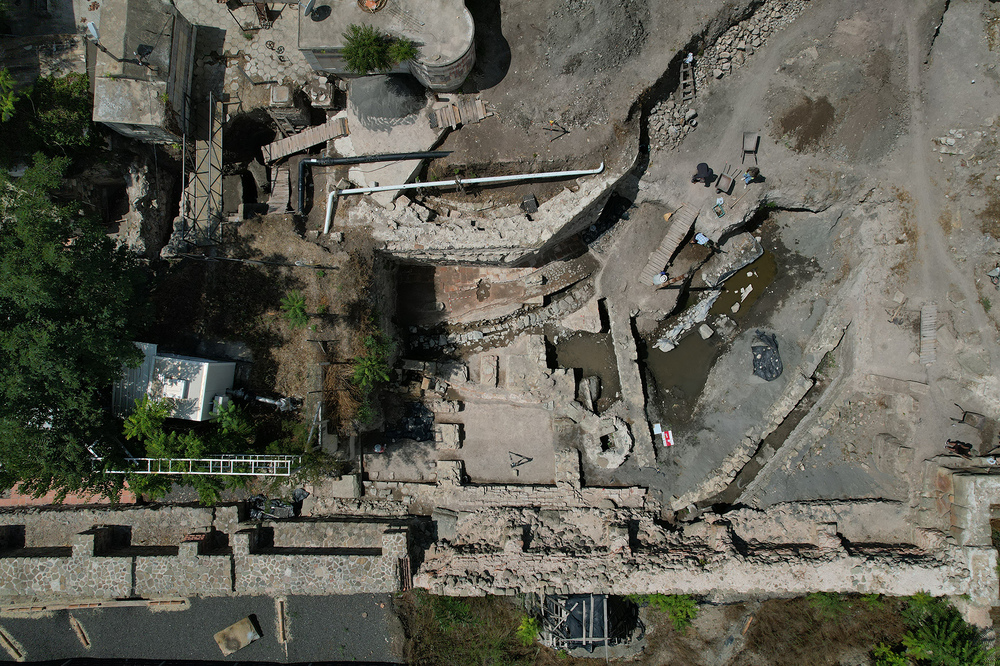
Parts of a Roman marble pool, a medieval church and dozens of valuable artefacts, including seals, coins and artistic ceramics, were among the most significant discoveries from the 2025 archaeological excavations at the early Roman bath area in the ancient city of Aquae Calidae, according to Burgas Municipality, which funded the research.
The latest campaign uncovered three preserved polished marble steps from a Roman pool located beneath later ancient and medieval alterations, according to the Regional History Museum. These elements correspond to a facility that was partially studied in 2015.
In the excavation area, researchers found structures from a medieval church and a rich cultural layer with a range of items. The team identified imported Persian celadon from the 12th century. As a rare find for the region, the museum pointed to a coin of Emperor Leo VI. Archaeologists found large quantities of ancient coins from Mesembria and Apollonia Pontica. There was also a notable concentration of coins from the reign of Emperor Alexius I Comnenus (1081–1118), as well as issues from the 1220s and 1230s.
The main stage of the excavations took place between July and September, continuing archaeological work that began within the complex in 2022.
Alongside the main work, between October and early December, a site linked to the municipality’s investment plan for an outdoor pool was examined. The study confirmed a dense medieval cultural layer from the 11th to the 13th century, similar to what earlier excavations found.
The municipality noted that the results again show the long-term use and rebuilding of the Aquae Calidae complex over the centuries, with layers of ancient, Byzantine, Bulgarian and Ottoman construction phases.
In 2024, archaeologists from Burgas found part of a nymphaeum during excavations in the early Roman bath area in Aquae Calidae. Archaeologist Dimcho Momchilov, head of the archaeological team, told the Bulgarian News Agency that the nymphaeum resembled a fountain with figures and was linked to the Thracian cult of nymphs and the healing properties of the water.
/MY/
news.modal.header
news.modal.text