site.btaBulgaria Pushes to Add Ruse–Gorna Oryahovitsa Rail Link to EU Funding List
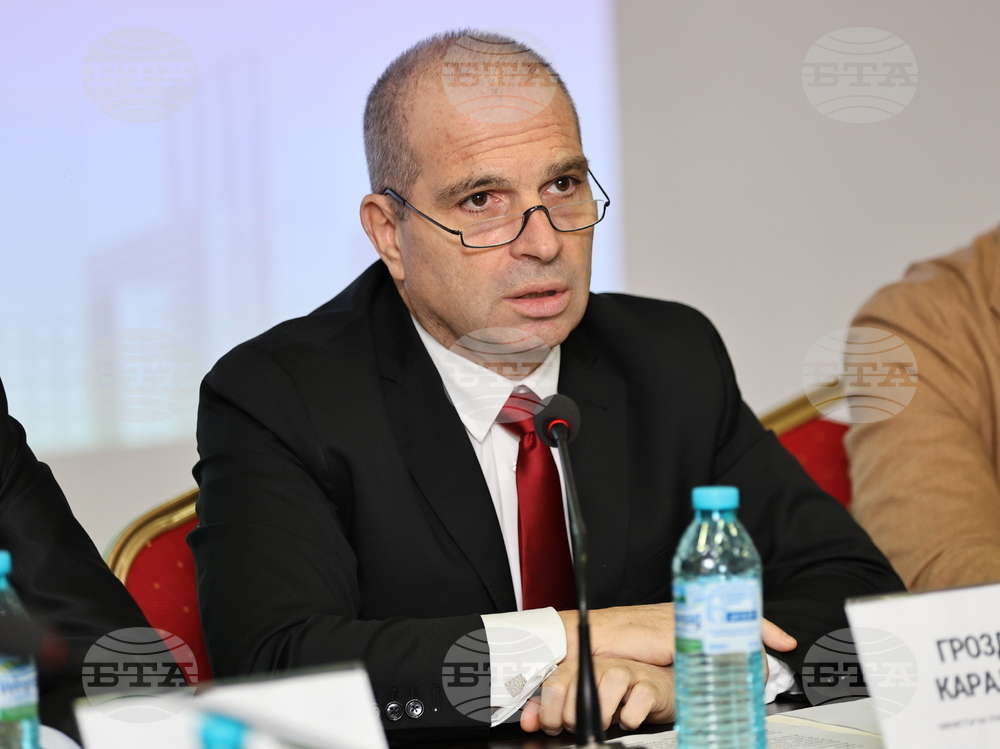
Transport Minister Grozdan Karadjov proposed including the strategic Ruse-Gorna Oryahovitsa railway section in the Connecting Europe Facility annex for 2028-2034 at an EU transport ministers’ meeting in Brussels, the Transport and Communications Ministry’s press service said here Thursday.
The section is described as key for cross-border connectivity, military mobility and the development of the Baltic Sea–Black Sea–Aegean Sea European corridor.
The proposal for the Connecting Europe Facility in the next EU financial framework envisages EUR 51 billion for cross-border infrastructure and military mobility projects. Bulgaria has already secured the inclusion of the Sofia–Skopje section as a key stretch of Corridor 8 in the list of projects under this instrument.
Karadjov also drew attention to the importance of the legislative proposals in the Roadworthiness Package for road safety.
“We support the introduction of higher and harmonized European requirements, especially for vehicles subject to mandatory periodic technical inspections, as well as for odometer data. This is an important tool in the fight against fraud,” Karadjov said. He recalled that Bulgaria already maintains a national register of odometer readings for all vehicles.
He noted that Bulgaria has introduced annual technical inspections for all motor vehicles, including those over 10 years old – a measure that goes beyond the requirements in the texts adopted on Thursday.
In a discussion on the dimensions and maximum permissible masses of certain road vehicles, Karadjov emphasized Bulgaria’s role as a transit country and stressed that the existing limits must not be exceeded in order to protect road infrastructure and ensure safety.
The Connecting Europe Facility (CEF) is the EU’s main fund for trans-European transport, energy and digital networks. In the 2028–2034 budget proposal, about EUR 51 billion is earmarked under CEF for transport and military mobility, focusing on completing missing TEN-T cross‑border links and upgrading dual‑use infrastructure. The new Baltic Sea–Black Sea–Aegean Sea European Transport Corridor will create a continuous North–South rail and road backbone via Ukraine and Moldova for both civilian and defence needs.
Pan-European Corridor 8 is a key east–west transport axis in the EU’s TEN-T and Global Gateway frameworks, linking Adriatic ports in Albania with Black Sea ports in Bulgaria via North Macedonia and Sofia. The Sofia–Skopje railway is one of the last missing links and is strategic for integrating the Western Balkans into the EU market and improving regional military and economic mobility. Over half of Corridor 8’s rail length is in Bulgaria, with only a short cross-border section near Gyueshevo–Deve Bair still to be built, for which EU grant support is prioritized.
The Roadworthiness Package covers EU rules on periodic roadworthiness tests and roadside inspections. In April 2025, the Commission proposed revisions to improve road safety, reduce emissions and combat fraud, including tighter checks for older vehicles, specific rules for electric and driver-assistance systems, and better recording and sharing of odometer data. The proposal responds to evidence that current intervals and uneven enforcement limit effectiveness and aims to harmonize minimum EU requirements while allowing stricter national rules.
/RY/
news.modal.header
news.modal.text