site.btaHistory of Winemaking is History of Constant Adaptation, says MEP Sargiacomo at Wine Forum

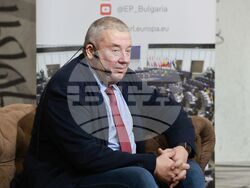
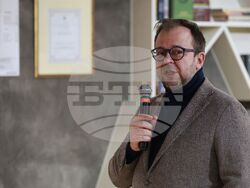
The history of wine production is a history of constant adaptation, said shadow rapporteur on the so-called "wine package" in the European Parliament, MP Eric Sargiacomo (France, S&D), during a discussion on the topic "The Future of the Wine Sector: European Perspectives", which took place in Sofia on Wednesday.
Sargiacomo said that the deep crisis in the wine sector is not only in Europe but also in Argentina and California, where vines are being uprooted. According to him, regulatory solutions to this crisis need to be provided, which is where the preparation of the "wine package" came from.
On February 10, MEPs approved part of the so-called "wine package", on which the European Parliament and the Council of the EU reached a preliminary agreement on December 4, 2025. The legislative package aims to respond to the structural oversupply in the sector, the long-term decline in consumption and the growing impacts of climate change on production. Regarding regulatory tools, Sargiacomo pointed out that the European Parliament has worked to support the grubbing-up of vines with different funds. For example, France will uproot many vineyards around Bordeaux which account for 20% of the region's production capacity. "We have very serious reserves, so distillation must also be financed and we will look for European solutions for this", the Frenchman commented.
As for the grubbing-up of vineyards and concerns about whether its funding will turn from a crisis measure into a permanent one, Sargiacomo said that the measure is exceptional and the aim is not to make it permanent. He believes that the right proportion needs to be found between what to grubbing up and what not. Distillation is also a crisis measure, with EUR 450 million earmarked, and this amount will be doubled in the next Common Agricultural Policy (CAP). He voiced his belief that these measures will lead to a better balance and better visibility for winegrowers and winemakers. Sargiacomo explained that in France the sector is very strictly regulated in terms of issuing planting and replanting permits. According to him, it is important to keep in place the PDO (Protected Designation of Origin) and PGI (Protected Geographical Indication) regulations as removing them might damage the reputation of the wines being sold.
The MEP said that the serious decline in orders for the United States is one of the main problems for the current crisis in the sale of European wine. Therefore, more and more work is being done on programmes to promote European wines in other countries, while programmes are being implemented to find new markets throughout the US. He recalled that the current Common Agricultural Policy (CAP) programming period is ending, which began in 2021 and runs until 2027, but said that MEPs are already thinking about the next period - 2028-2034. According to him, the ministers of the different countries should request more information about how the funds will be distributed in the individual sectors.
Commenting on the fact that over three-quarters of those employed in the wine sector in Bulgaria are under 50, he pointed out that there is a need for new generations to join the sector. According to him, area subsidies can be redirected to directly help producers and the new generation in the sector. He added that subsidies do not lead to greater competitiveness.
Regarding non-alcoholic and low-alcohol wines, Sargiacomo believes that wine should not forbid itself from certain markets, but this is emerging as a niche market. He said the fact that this is associated with serious investments and not all winemakers would turn to such production.
Regarding the trade deal between the EU and Mercosur, Sargiacomo commented that a mistake has been made with the negotiations regarding agricultural policy. He does not think that the agreement would lead to the export of huge quantities of wine to Latin America from Europe. Regarding the deal with India, he noted that the situation is different – there is a huge market for spirits and wines there, and the agreement is better designed.
When asked when the "wine package" is expected to enter into force, Sargiacomo said that the Council's vote will follow, which he has no doubt will be positive.
/КТ, KK/
Additional











news.modal.image.header
news.modal.image.text
news.modal.download.header
news.modal.download.text
news.modal.header
news.modal.text