site.btaOECD Chief Discusses Bulgaria’s Accession Path at Public Lecture, Meeting with Economic and Social Council in Sofia
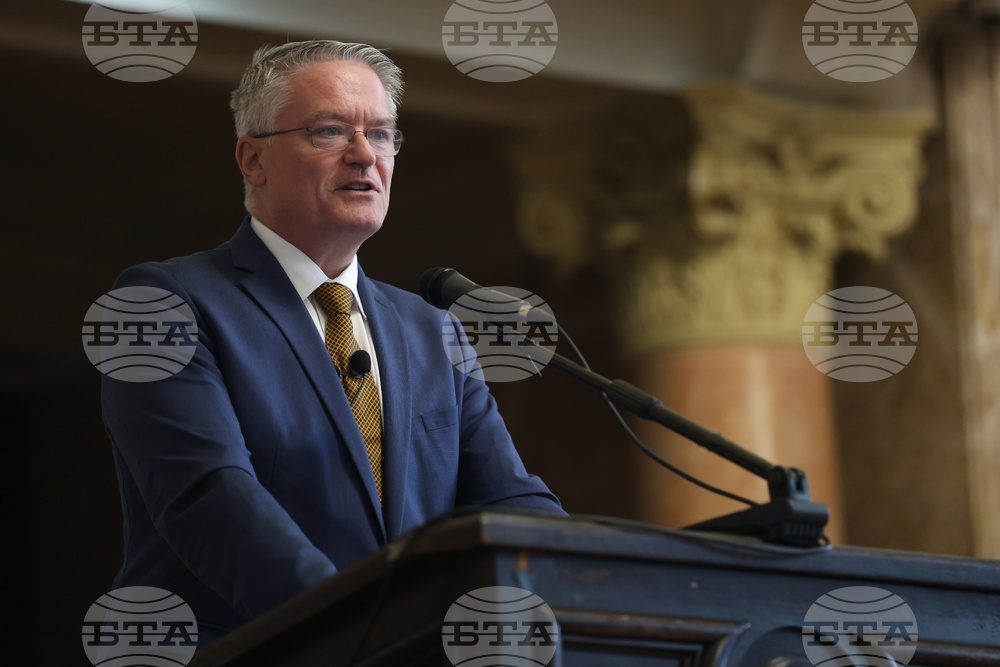
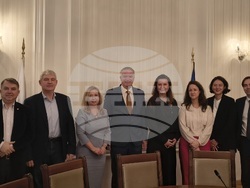
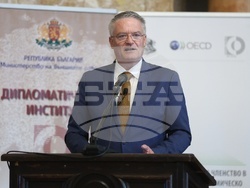
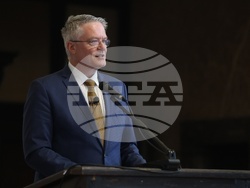
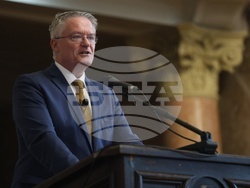
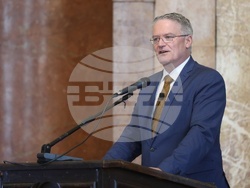
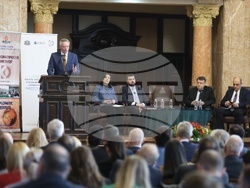
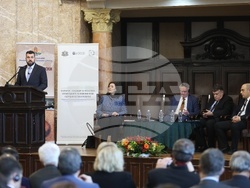
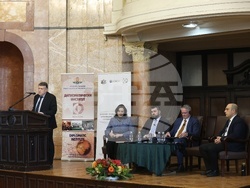
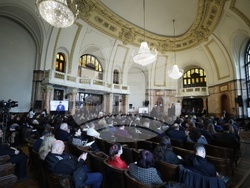
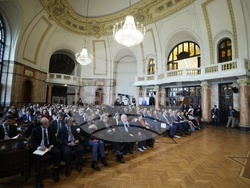
Organisation for Economic Co-operation and Development (OECD) Secretary-General Mathias Cormann delivered a public lecture on Bulgaria’s path to OECD membership at Sofia University on Friday. As part of his visit to Sofia, Cormann, together with his team, also met with the Chairpersons’ Council of Bulgaria’s Economic and Social Council (ESC) to discuss the country’s progress toward OECD membership, key economic and social reforms, and the role of organized civil society in the process.
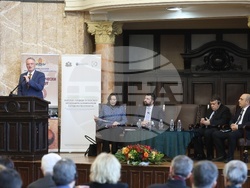
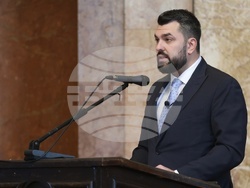
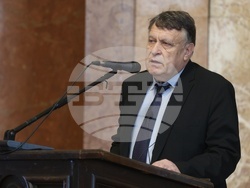
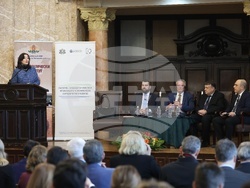
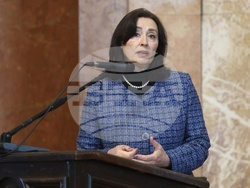
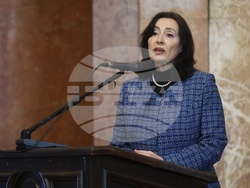
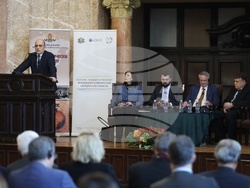
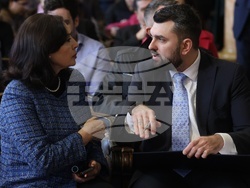
Friday’s lecture was organized by the Diplomatic Institute to the Foreign Minister together with the Ministry of Foreign Affairs and Sofia University, in partnership with the Faculty of Economics and Business Administration. Attending the event were outgoing Foreign Minister Georg Georgiev, Sofia University Rector Prof. Georgi Valchev, Faculty of Economics and Business Administration Dean Atanas Georgiev, Diplomatic Institute head Tanya Mihaylova as moderator, as well as representatives of the diplomatic corps, state institutions, academic circles, lecturers, and students.
During the lecture, Cormann said that the joint efforts of all political parties represented in the Bulgarian Parliament over the next two months would be crucial to completing Bulgaria’s pre-accession process to the OECD in 2026. He highlighted the progress achieved over the past 12 months, which, in his words, gives him confidence that the accumulated momentum will not be lost.
Cormann noted that the OECD expects progress in five areas where technical reviews have not yet been finalized: anti-corruption measures, corporate governance in state-controlled enterprises, waste management, investment, and public governance. He added that Bulgaria’s progress on its accession path generates strong and broad momentum for reform, including the establishment of more independent and robust competition authorities, the strengthening of anti-corruption policies, and measures to promote the principles of responsible business conduct in multinational operations.
He recalled that Bulgaria’s journey toward OECD membership began in January 2022, shortly after he assumed office as OECD Secretary-General in June 2021. Since then, teams from 25 OECD committees have conducted and successfully completed reviews of legislation, policies, and practices across a wide range of areas. Among the completed technical work, he highlighted fiscal and monetary policy, education, competition, healthcare, agriculture and fisheries, statistics, employment, and social policy.
Outgoing Foreign Minister Georg Georgiev said that, having joined Schengen and the euro area, Bulgaria’s bid to join the OECD should be regarded as a long-term strategic choice rather than merely a technical procedure or a foreign policy objective. He noted that successive governments have worked toward this goal, treating it as a cross-party commitment to establishing Bulgaria as a predictable and reliable partner in the global economic community. Georgiev also described Bulgaria’s initiative to host the OECD Global Skills Summit in 2028 as further evidence of the country’s long-term interest in working closely with the Organisation on this key policy issue.
Rector Prof. Georgi Valchev said that joining the OECD will help Bulgaria “draw on the good practices created in the past years to the fullest in this growingly insecure world.”
Dean Atanas Georgiev noted that through its Faculty of Economics and Business Administration, Sofia University has been an associate member of the OECD’s financial education network since 2021.
At his meeting with the Chairpersons’ Council of Bulgaria’s Economic and Social Council on Friday, Cormann outlined the current stage of the accession procedures, stressing the importance of the final phase of technical reviews by the Economic and Development Review Committee.
During the discussion, the ESC presented its work on key topics, including a comprehensive analysis of the pension model covering its three pillars and based on balanced dialogue among employers, trade unions and civil organizations. ESC Chair Zornitsa Rusinova recalled that the Council adopted a resolution in support of OECD membership two years ago and emphasized the ESC’s role in supporting reforms through expert proposals and consistent backing for government efforts to meet accession criteria. The Deputy Chairs of the ESC Groups representing employers, trade unions and civil organizations, Maria Mincheva, Plamen Dimitrov and Bogomil Nikolov, highlighted priorities related to regulatory modernization, education and skills development, industrial policy, and the social dimensions of the green and digital transitions.
In conclusion, Cormann expressed appreciation for the ESC’s active contribution to the accession process and noted the importance of the issues addressed by the Council for Bulgaria’s sustainable economic and social development.
On Thursday, Cormann presented the OECD’s third Economic Survey of Bulgaria at the Council of Ministers in Sofia, where he appeared together with outgoing Prime Minister Rosen Zhelyazkov and outgoing ministers.
/NZ/
Additional


news.modal.image.header
news.modal.image.text
news.modal.download.header
news.modal.download.text
news.modal.header
news.modal.text