site.btaJoint Efforts of Political Parties Represented in Parliament over Next Two Months Key to Bulgaria's Accession to OECD in 2026
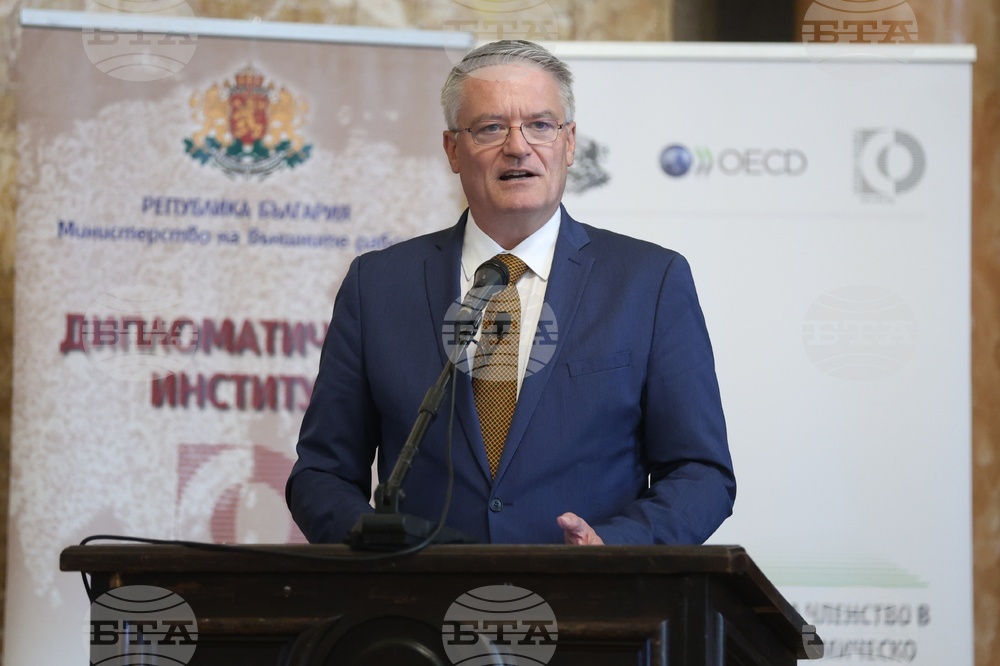
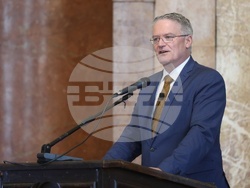
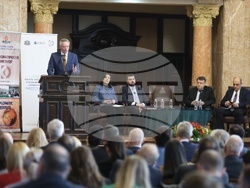
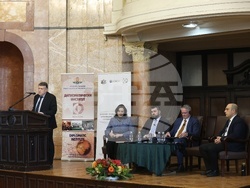
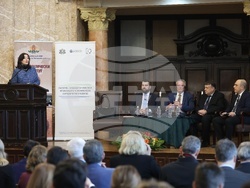
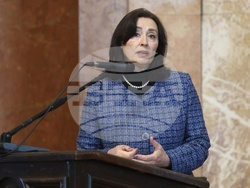
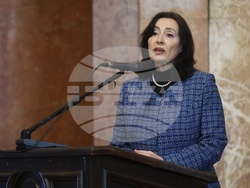
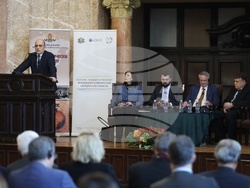
The joint efforts of all political parties represented in the Bulgarian Parliament over the next two months will be crucial to completing Bulgaria’s pre-accession process to the Organisation for Economic Co-operation and Development (OECD) in 2026, the organisation’s Secretary-General Mathias Cormann said at a public lecture on Bulgaria’s path to OECD membership, delivered on Friday at Sofia University.
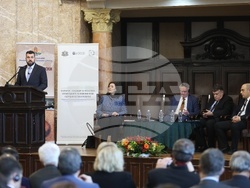
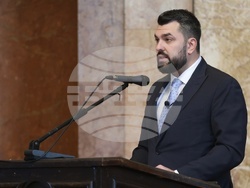
The event was part of Mathias Cormann’s working visit to Bulgaria and was organized by the Diplomatic Institute under the Minister of Foreign Affairs of the Republic of Bulgaria, jointly with the Foreign Ministry and St Kliment Ohridski Sofia University, in cooperation with the university’s Faculty of Economics.
Addressing parliamentary forces, Cormann described their coordinated efforts over the coming two months as being entirely in Bulgaria’s national interest.
He emphasized that Bulgaria has built strong momentum on its path toward OECD membership and expressed hope that this momentum will be maintained after the upcoming snap elections, against the backdrop of broad political support in the National Assembly for the country’s accession.
Cormann stated that together with representatives of the Bulgarian government, the organisation continues working toward the full completion of the OECD pre-accession process within this calendar year. The OECD highly values the sustained efforts made by successive governments over the past four years to advance Bulgaria’s membership and to place the country in the strongest possible position for accession. He highlighted the progress achieved over the past 12 months, which, in his words, gives him confidence that the accumulated momentum will not be lost.
Cormann added that the OECD expects progress in five areas where technical reviews have not yet been finalized.
The first area concerns anti-corruption measures, with Bulgaria’s progress expected to be reviewed at a plenary session in March.
The second area relates to corporate governance in state-controlled enterprises. The assessment will be completed once Bulgaria implements key OECD recommendations, including transparent appointments of senior management, the application of international financial reporting standards by all major state-owned enterprises, and related measures.
The third area is waste management. An evaluation will begin after Parliament adopts amendments to the Waste Management Act that align with OECD legal requirements on the reuse and recycling of beverage packaging.
In the field of investment, Bulgaria has implemented several reforms in line with OECD recommendations, but further steps are required before the Investment Committee can draw final conclusions from its review.
The fifth area concerns public governance, where progress is needed to improve the effectiveness and efficiency of the justice system through amendments to the Judiciary System Act and alignment with recommendations on public integrity and anti-corruption. These include strengthened oversight of political campaign financing and the adoption of a Lobbying Activities Act.
Cormann said in his lecture that Bulgaria’s progress on its accession path generates strong and broad momentum for reform, including the establishment of more independent and robust competition authorities, the strengthening of anti-corruption policies, and measures to promote the principles of responsible business conduct in multinational operations.
According to him, all evidence shows that a country’s pre-accession process and subsequent OECD membership lead to improved investor confidence, accelerate positive and productivity-enhancing structural reforms, strengthen market competition, unlock economic growth, and result in sustainable income growth and improved living standards.
Cormann said that Bulgaria’s journey toward OECD membership began in January 2022, shortly after he assumed office as OECD Secretary-General in June 2021. Since then, teams from 25 OECD committees have conducted and successfully completed reviews of legislation, policies, and practices across a wide range of areas. Among the completed technical work, he highlighted fiscal and monetary policy, education, competition, healthcare, agriculture and fisheries, statistics, employment, and social policy.
In his lecture, Cormann described the OECD as a unique international organization that brings together member countries around market-oriented and democratic principles, united by shared commitments to values-based international policies and practices, aimed at achieving greater prosperity.
/RY/
Additional







news.modal.image.header
news.modal.image.text
news.modal.download.header
news.modal.download.text
news.modal.header
news.modal.text