site.btaNational Audit Office President Meets with World Bank Mission
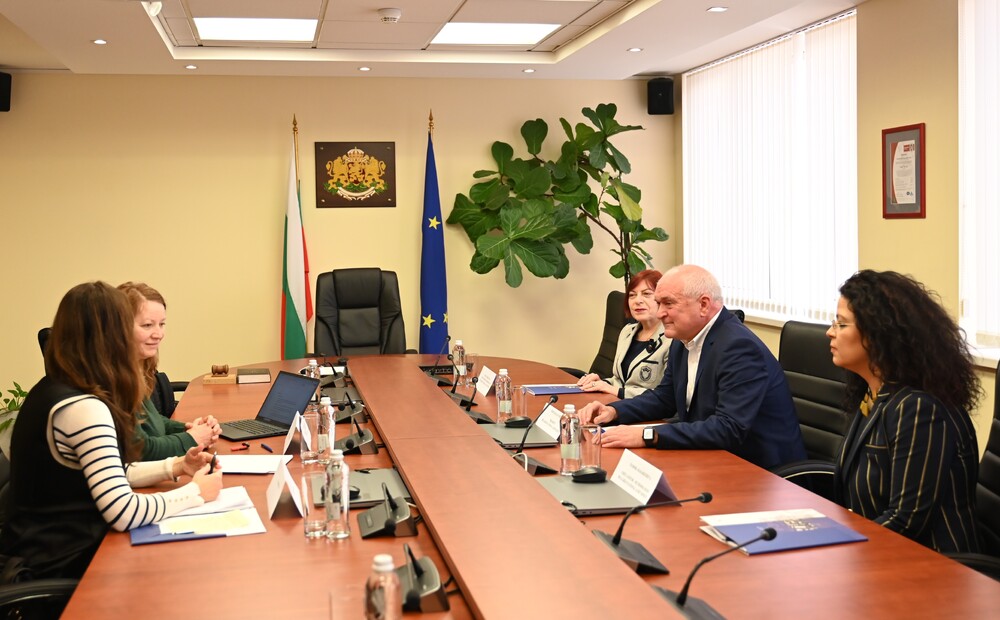
Enhancing the administrative capacity of local government bodies is absolutely necessary, especially in small municipalities, so that municipal administrations can be useful to their citizens and so that errors and irregularities identified by the Bulgarian National Audit Office during its audits can be reduced, said National Audit Office President Dimitar Glavchev, during a meeting with Izabella Barati of the World Bank. Barati is heading a mission, dedicated to assessing the administrative performance and capacity of municipalities (the MAPCAF project) and examining the loan conditions for municipalities.
This would also enable them to manage municipal debt more effectively, as this process is linked to the management of all other activities. Auditors from the National Audit Office are making every effort, within their competences, to support municipal administrations through their audits, Glavchev added.
Glavchev explained that the National Audit Office conducts audits of virtually almost all municipalities in Bulgaria. Under the annual audit program for 2025, 249 financial audits of municipalities’ annual financial statements for the previous year were carried out, while 251 are planned for 2026, given that there are 265 municipalities in Bulgaria. In addition, compliance audits of municipalities are also conducted, which examine the legality of decisions taken by municipal administrations. Within the scope of these two types of audit tasks, the processes of incurring, managing, and reporting municipal debt, as well as the implementation of investment projects, are also reviewed.
Glavchev highlighted two very significant aspects of weaknesses identified in the work of municipalities. One is exceeding the debt limit set in the Public Finance Act, according to which the annual amount of debt payments for each municipality in a given year may not exceed 15% of the average annual amount of own revenues and the subsidy for the last three years. In some municipalities, the level of such payments reaches 70%, with old debts being refinanced with new ones, thus creating a spiral of liabilities. Another serious problem, according to the President of the National Audit Office, is the very low tax collection rate in many municipalities, which is a key factor in achieving higher revenues and in complying with this threshold.
When violations of budgetary discipline are identified, the National Audit Office notifies the competent authorities - the Finance MInistry and the State Financial Inspection Agency, including in matters related to the management of municipal debt. If there is suspicion of criminal activity, the institution alerts the prosecutor’s office.
The National Audit Office sends its audit reports on municipalities to mayors, municipal councils, and the National Association of Municipalities in the Republic of Bulgaria.
The meeting was also attended by chief audit methodologists Teodora Bakarzhieva-Lyutskanova and Pavlina Mihaylova. They explained additional irregularities and problems identified during audits related to the incurrence, management, and reporting of municipal debt, such as poor management of municipal property, lack of communication with the local community regarding the expediency of projects financed through loans, insufficient transparency concerning all debt-related activities, incurring debt later than 39 months after the start of the municipal council’s term, violations in providing municipal guarantees, and a formal approach to investment projects, where the focus is on the absorption of funds rather than on results.
MAPCAF was developed in cooperation with the Ministry of Finance in support of the government’s objectives to improve local capacity in the areas of public finances, investment, and human resources management.
In 2025, the National Audit Office issued 901 recommendations to the audited entities to improve their performance, the audit institution reported. In 2024, the number of recommendations issued by the Office was 573, and in 2023 it was 611, the institution announced in the second half of January. Of the recommendations made last year, slightly more than half, 506, were addressed to mayors and municipal councils following audits of the management of their public funds and activities, the Office reported at the time.
/PP/
news.modal.header
news.modal.text