site.btaGovernment Moves to Extend Budget Law Until 2026 Budget Adopted
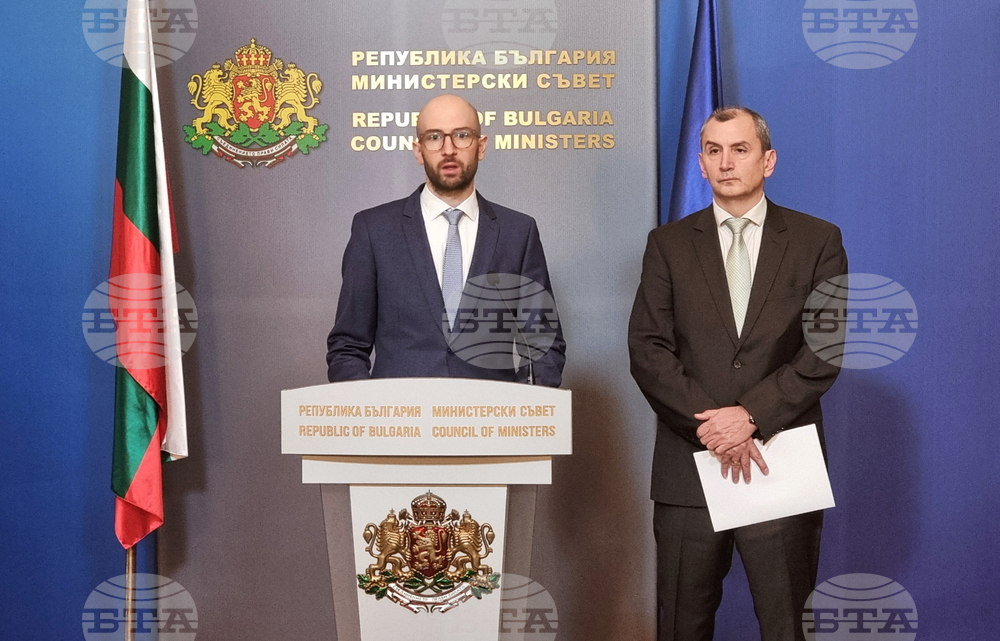
The Council of Ministers has approved a bill to amend and supplement the so-called budget extension law (formally the Act on the Collection of Revenues and the Commitment of Expenditures in 2026 until the Passage of the 2026 State Budget Act, the 2026 Public Social Insurance Budget Act and the 2026 National Health Insurance Fund Budget Act). The news was reported by caretaker Finance Minister Georgi Klisurski on Wednesday at a briefing after a government meeting.
According to Klisurski, the changes would allow, subject to subsequent approval by the National Assembly, the effect of the extension law not to be limited to March 31, as stipulated by the Assembly after an earlier vote, but to continue until the actual adoption of the regular budgets for 2026. “This ensures continuity in the functioning of the State,” the Finance Minister said.
He noted that the planned spending for the April 19 snap parliamentary elections will not be increased. At this stage, only a reduction but not an increase in expenditures is possible, he added.
Prime Minister Andrey Gurov tasked the Ministry of Finance with gathering information from all ministries regarding concluded public procurement contracts, upcoming payments, and advance payments already made, Klisurski added. The data have been consolidated and a substantive analysis is forthcoming. The aim is to protect the public interest and competition, as well as to ensure that every euro cent of public resources is used as intended, the Finance Minister said.
As an example, he pointed to a public procurement contract worth EUR 500 million for the delivery and maintenance of new guardrails for the national road network, awarded through the Road Infrastructure Agency. In this case, the Ministry of Regional Development and Public Works has ordered an audit. There are serious concerns about potentially unlawful decisions by commissions during the selection of contractors and about prices that could exceed the estimated values under the contract, Klisurski said. Any additional information available will be made public.
The Finance Minister also highlighted two other important changes proposed in the budget extension bill. The first concerns municipalities. Klisurski stated that the forthcoming extension law would liberalize the possibility for municipal governments to make higher expenditures than previously allowed. In addition to the levels from last year, municipalities will be able to spend the additional local taxes and fees they collect. According to Klisurski, this will give local authorities “a breath of air” and will prevent investment processes at local level from being halted.
Another key element in the draft is a set of provisions prepared jointly with the Ministry of Defence, which would authorize the Council of Ministers to conclude agreements with the European Commission under the SAFE mechanism. According to Klisurski, this concerns funds of over EUR 3 billion for defence modernization projects.
No amendments to other laws are proposed through the transitional and concluding provisions of this bill, the minister added.
/RY/
news.modal.header
news.modal.text