Regulation establishing the Just Transition Fund
![Over 4,000 Jobs Expected to Be Created in Bulgaria with Support from JTF]()
![Over 4,000 Jobs Expected to Be Created in Bulgaria with Support from JTF]() Ivaylo Stoyanov, Head of the Strategic Planning and Programming Department at the Ministry of Regional Development and Public Works, Sofia, November 28, 2025 (BTA Photo/Minko Chernev)
Ivaylo Stoyanov, Head of the Strategic Planning and Programming Department at the Ministry of Regional Development and Public Works, Sofia, November 28, 2025 (BTA Photo/Minko Chernev)
site.btaOver 4,000 Jobs Expected to Be Created in Bulgaria with Support from JTF
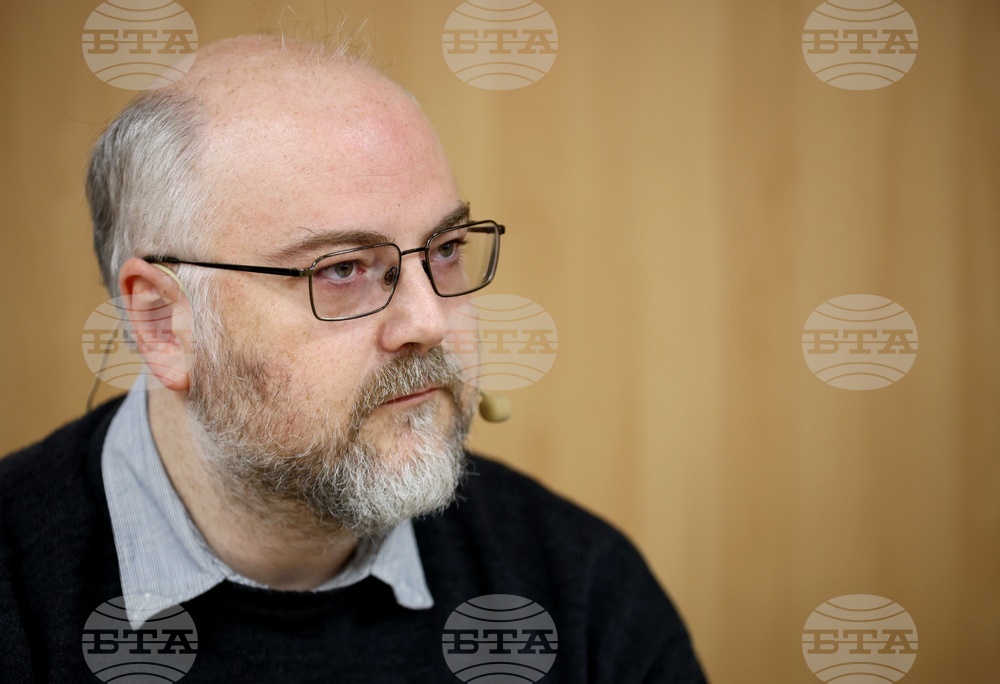
The financial resource allocated to Bulgaria under the EU’s Just Transition Fund (JTF), through which investments and activities are to be supported to mitigate the negative consequences of the transition to climate neutrality in Bulgaria’s three coal regions - Pernik, Kyustendil and Stara Zagora, together with the adjacent 10 municipalities - amounts to EUR 1,150,214,405. Expectations are that, with the successful implementation of projects, by the end of the programming period more than 4,000 jobs will be created with JTF support, more than 600 enterprises will be assisted, and more than 7,000 workers will be trained and upskilled, Ivaylo Stoyanov, Head of the Strategic Planning and Programming Department at the Ministry of Regional Development and Public Works (MRDPW), said in a BTA interview.
The interview is on one of the topics in BTA’s EU Lex BG section (a joint project of the European Parliament and BTA) and focuses on the implementation in Bulgaria of Regulation (EU) 2021/1056 of the European Parliament and of the Council of June 24, 2021 establishing the Just Transition Fund.
In Bulgaria, Regulation (EU) 2021/1056 establishing the Just Transition Fund is implemented through the planned funding from the Fund under the Regions in Growth Programme (RGP) 2021–2027, Priority 4 – Just Transition. By Council of Ministers Decision No. 634 of September 8, 2020, the Regional Development Ministry was designated as the responsible authority for ensuring the implementation of the territorial just transition plans, including through the Just Transition Fund within the RGP 2021–2027. By Council of Ministers Decision No. 712 of 6 October 2020, the GD SPRDP was designated as the Managing Authority of the RGP as well. The GD SPRDP is responsible for the implementation of the regulation, project selection and monitoring.
Regulations adopted by the European Parliament have the legal force of laws and apply directly in the EU Member States, unlike directives, which have the value of recommendations and must be transposed.
Unlike regulations and decisions, directives are not directly applicable in EU countries and require national legislation for the possible introduction of their rules into the legislation of the respective country.
“The Bulgarian economy is one of the economies in the EU with the highest energy and carbon intensity. In addition, Bulgaria is among the Member States with the highest share of solid fossil fuels in final household energy consumption. In line with the national decarbonization policy, a gradual reduction in electricity generation from lignite coal is envisaged, with the scale of the economic and social impact of this transition being greatest in the regions whose economies are based on coal mining and coal-fired power generation: Stara Zagora, Kyustendil and Pernik. These three regions are facing economic transformation over the coming decades, and if appropriate plans for diversification, growth and jobs are not developed, they will be exposed to the risk of deepening economic decline, unemployment, including the transfer of unemployment due to mine closures, depopulation and poverty,” Stoyanov noted.
“The main priority of JTF support for a smooth transition to climate neutrality in coal regions is reducing negative social impacts, primarily related to employment, which have direct consequences for the livelihoods of households and families. To achieve this, the Fund primarily supports measures to improve skills and reskill (including training) workers and jobseekers in sectors with potential for local employment (existing jobs or those that will be created). This also includes assistance in job searching (career guidance and counselling, assessment and validation of prior learning) for jobseekers, as well as their active inclusion in the labour market,” he said.
The full interview follows:
What is the significance of the Just Transition Fund for Bulgaria’s energy sector and what results have been achieved since its implementation began in 2021?
Regulation (EU) 2021/1056 establishes the Just Transition Fund (JTF), whose objective is to provide support to the population, economy and environment of territories facing serious socio-economic challenges arising from the transition to a climate-neutral European Union (EU).
The Just Transition Fund is the first pillar of the Just Transition Mechanism (JTM), which aims to support the transition to climate neutrality by 2050. The mechanism focuses on regions and sectors most affected by the transition due to their dependence on fossil fuels or carbon-intensive processes. Funding under the JTF is targeted at measures and investments contributing to the reduction of negative socio-economic consequences of the gradual phase-out of fossil fuels.
The Bulgarian economy is one of the economies in the EU with the highest energy and carbon intensity. In addition, Bulgaria is among the Member States with the highest share of solid fossil fuels in final household energy consumption. In line with the national decarbonization policy, a gradual reduction in electricity generation from lignite coal is envisaged, with the scale of the economic and social impact of this transition being greatest in the regions whose economies are based on coal mining and coal-fired power generation: Stara Zagora, Kyustendil and Pernik. These three regions are facing economic transformation over the coming decades and, if appropriate plans for diversification, growth and jobs are not developed, they will be exposed to the risk of deepening economic decline, unemployment, including unemployment transfers from mine closures, depopulation and poverty.
Given the fact that the actual implementation of the Just Transition Fund in Bulgaria began in 2024, at this stage final results cannot yet be reported. A total of 201 JTF projects worth more than EUR 167 million are currently under implementation, targeting measures to improve energy efficiency in multi-family residential buildings, mapping the skills of indirectly affected persons in the three regions, as well as training and upskilling workers from thermal power plants and mines in the three coal regions.
Where and how exactly is the regulation establishing the JTF applied in Bulgaria?
Projects financed by the Just Transition Fund are implemented in the territories of the Pernik, Kyustendil and Stara Zagora regions, including the 10 municipalities of Nova Zagora, Yambol, Simeonovgrad, Harmanli, Topolovgrad, Dimitrovgrad, Haskovo, Elhovo, Sliven and Tundzha, which are linked to the Maritsa Basin in terms of employment and labour mobility.
During the current programming period, JTF funds are included in the Regions in Growth Programme 2021–2027, within which a separate priority, Just Transition, has been established to support investments for the smooth transition of coal regions, diversification of the local economy, training and qualification of workers, development of renewable energy technologies, green energy production, promotion of research and development activities, and more.
How has the allocation of JTF funds affected the Maritsa Coal Basin area?
The main objective of JTF funding is to provide targeted support for a smooth transition to decarbonization in Stara Zagora and the adjacent territories, where energy production from fossil fuels is currently concentrated. In the Maritsa Basin area, opportunities have been identified for the development of alternative economic activities related to renewable energy production, building a chain for the production, consumption and storage of green hydrogen, and the development of research and development activities. A leading priority is to preserve and develop the economic potential of the region, as well as to maintain the capacity of the workforce by providing effective support to workers in the coal mining sector, fossil fuel energy production and related industries.
How are the funds distributed in Bulgaria and what is the budget for the country?
The financial resource allocated to Bulgaria under the JTF, through which investments and activities are supported to mitigate the negative consequences of the transition to climate neutrality in the country’s three coal regions of Pernik, Kyustendil and Stara Zagora, together with the adjacent 10 municipalities, amounts to EUR 1,150,214,405.
To ensure targeted and effective support based on the specific identified needs of the designated territories, the financial resource is distributed through a methodology that includes several criteria: population of the respective region, gross value added, and the number of employed persons in the affected mining and energy enterprises.
Taking into account the key focus of JTF support - the impact on the social sphere and, above all, on workers in sectors related to the extraction and processing of fossil fuels - the greatest weight is given to the criterion related to the potential loss of workforce in the three regions.
On this basis, the financial resource is distributed proportionally among the territories, with the largest share planned for the Stara Zagora region and the adjacent 10 municipalities, given the concentration of activities related to fossil fuel energy production and the large number of workers employed in related industries.
JTF funds are distributed through separate calls for funding under the Regions in Growth Programme 2021–2027. Special Just Transition subcommittees have been established within the Programme Monitoring Committee. These subcommittees review and discuss the parameters of individual procedures, while decisions approving the methodology and project selection criteria are taken by the Programme Monitoring Committee.
As follows from the amendment made to the regulation, the aim is result indicators—what are they and where are they in Bulgaria?
The final results that Bulgaria is expected to achieve through JTF financing are detailed in Priority 4, Just Transition, of the approved Version 2 of the Regions in Growth Programme 2021–2027. These are reported at the stage of completion of the implementation of the measures. At present, all projects supported with JTF resources are still under active implementation.
Expectations are that, with the successful implementation of projects, by the end of the programming period more than 4,000 jobs will be created with JTF support, more than 600 enterprises will be assisted, and more than 7,000 workers will be trained and upskilled.
How does the JTF affect the labour market in Bulgaria?
A main priority of JTF support for a smooth transition to climate neutrality in coal regions is reducing negative social impacts, primarily related to employment, which have direct consequences for the livelihoods of households and families. To achieve this, the Fund prioritizes measures for improving skills and reskilling (including training) workers and jobseekers in sectors with potential for local employment (existing jobs or those to be created). This also includes assistance in job searching (career guidance and counselling, assessment and validation of prior learning) for jobseekers, as well as their active inclusion in the labour market.
In this context, under the Regions in Growth Programme 2021–2027, procedures are planned to enhance the qualifications and skills of workers, some of which are already under implementation, while others are yet to be launched. In addition, JTF funds are used to finance the preparation of skills mapping of indirectly affected persons in the regions most affected by the climate transition. The aim is to examine the current skills and qualifications of workers, as well as their attitudes and expectations for future development. Based on the results of the mapping, targeted measures for training and skills development will be planned.
What is the impact of the creation of the JTF mainly on coal mining in Bulgaria?
Investments related to the production, processing, transport, distribution, storage or combustion of fossil fuels are excluded from the scope of the Just Transition Fund and are therefore not financed under the programme.
The JTF focuses on regions and sectors most affected by the transition because they depend on fossil fuels or carbon-intensive processes. Support is linked to encouraging the transition to low-carbon and climate-resilient activities. Its purpose is also to ensure protection for citizens and workers who are most vulnerable to the transition by providing them with opportunities for access to retraining programmes, jobs in new economic sectors, or energy-efficient housing.
The EU’s objective is to reduce greenhouse gas emissions by at least 50 percent by 2030, with an ambition to reach 55 percent, compared to 1990 levels. These policy reforms will help ensure effective pricing and reduction of carbon emissions across the economy.
Renewable energy sources play a key role. The intelligent integration of renewable energy sources, energy efficiency and other sustainable solutions across different sectors helps reduce carbon emissions. The transition to climate neutrality also requires smart infrastructure and enhanced regional cooperation to help realise the benefits of the transition to clean energy.
The Just Transition Fund supports measures and activities aimed at decarbonizing the regional economy - support for alternative economic activities, creation of new jobs, development of renewable energy production technologies, targeted support for the workforce in the regions to improve qualifications, acquire new skills, and more.
/NF/
news.modal.header
news.modal.text