site.btaOmbudsman Delcheva Says She Hasn't Been Approached by President Radev About Caretaker PM Post
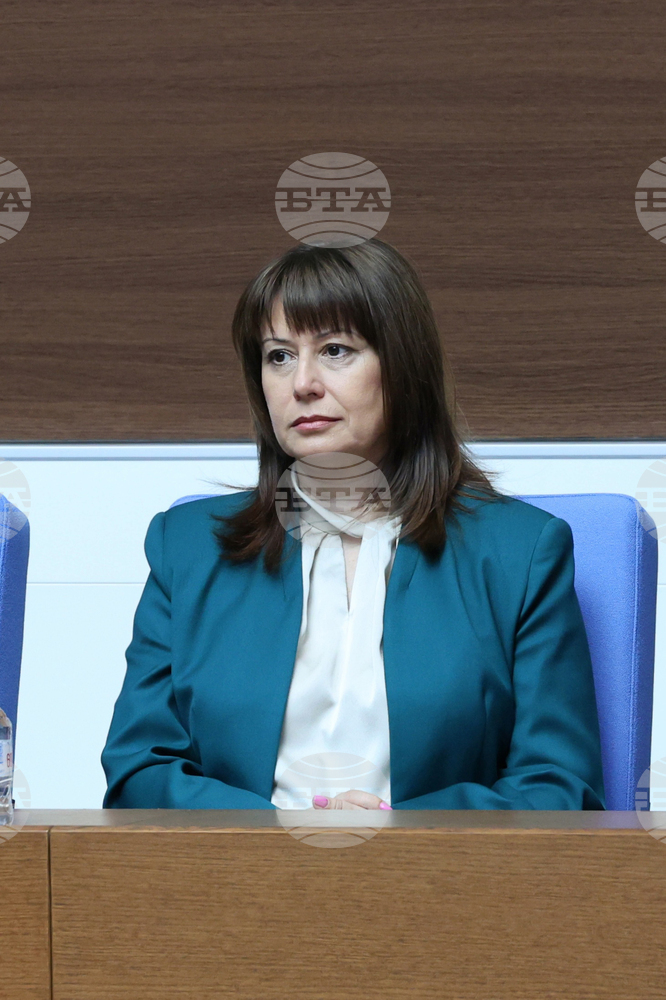
Ombudsman Velislava Delcheva told NOVA TV here on Sunday that she has not yet been approached by President Rumen Radev regarding the position of caretaker prime minister. If she is invited to a meeting, she said she will present her arguments as to why the Ombudsman should not be appointed as caretaker prime minister.
Under the Constitution, the positions eligible for appointment as caretaker prime minister include the Chair of the National Assembly, the Governor or Deputy Governor of the Bulgarian National Bank, the Chairperson or a Deputy Chairperson of the National Audit Office, and the Ombudsman or Deputy Ombudsman.
According to Delcheva, the role of caretaker prime minister affects the independence of the ombudsman institution. Independence is a fundamental principle enshrined not only in the Constitution but also upheld by international institutions, she noted, adding that in her view this principle should also be observed by Deputy Ombudsman Maria Filipova. Delcheva said she has not discussed Filipova’s intentions with her, but noted that during her parliamentary hearing the Deputy Ombudsman stated she would give her answer to President Radev.
“There are voices saying that everyone should assume responsibility once they are listed in the so-called ‘house book’ [a reference to the pool of possible candidates to be appointed as caretaker prime minister], but in my view responsibility does not mean accepting every position that is offered to you. It means making a clear and informed assessment of the situation and your capabilities in order to fulfil the duties assigned by the Constitution,” Delcheva said.
She also commented that tens of thousands of people are affected by problems at Sofia's Toplofikatsiya heating utility. Six out of ten residential microdistricts in the Lyulin neighbourhood are currently without heating, and breakdowns occur constantly, Delcheva said, adding that complaints have also been received from residents of other districts. In her view, Toplofikatsiya is failing to cope with repairs and cannot provide quality service to Sofia’s residents. Repairs should not be carried out during the winter season and should instead be planned well in advance to avoid last-minute emergency work, she added.
Delcheva noted that heating prices are rising while more and more customers are giving up Toplofikatsiya’s services, creating a vicious cycle. According to her, setting up working groups and drafting reports is ineffective, while concrete and timely measures are needed. Toplofikatsiya must be managed better, and the State should take a clear stance and begin acting in this direction. Instead of being resolved, the problem is worsening, she said.
The public defender also said that water supply problems across the country are systemic and require long-term solutions. She noted that hundreds of complaints have been received from Asenovgrad (southern Bulgaria), where residents report water shortages and prolonged emergency repairs.
Regarding Bulgaria’s adoption of the euro, Delcheva said it is important for citizens to report any irregularities they observe to the competent institutions.
The ombudsman also noted that complaints continue to be filed over issues related to medical expert commissions [responsible for granting disability status] and social services. She said that when people in need require social assistance, institutions must intervene in a timely manner.
/MY/
news.modal.header
news.modal.text